2020年1月10日星期五

“单一窗口”标准版用户操作手册--出口退税

    近期“单一窗口”标准版新上线了出口退税子系统,该系统包括备案申报、退税申报、代办退税、单证申报、其他申报、进料加工申报等业务功能。企业退税实现“一个平台、一次递交、一个标准”,从而提高企业出口退税效率,缩短通关时间,降低企业成本,有效促进我国国际贸易便利化。
第一章 用户注册
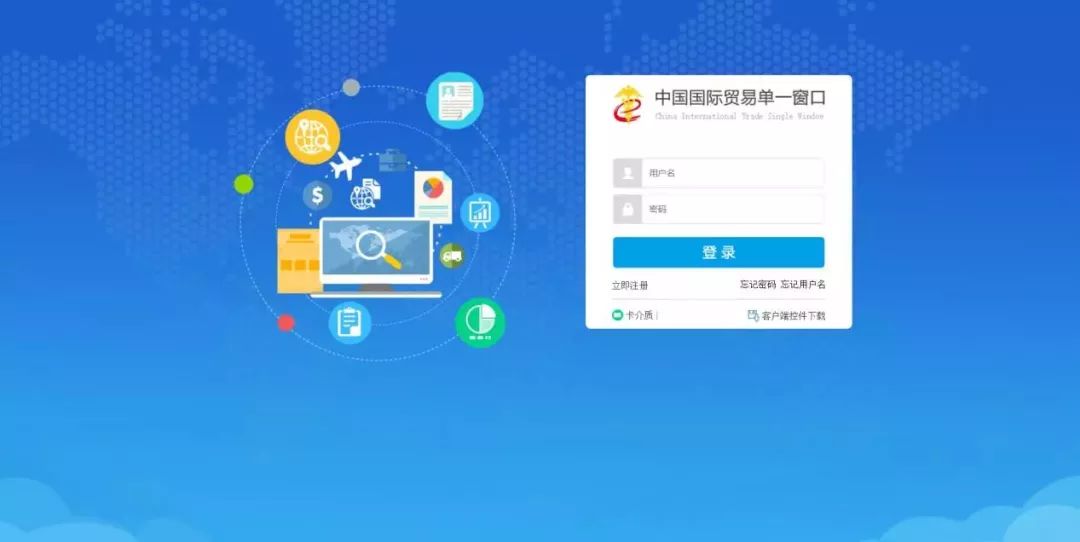
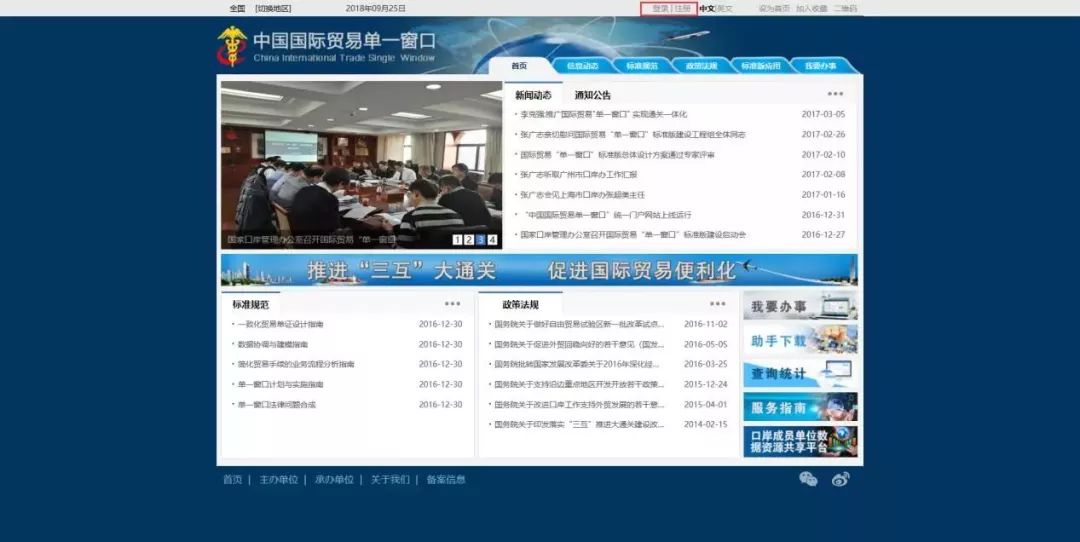
打开“单一窗口”标准版门户网站,在页面右上角点击“登录”字样,进入“单一窗口”标准版登录界面(如下图)。、
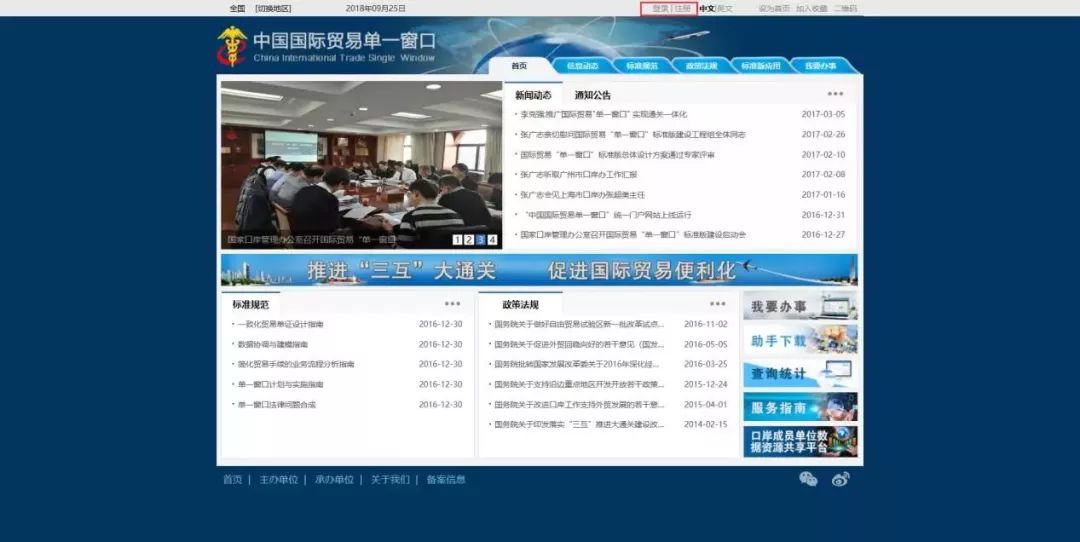
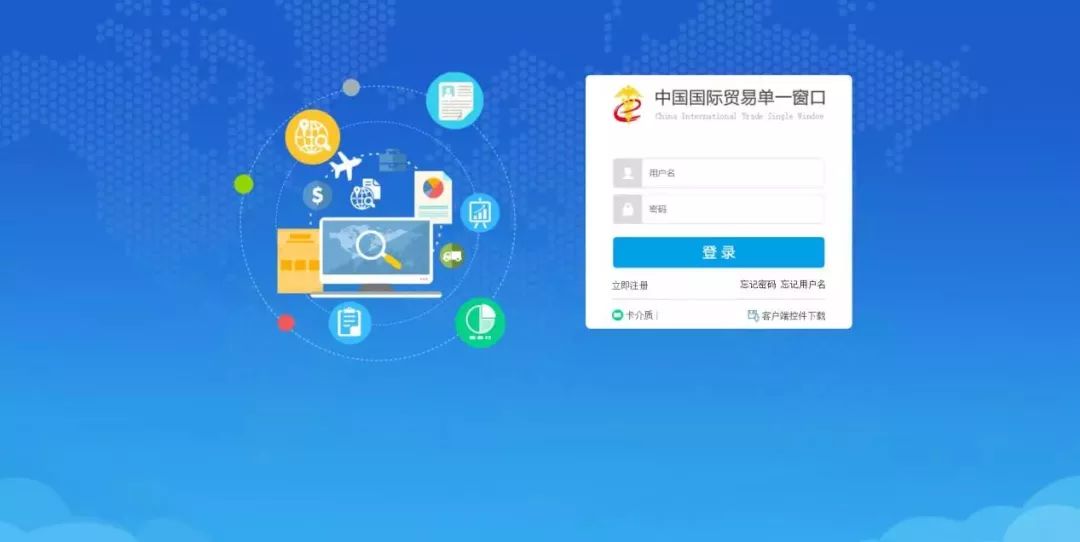
如您首次使用“单一窗口”标准版,请点击界面中的“立即注册”字样进行注册操作。
第二章 出口退税申报
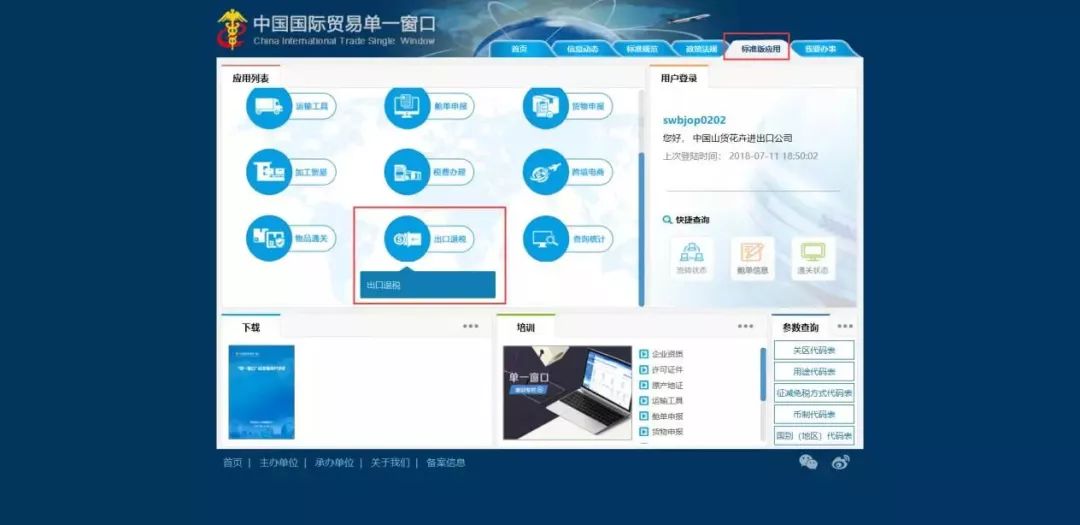
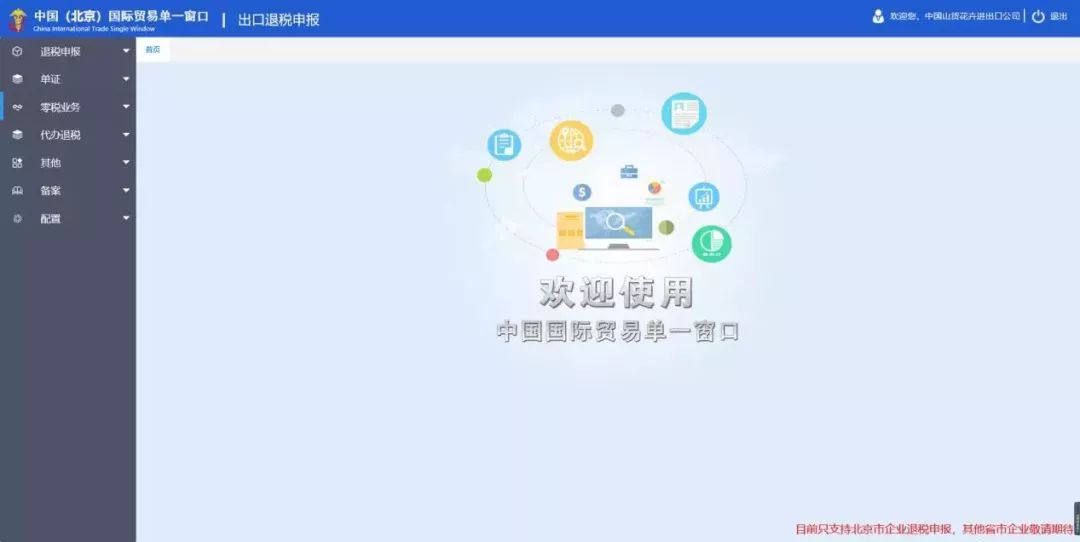
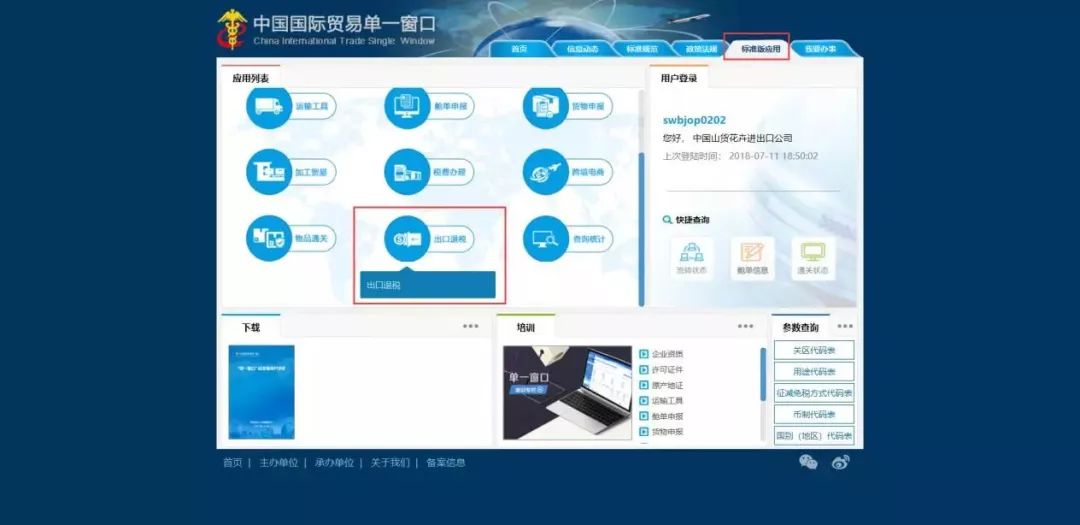
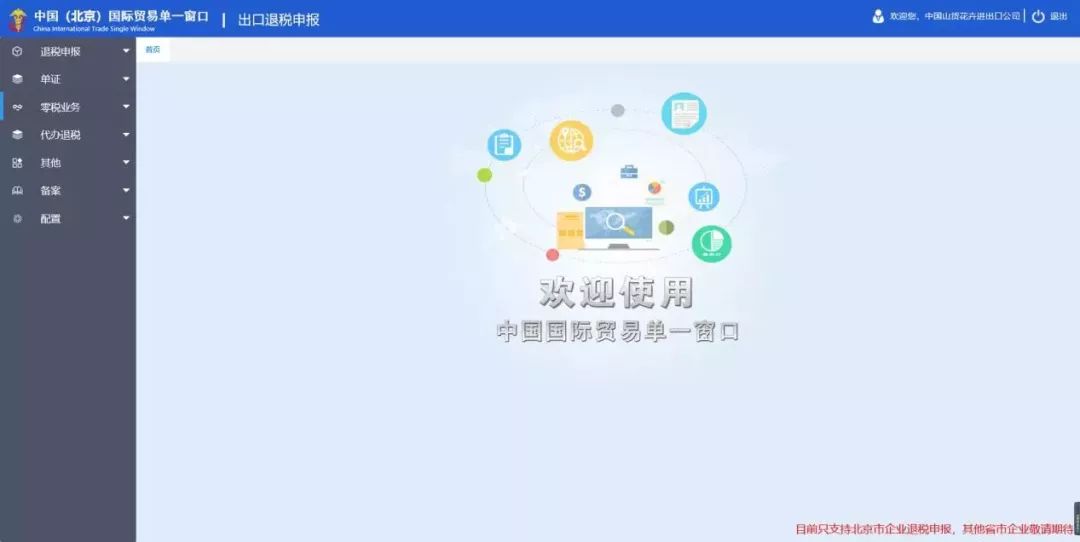
在门户网站首页的“标准版应用”中点击“出口退税”模块进入到出口退税申报界面。
2.1 外部管理
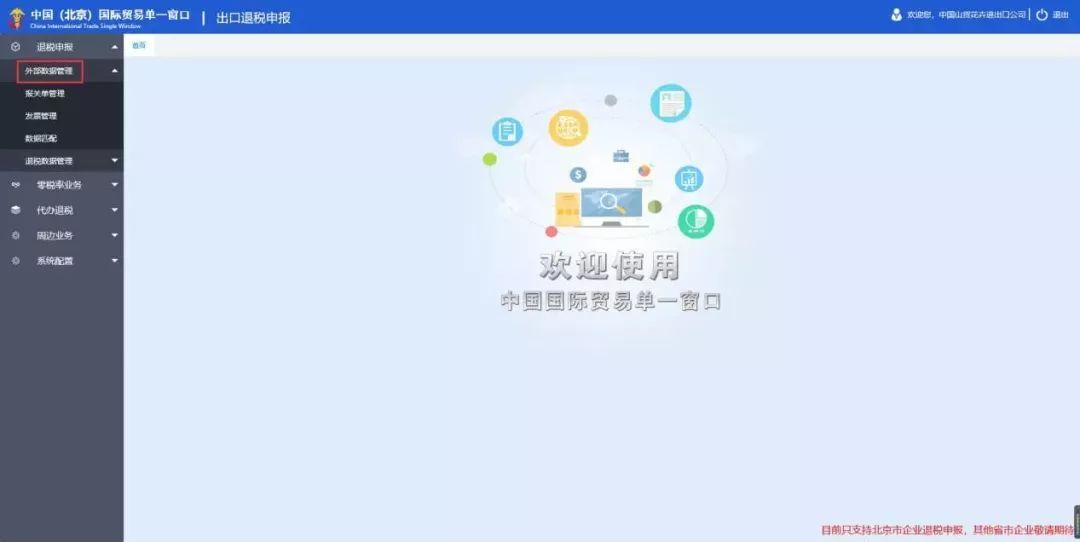
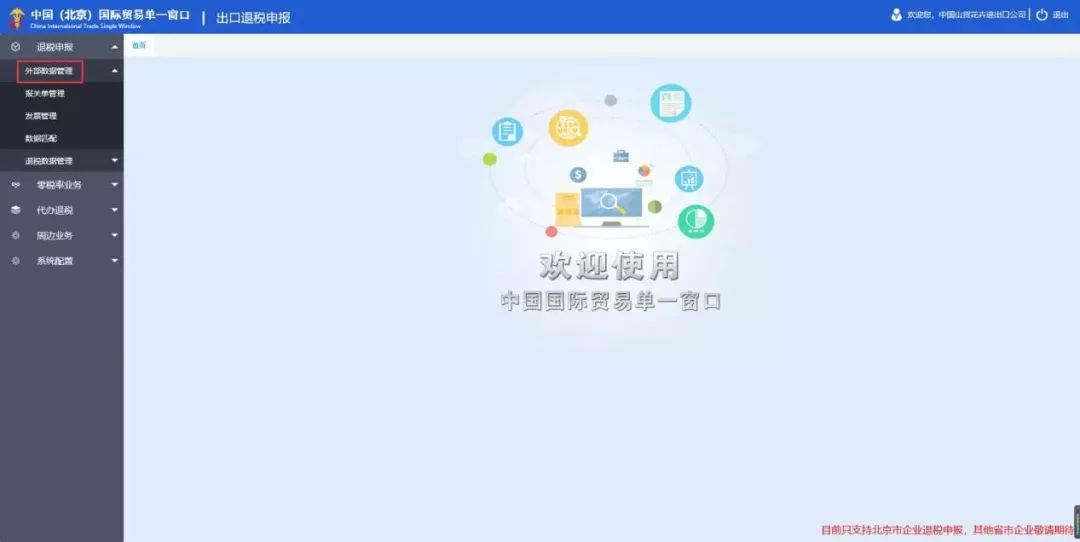
“外部数据管理”模块中包括“报关单管理”、“发票管理”和“数据匹配”三个功能模块。
2.1.1 报关单管理
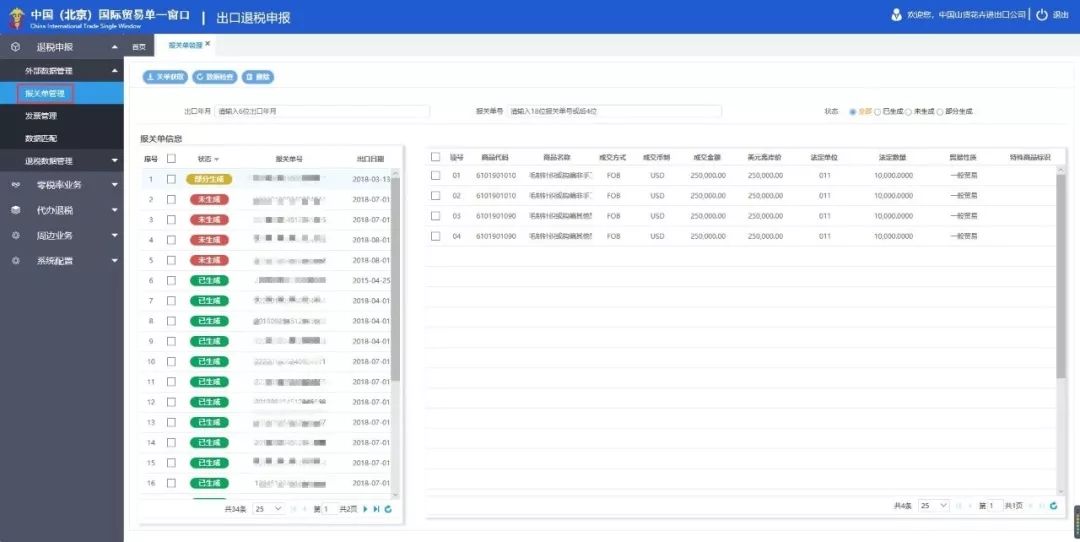
首先点击“报关单管理”模块。
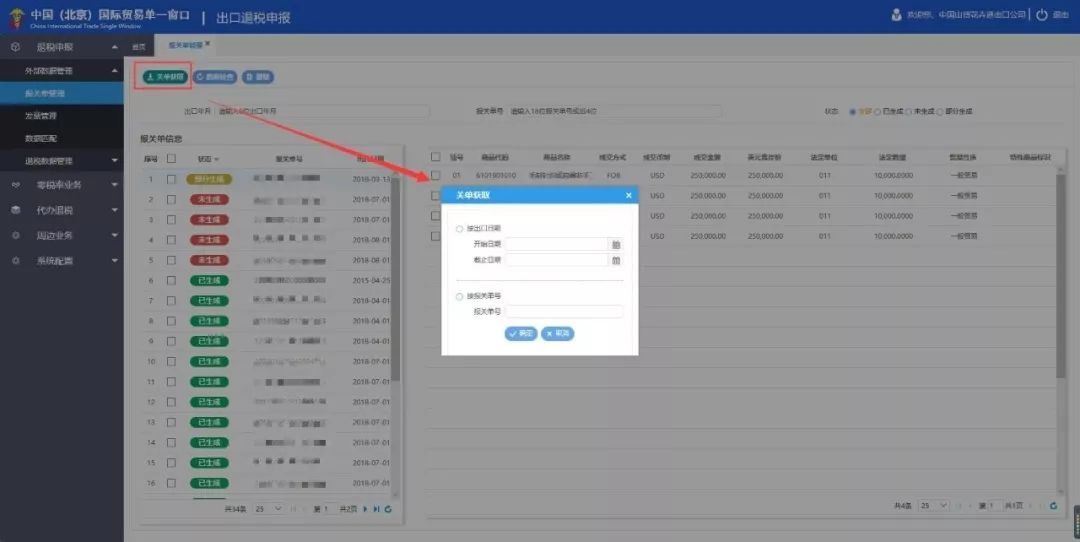
点击“关单获取”下载报关单。可以根据出口日期的开始和截止日期区间下载报关单,也可以按报关单号下载报关单。
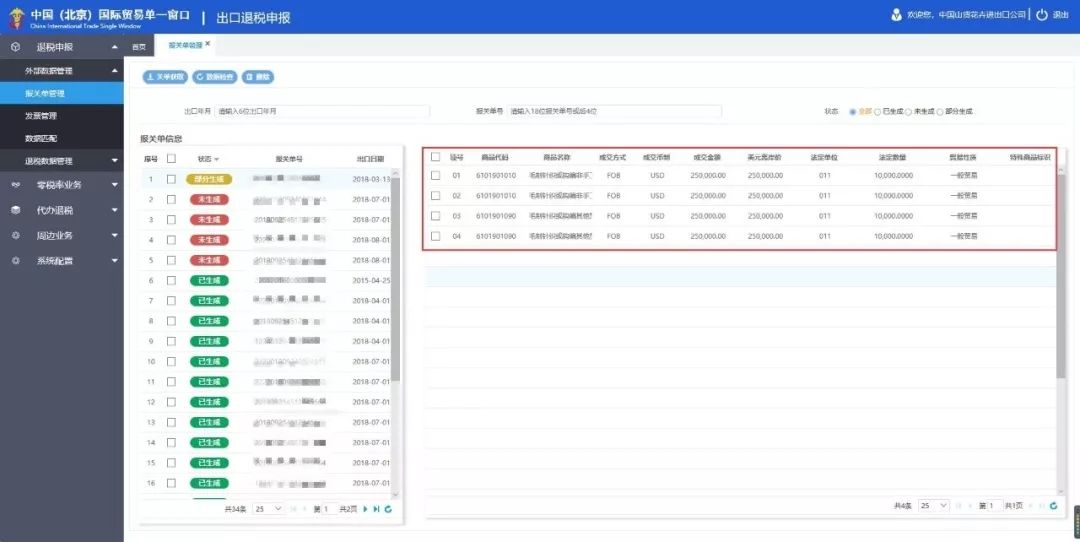
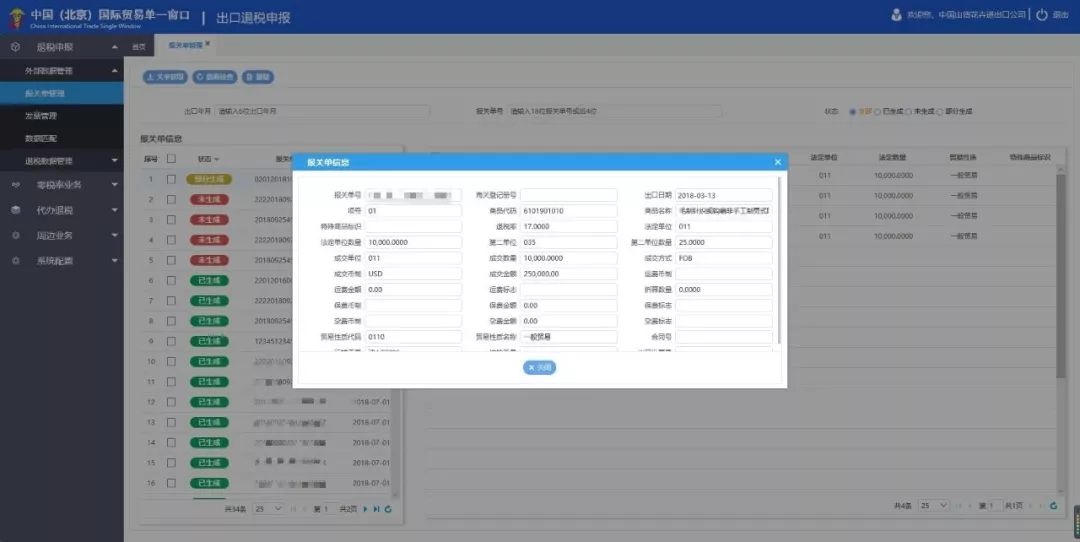
界面左侧的报关单信息中可以查看该报关单是否已经生成了退税申报数据。点击要查看的报关单可以在右侧看到该报关单中的商品信息,双击可以查看商品信息的明细。
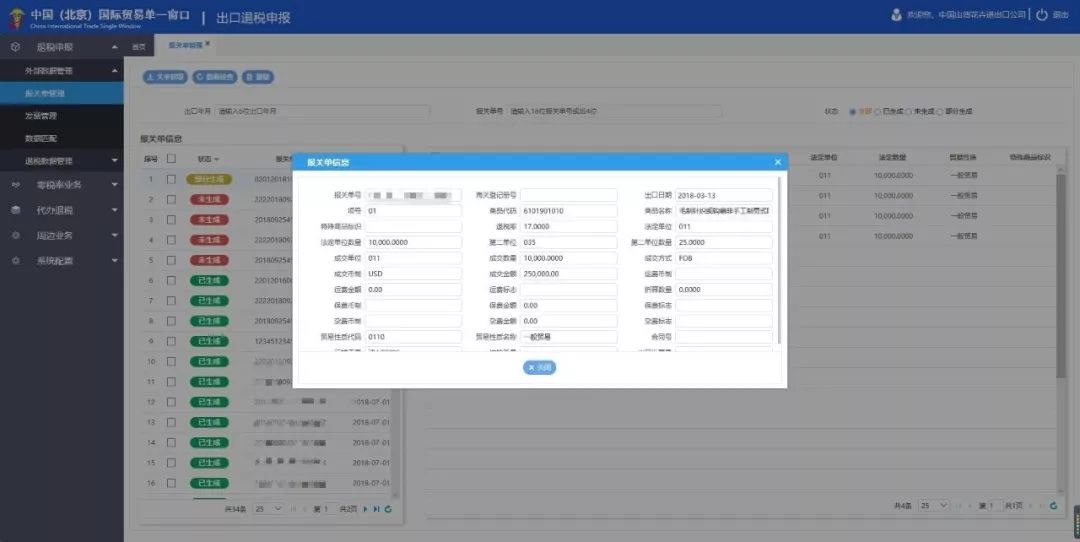
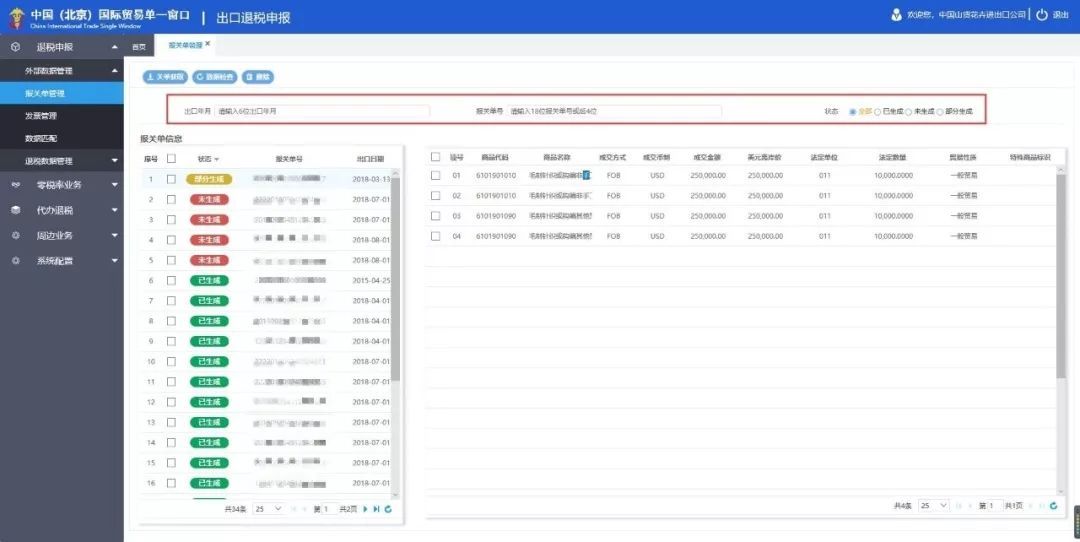
可以根据出口年月、报关单号和报关单状态查询报关单。
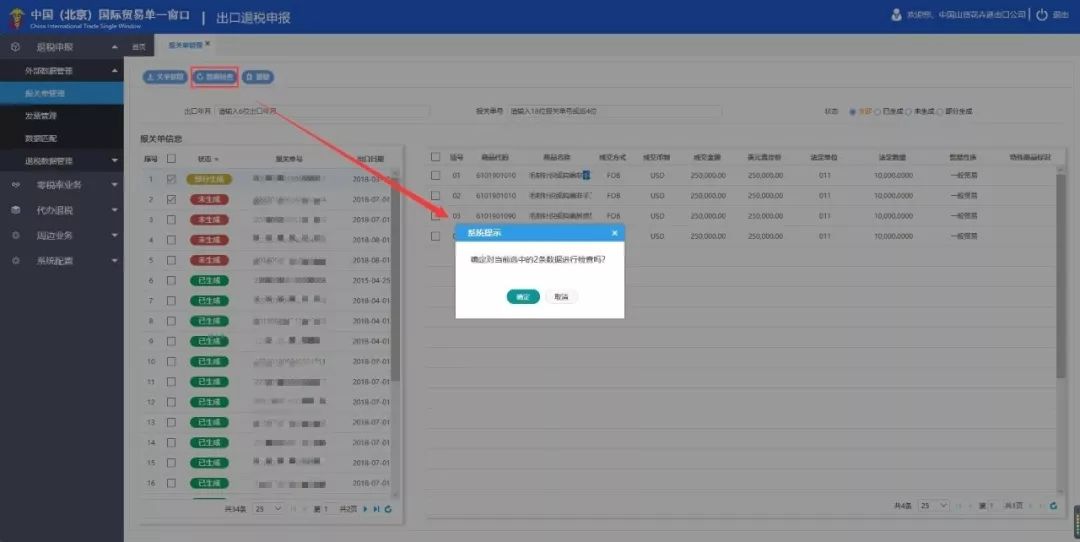
勾选将要申报的报关单,进行数据检查,该报关单数据检查无误可以进行申报退税。
2.1.2 发票管理
进入“发票管理”模块。
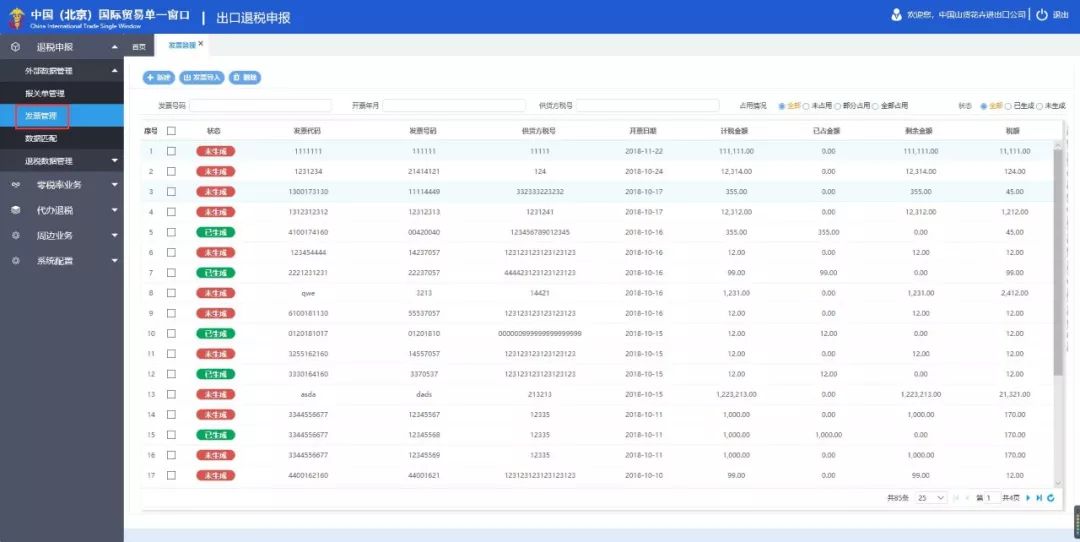
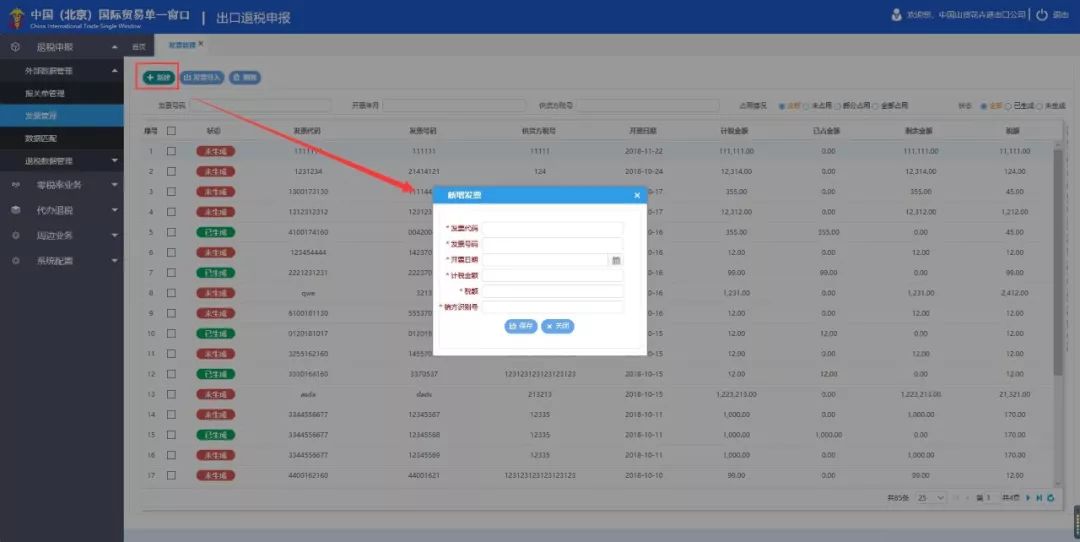
导入少量发票的话点击“新建”可以手动单张添加发票信息,录入该张发票信息后点击保存该发票信息则添加完毕。
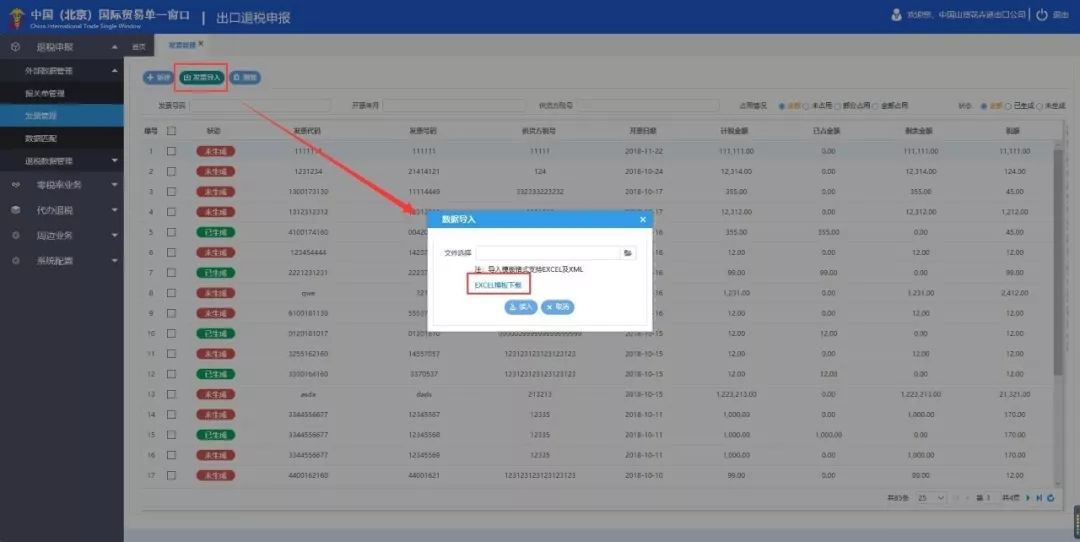
需要批量导入发票信息的话,点击“发票导入”可以下载导入发票信息的Excel格式的模板。
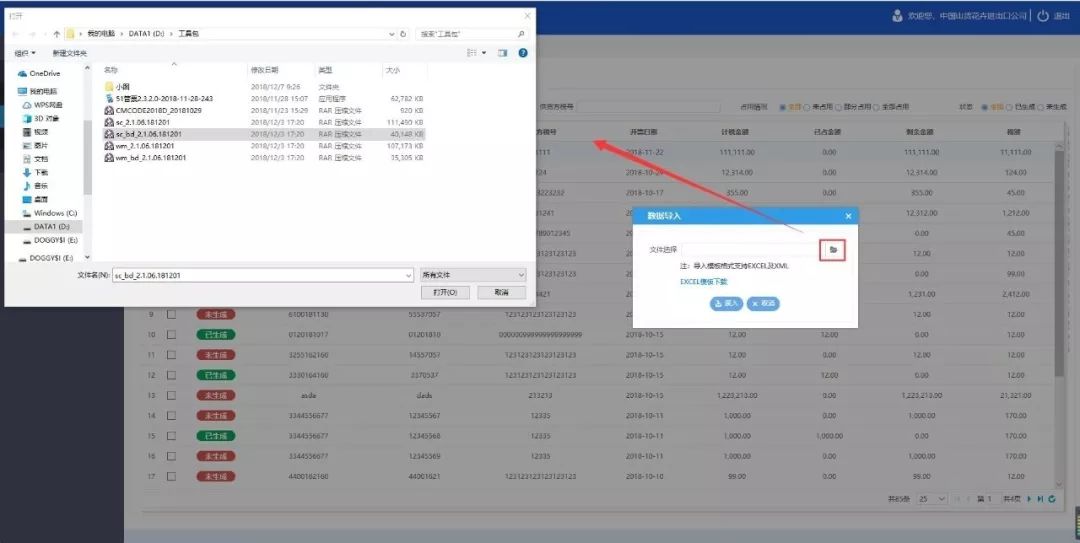
在Excel模板中填写发票信息完毕后,在发票导入中的文件选择中选择该文件读入发票信息。同时该系统也支持导入其他认证系统导出的XML格式的发票。
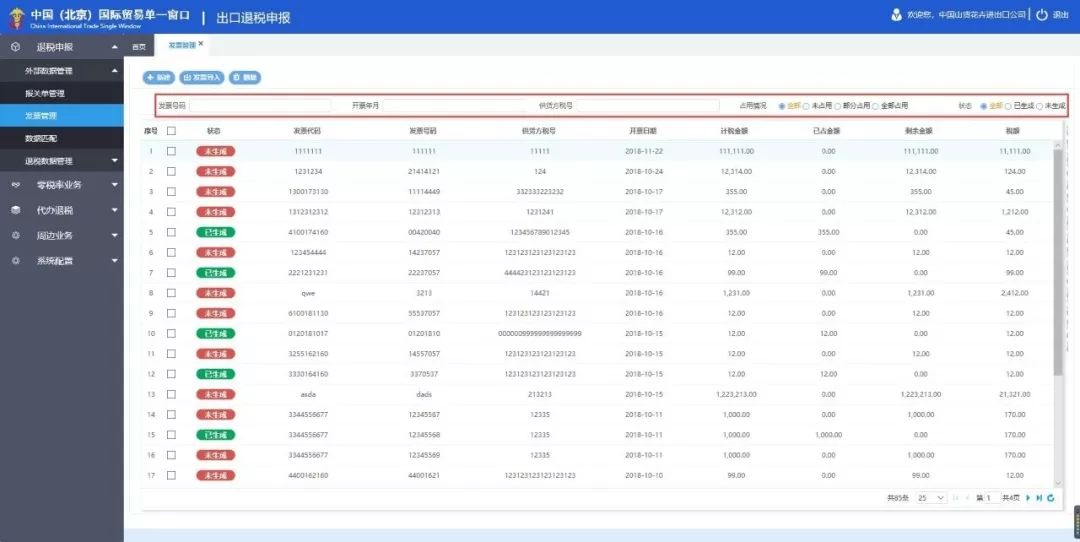
可以根据发票号码、开票年月和供货方税号以及发票状态查询发票。
2.1.3 数据匹配
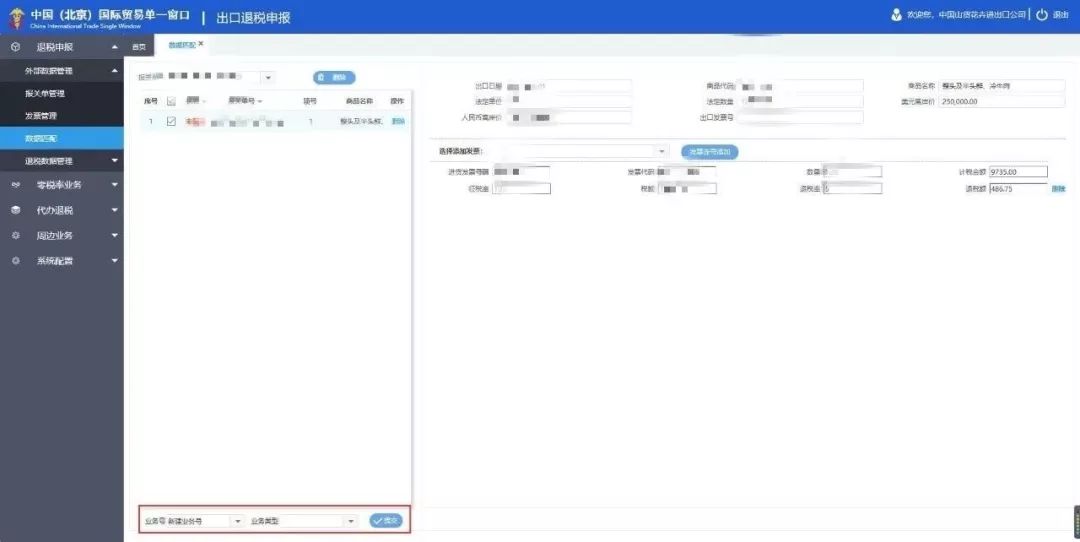
完成报关单和发票的信息下载和导入后,进入数据匹配模块。
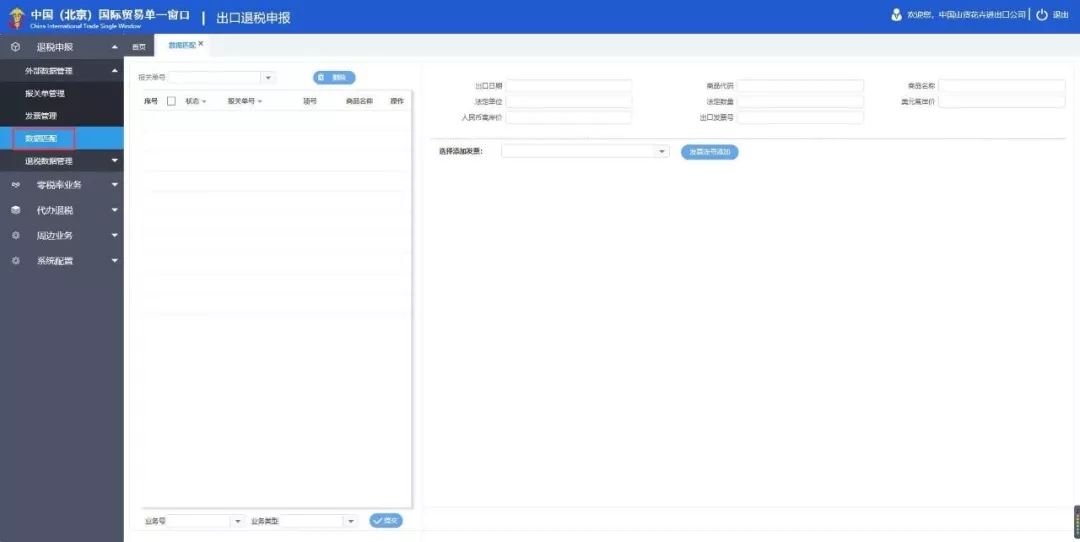
在左侧选择已经进行数据检查将要申报的报关单。可以输入报关单号后四位或点击下拉菜单选择。
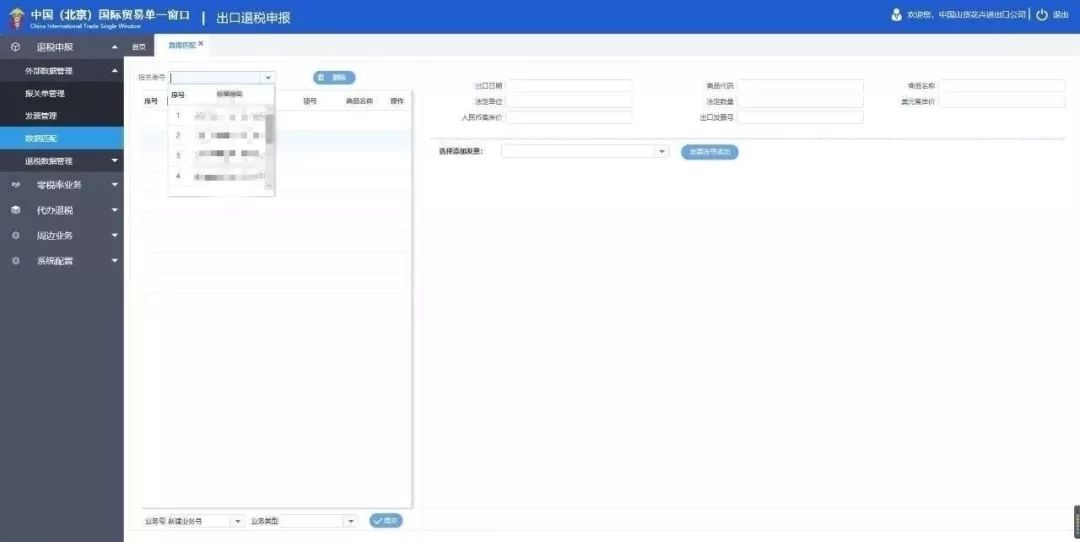
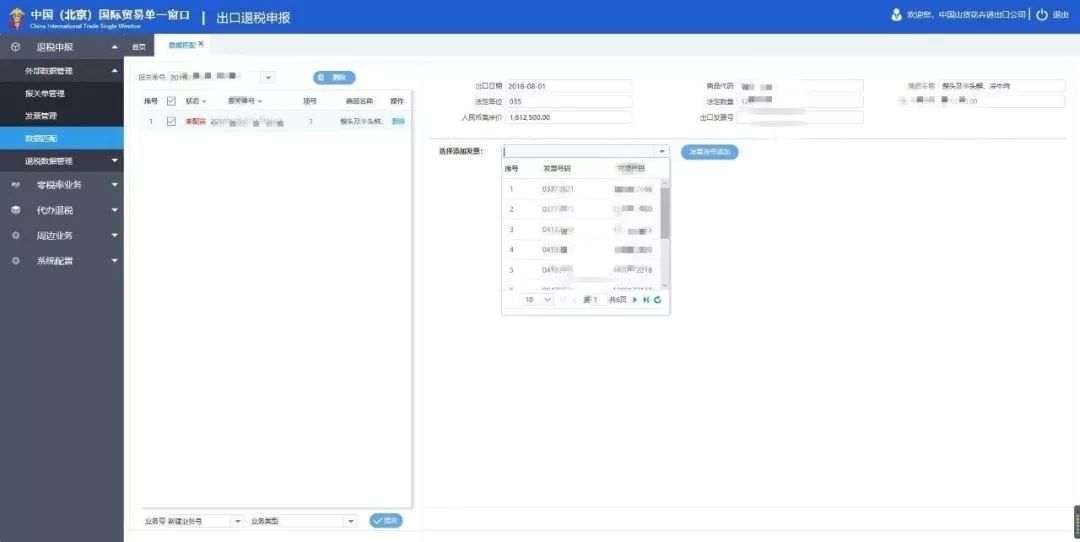
随后在右侧添加对应的发票。
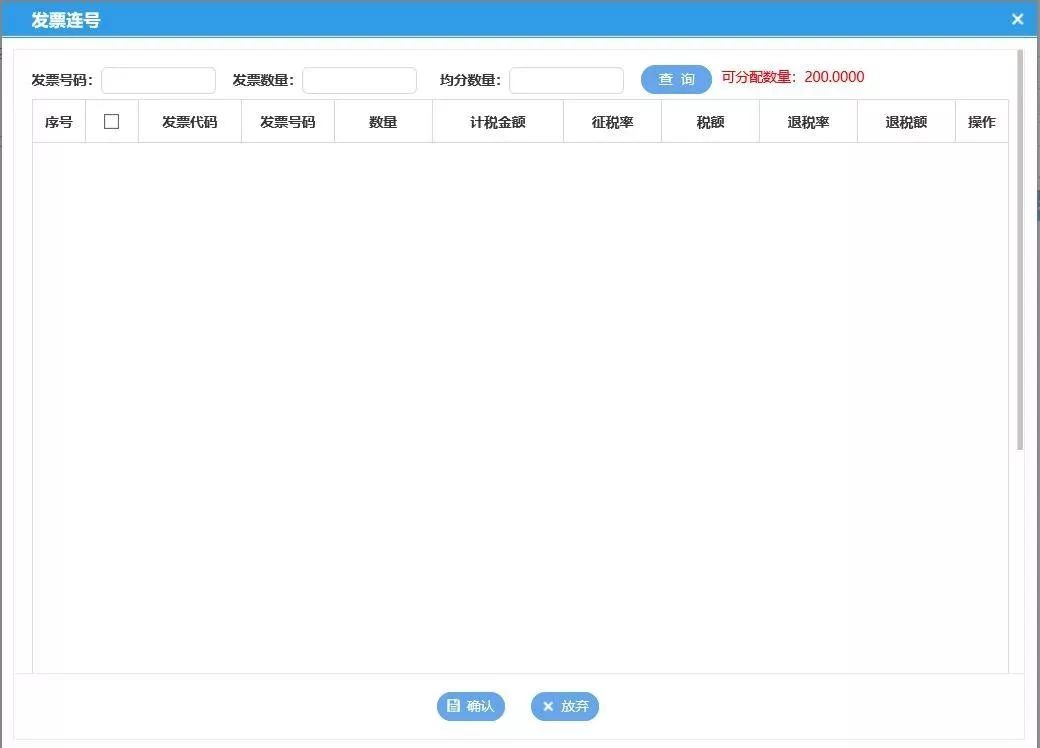
如果有连号的发票可以点击发票连号添加。
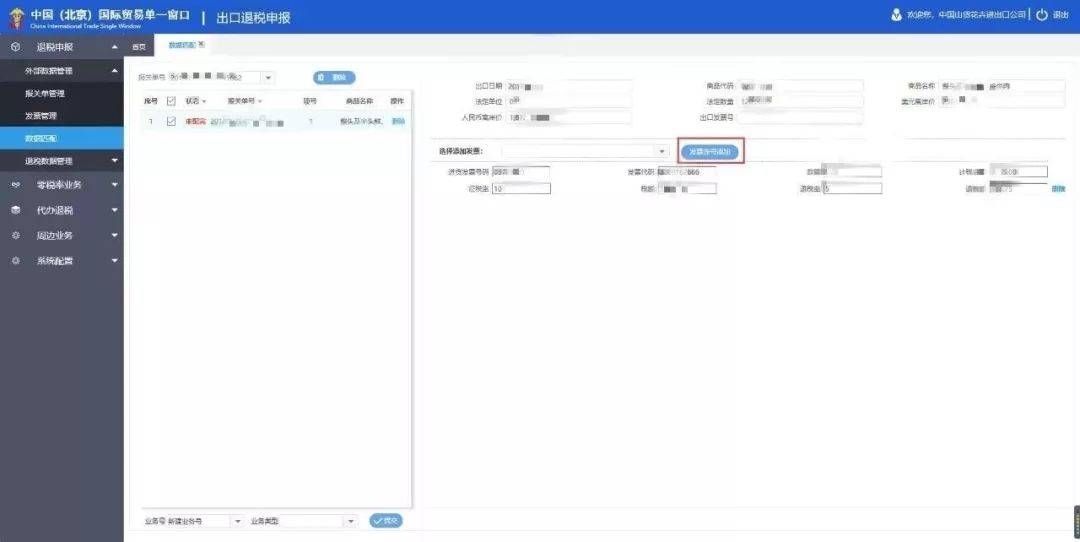
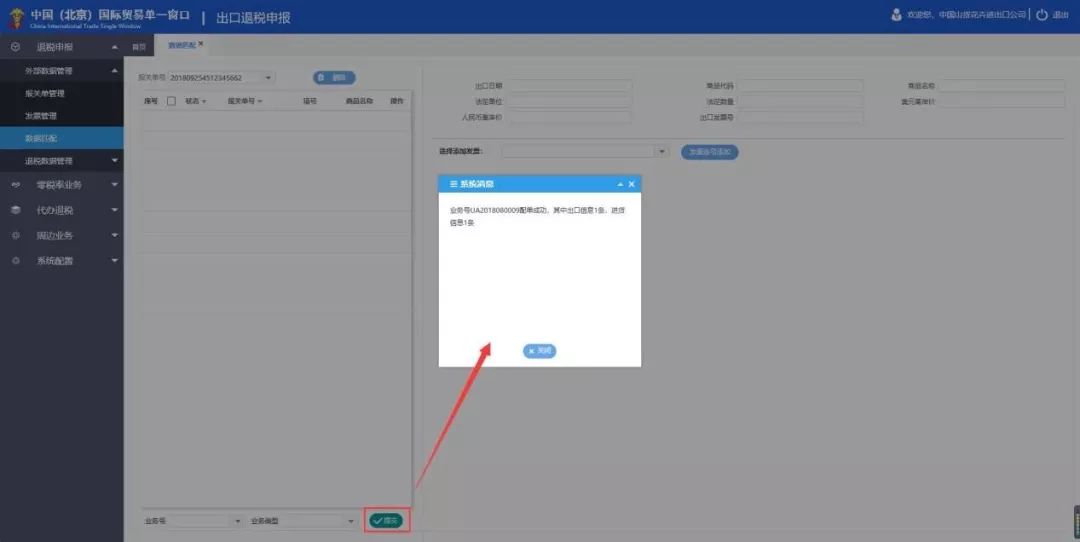
添加对应的发票后在左下角设置业务号和选择业务类型,确认无误后点击提交。
2.2 退税数据管理
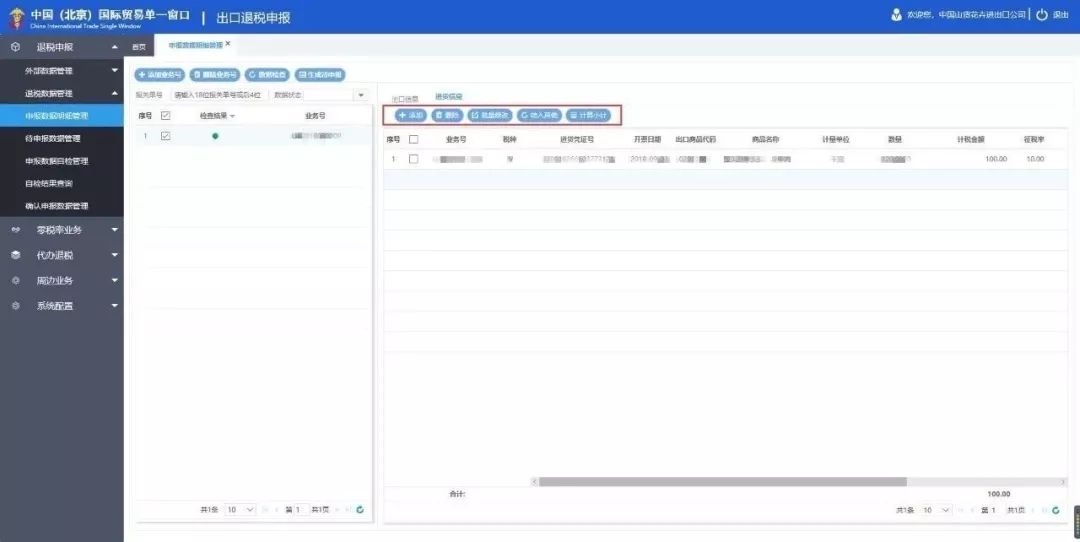
2.2.1 申报数据明细管理
点击退税数据管理,进入申报数据明细管理,已经提交的匹配数据会显示在申报数据明细管理界面,如图:
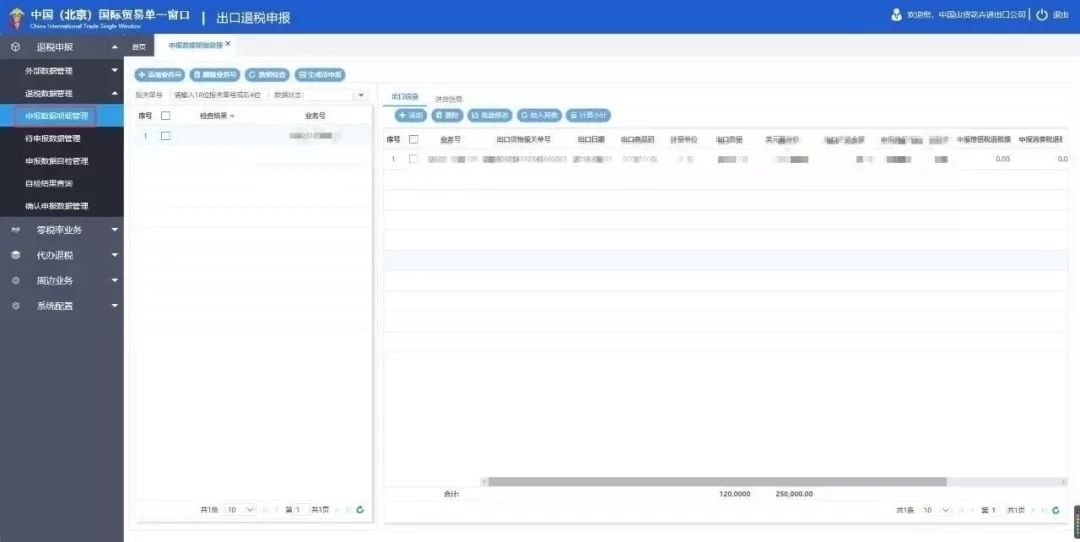
在申报数据明细管理中,可以根据报关单号和数据状态查询对应的匹配数据。
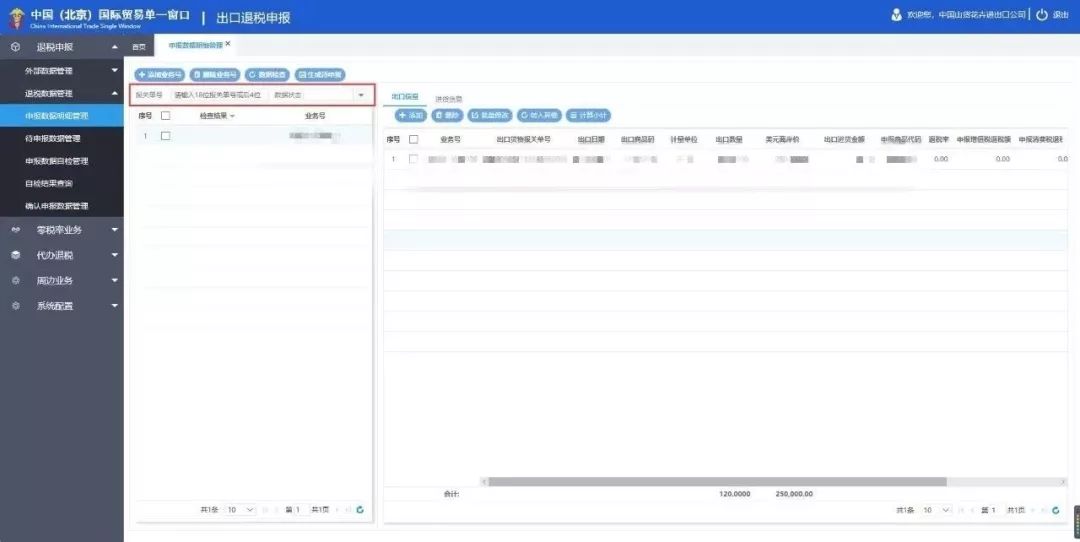
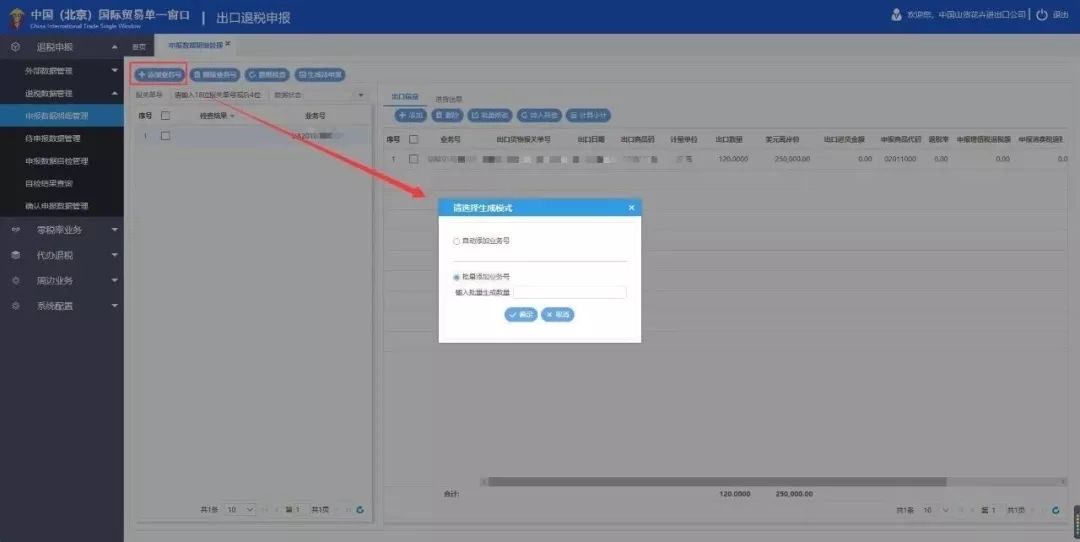
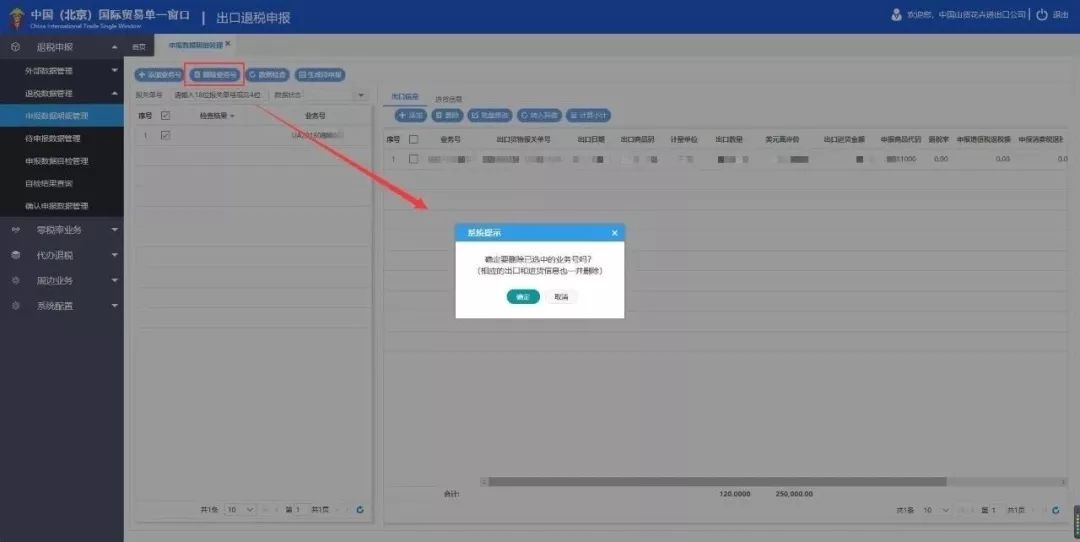
勾选不需要的数据点击删除业务号进行删除。
勾选数据点击数据检查。
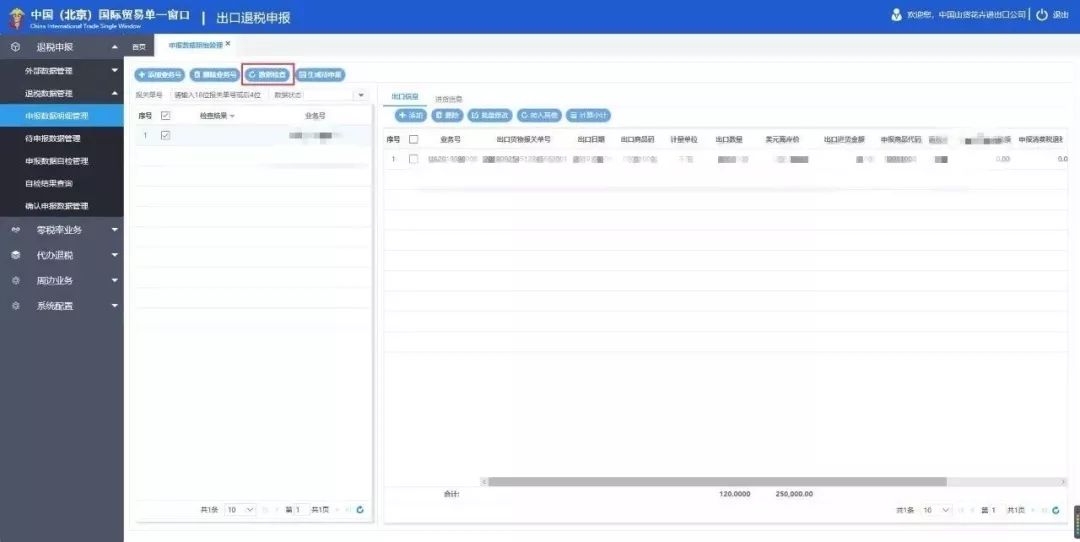
数据检查进行关联检查和换汇成本检查。
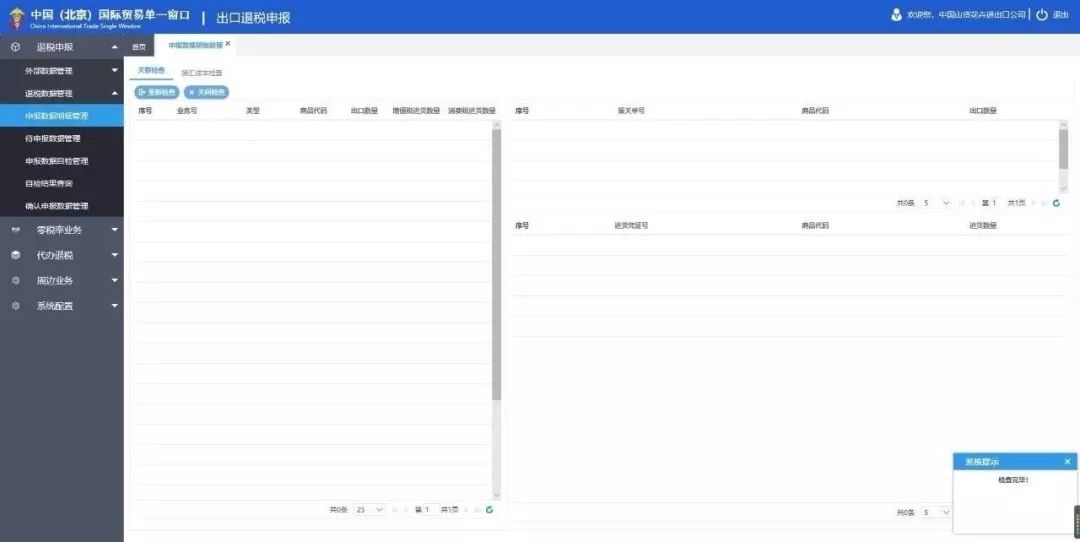
数据检查通过无提示,检查状态一栏标识为绿色。
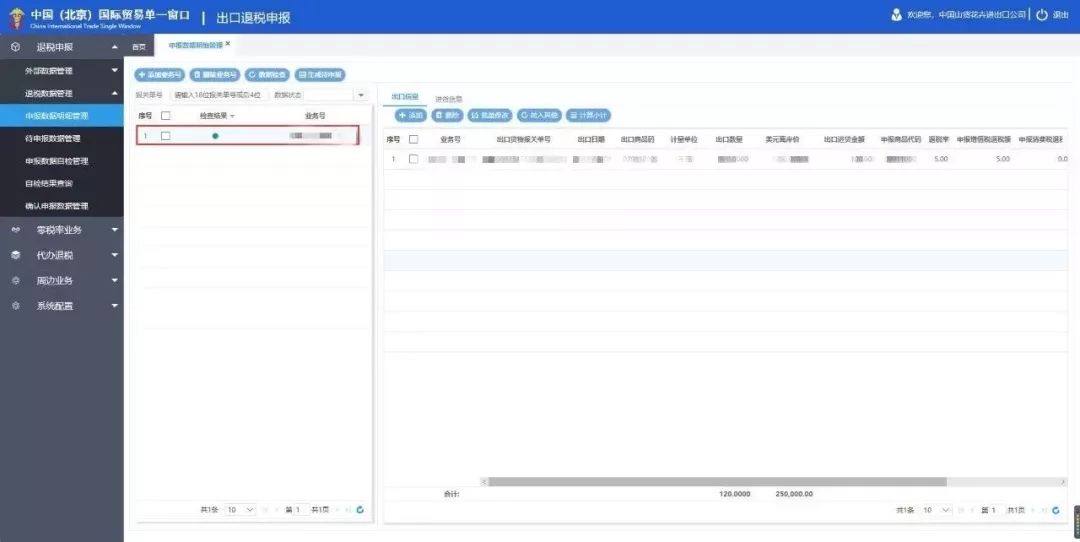
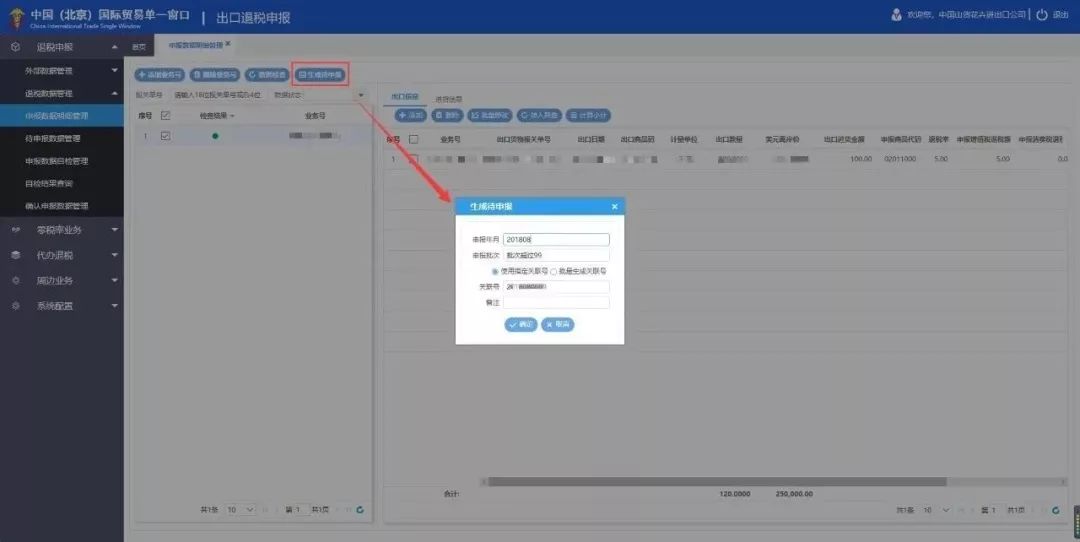
点击生成待申报按钮,设置申报年月批次和关联号,将申报数据转入待申报环节。
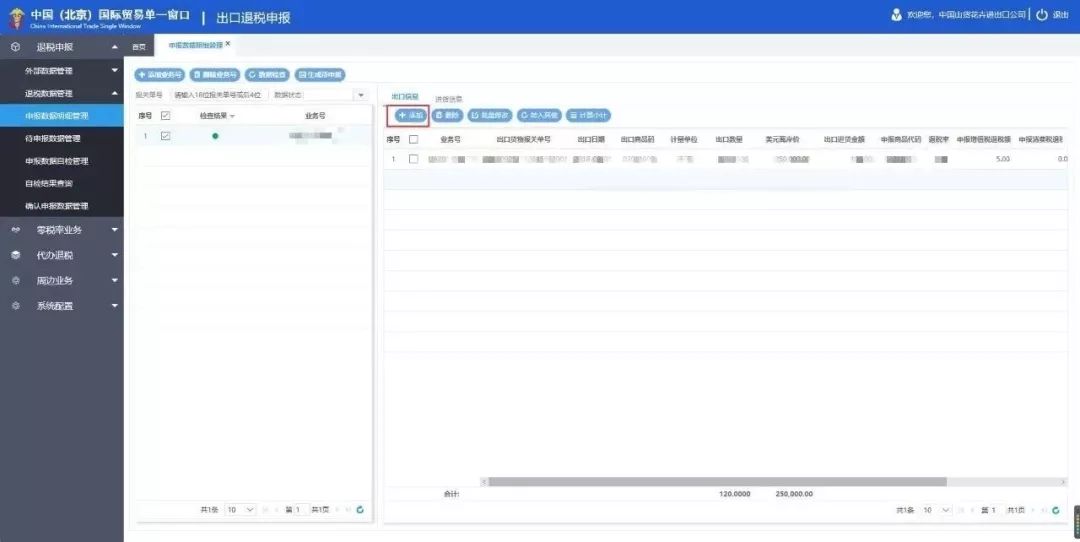
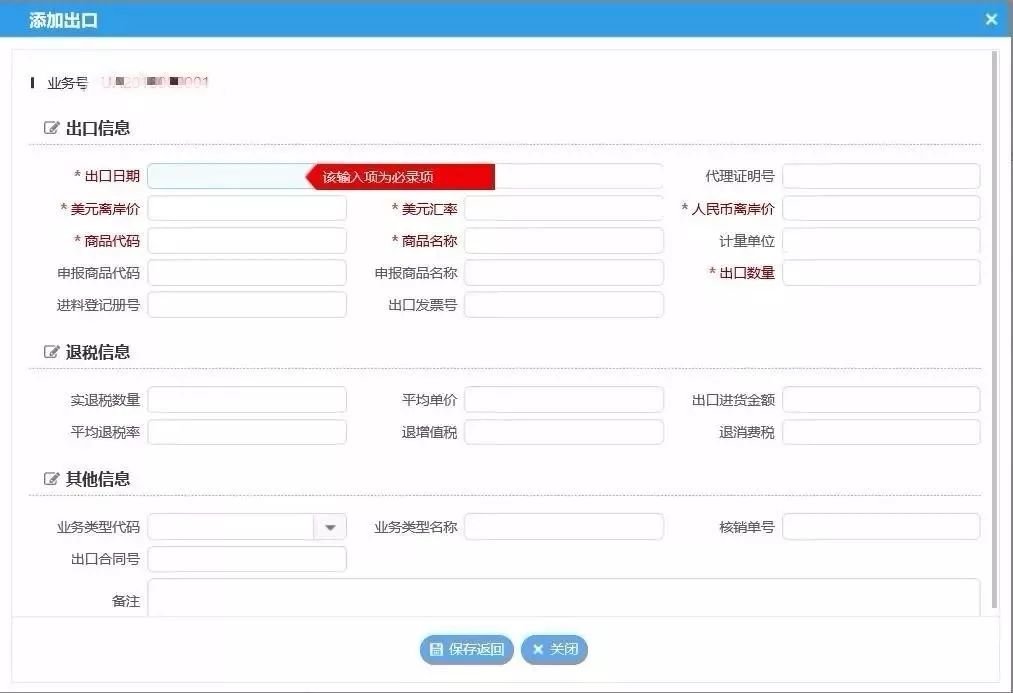
右侧出口信息中点击添加可以手动添加出口明细。
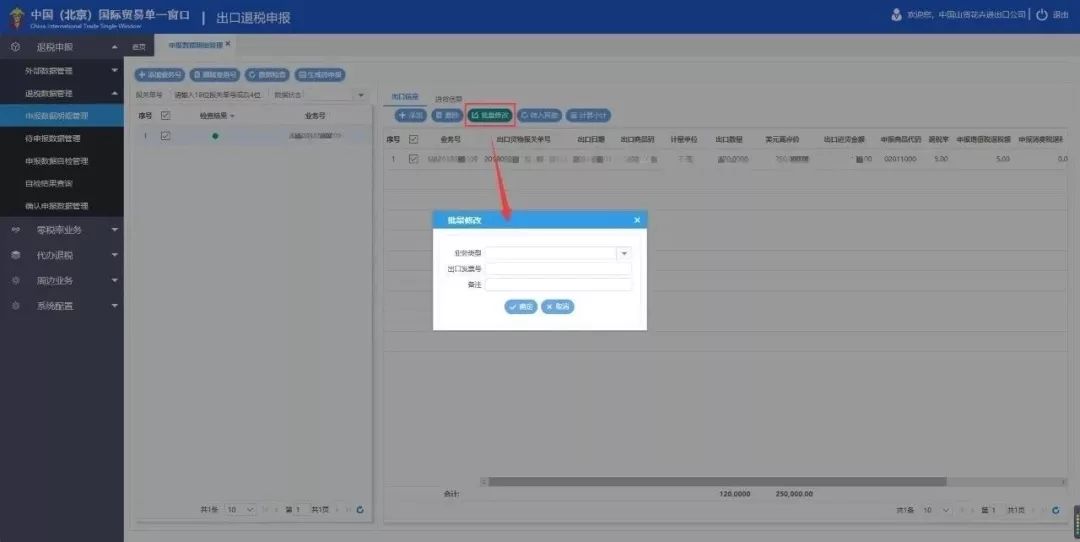
勾选后点击批量修改可以修改业务类型、出口发票号和备注。
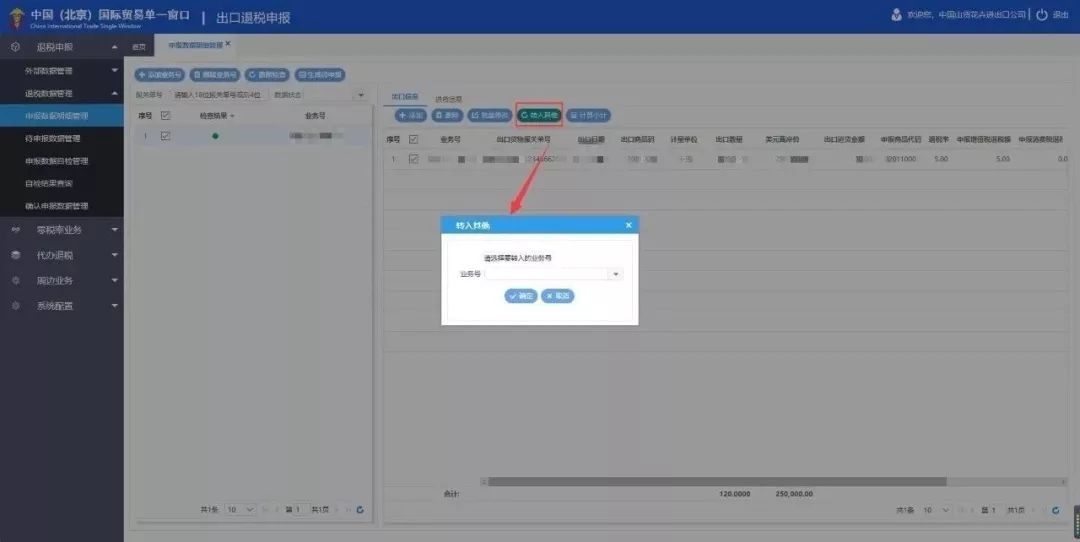
勾选后点击转入其他可以将该出口明细转入其他业务号。
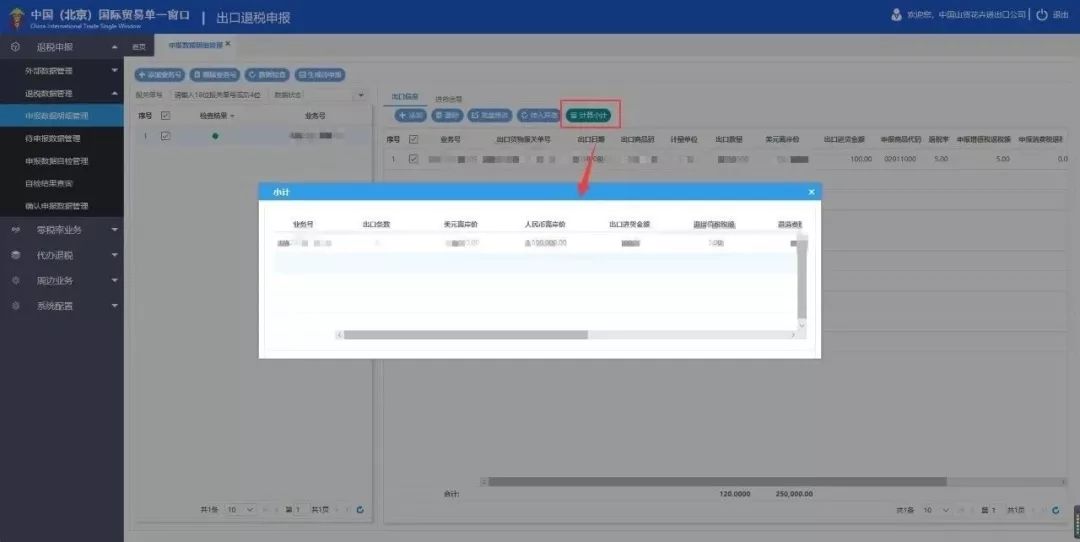
勾选后点击计算小计可以查看该条明细的数据。
进货明细中的数据查看和操作同上。
2.2.2 待申报数据管理
点击退税数据管理,进入待申报数据管理,已经提交的数据会显示在待申报数据管理界面。如图:
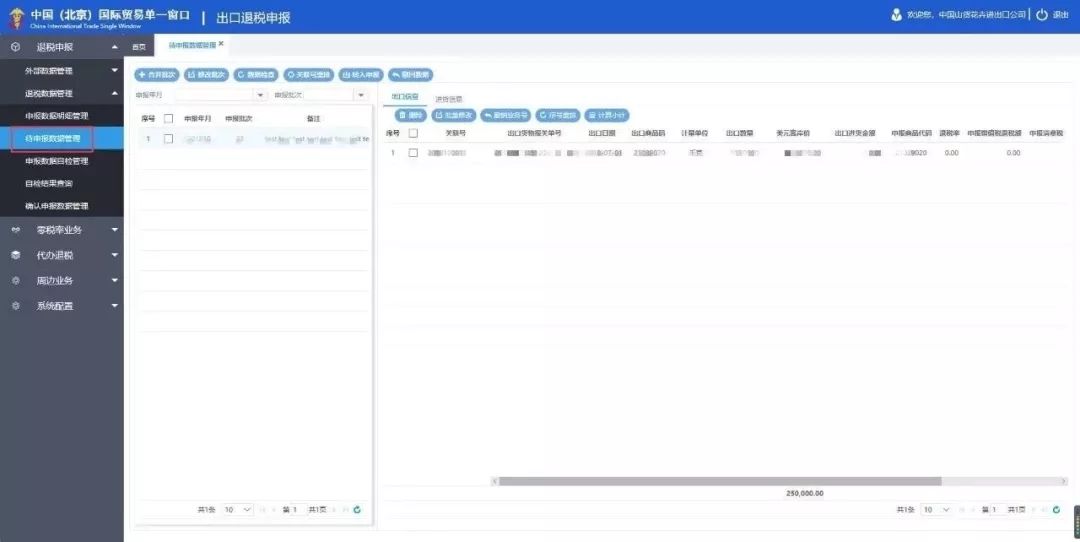
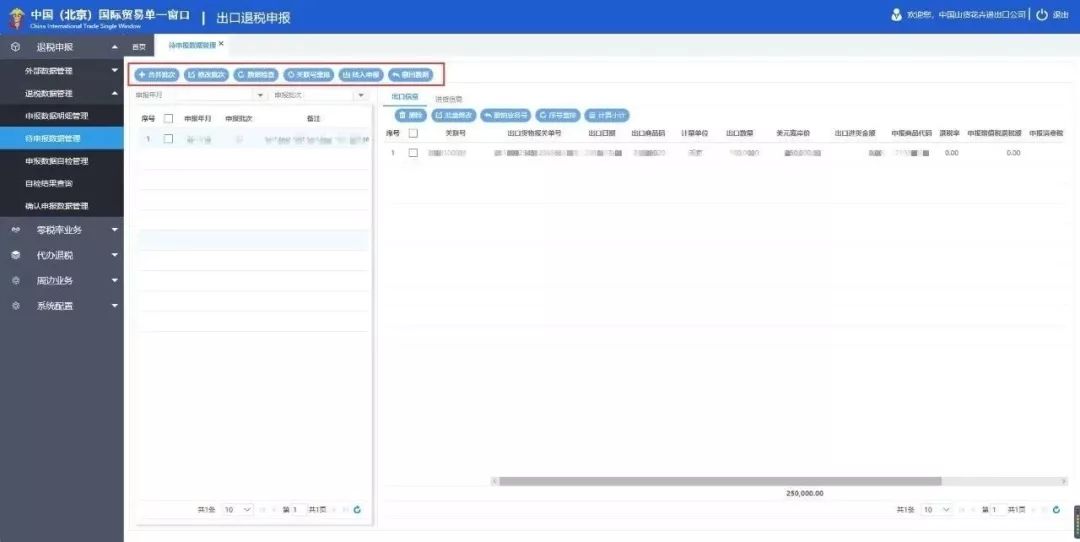
进入待申报数据管理模块,可以对同一申报年月的数据进行批次合并或修改批次;点击数据检查按钮可以对选中的年月批次数据进行数量关联检查和换汇成本检查;确认无误点击转入申报按钮将申报数据转入自检申报环节;撤销数据把待申报数据撤回申报数据明细管理。如图:
右侧出口明细和进货明细的数据查看和操作同申报数据明细管理。
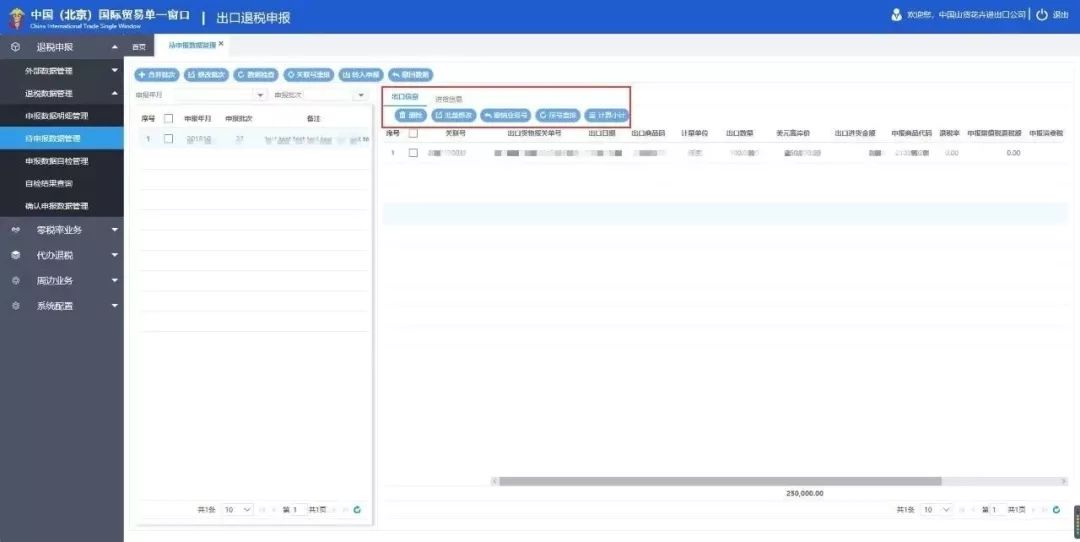
图 出口明细和进货明细的数据查看和操作同上
2.2.3 申报数据自检管理
点击退税数据管理,进入申报数据自检管理,已经提交的数据会显示在申报数据自检管理界面。如图:
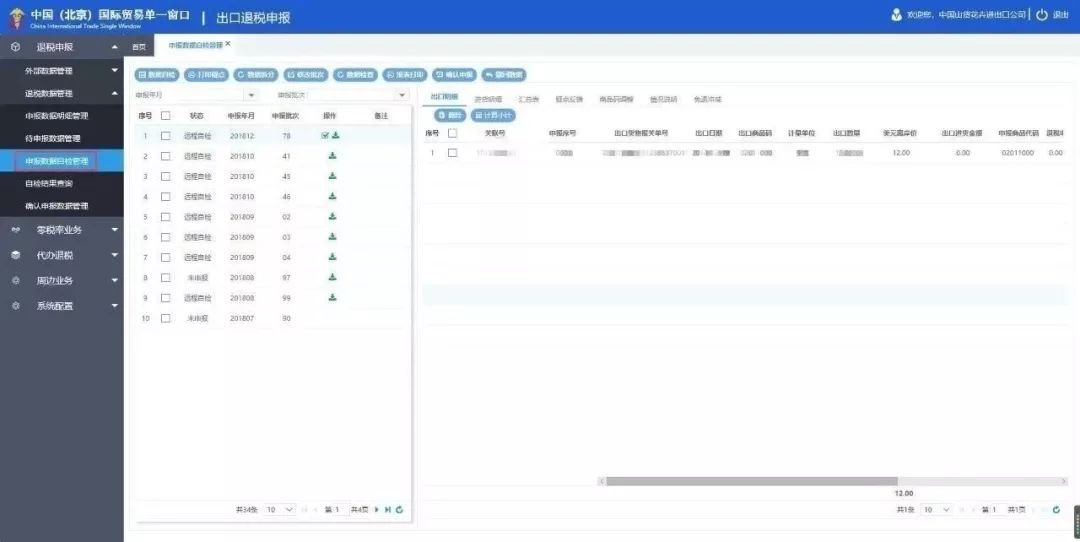
进入申报数据自检管理,勾选要申报的数据点击数据自检,选择本地申报可以选择路径在本地生成电子数据包,选择远程自检可以生成申报数据并直接上传到网报系统进行自检。
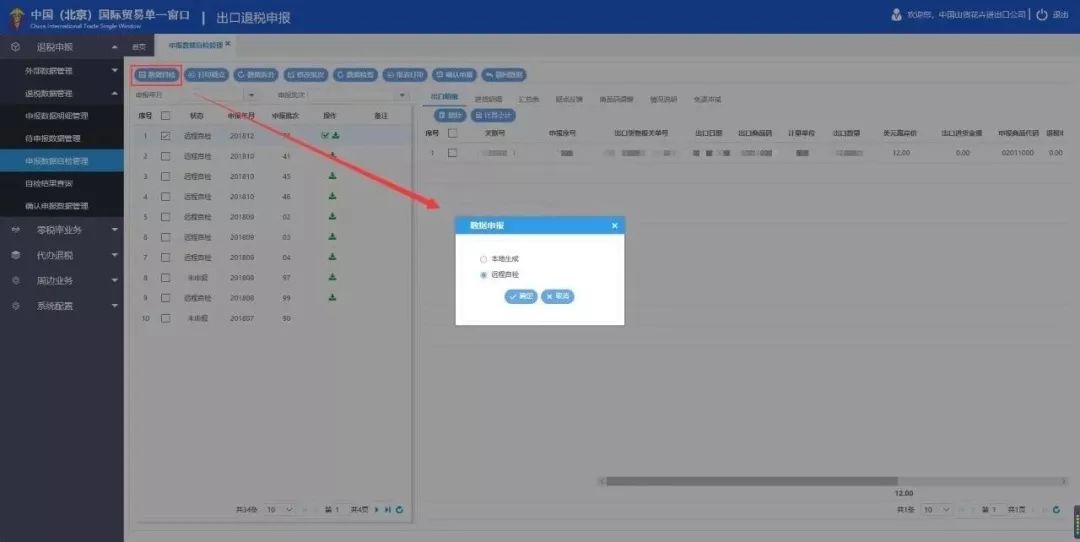
注:生成申报数据时,无纸化企业需要连接税盘。
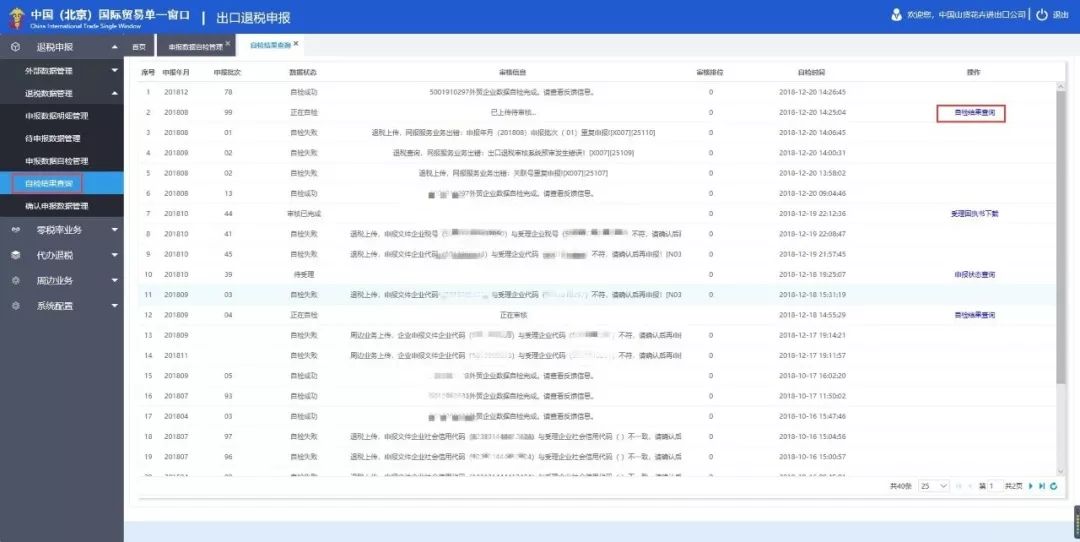
自检数据上传后在自检结果审查模块找到该条数据,点击自检结果查询即可刷新自检审核状态并自动将疑点反馈读入系统中。
回到申报数据自检管理模块,选中自检完成的数据可以在右侧查看疑点反馈。
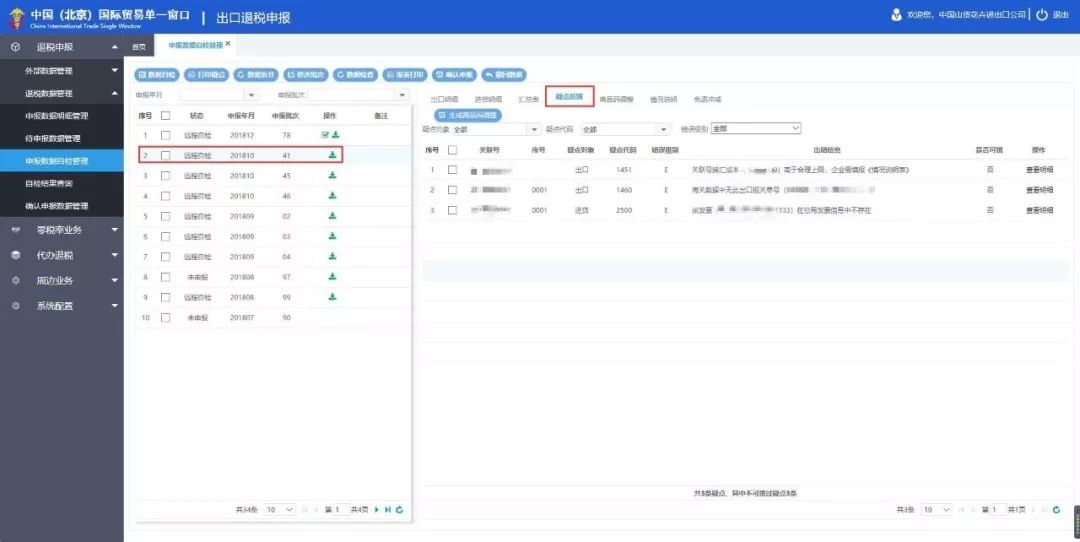
可以在右侧双击打开并直接修改出口明细和进货明细中的数据。
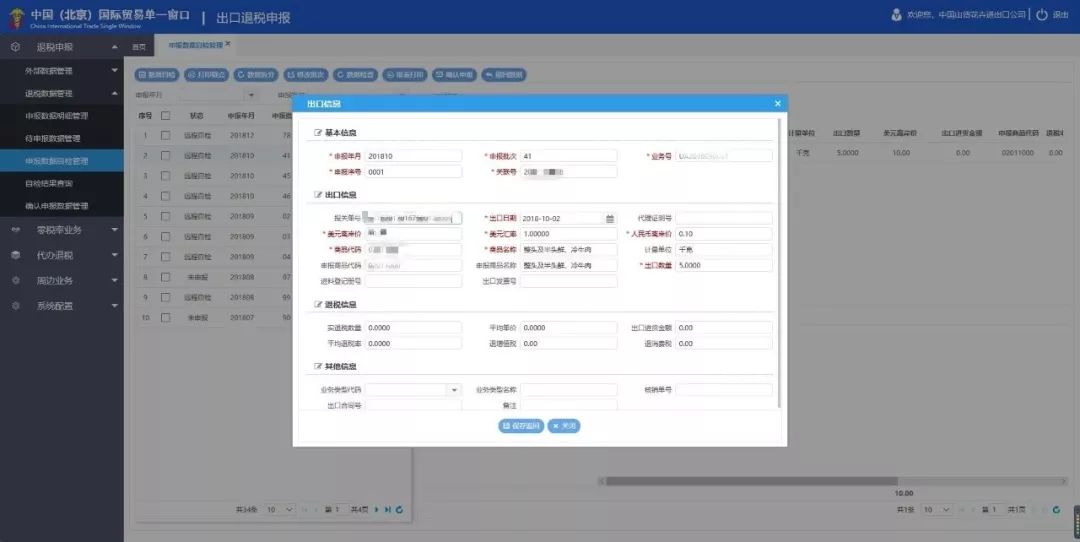
也可以对应疑点添加情况说明、商品码调整表等表单。选中要添加的表单点击添加即可。
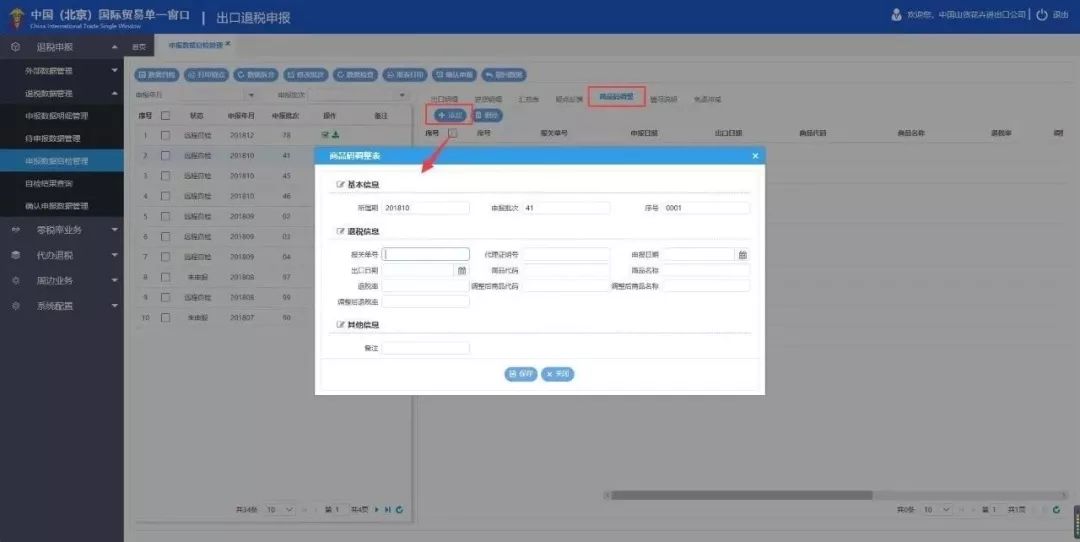
修改数据后在汇总表模块中点击重新生成汇总可以自动生成新的汇总表。
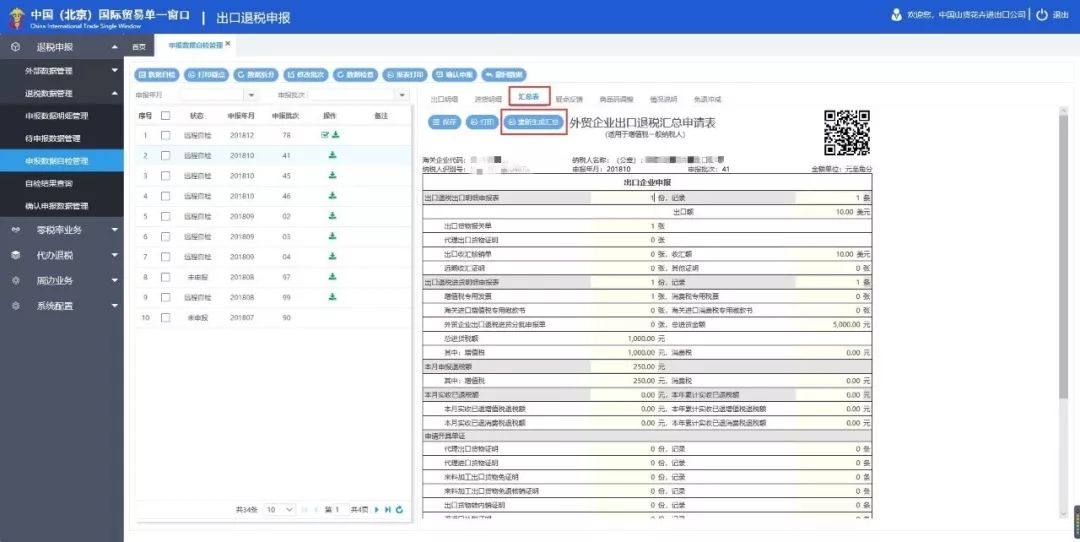
同时也可以选中数据进行数据拆分、批次修改等操作。数据修改无误后重新进行数据检查,然后进行重新自检申报。自检无疑点后选中数据点击确认申报即可转正式申报并打印纸质报表。
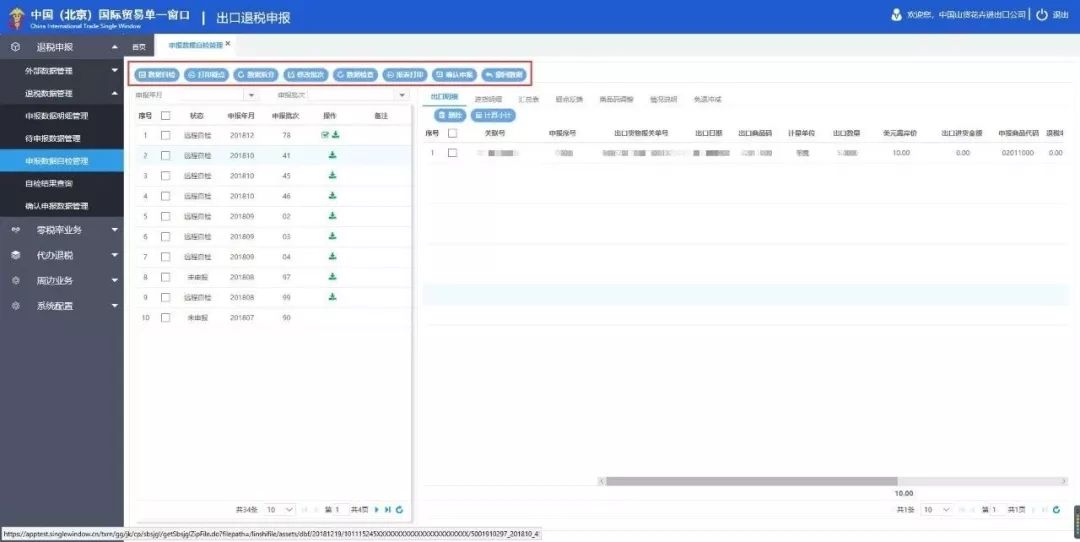
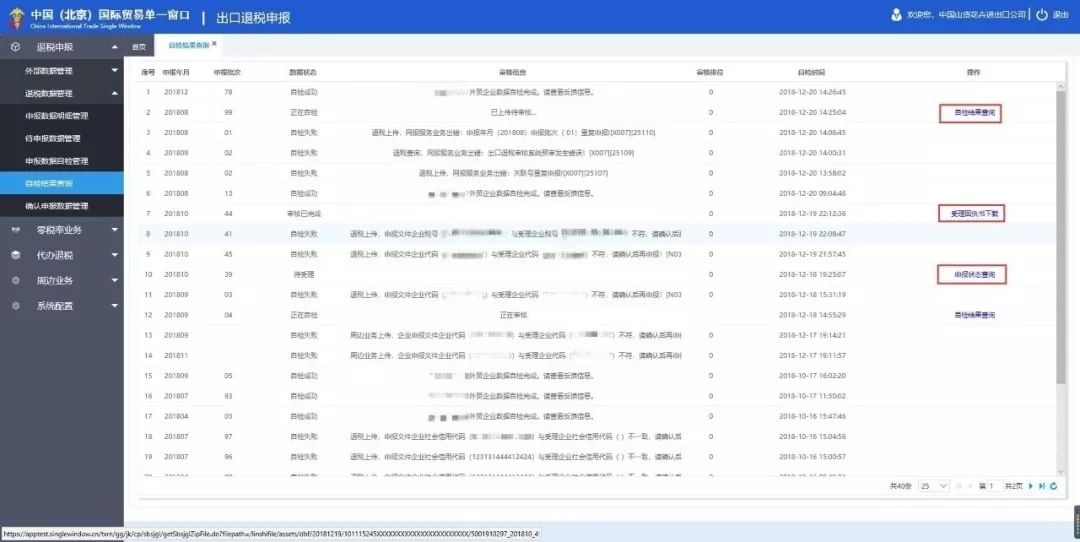
2.2.4 自检结果查询
点击退税数据管理,进入自检结果查询,可以查看自检申报的数据和正式申报数据的审核状态并接收相关反馈。自检的数据点击自检结果查询可以刷新审核状态并自动读入疑点反馈;正式申报的数据点击申报状态查询可以刷新审核状态,并在正式申报审核通过后该按钮变为受理回执书下载按钮,可以下载税务事项通知书。
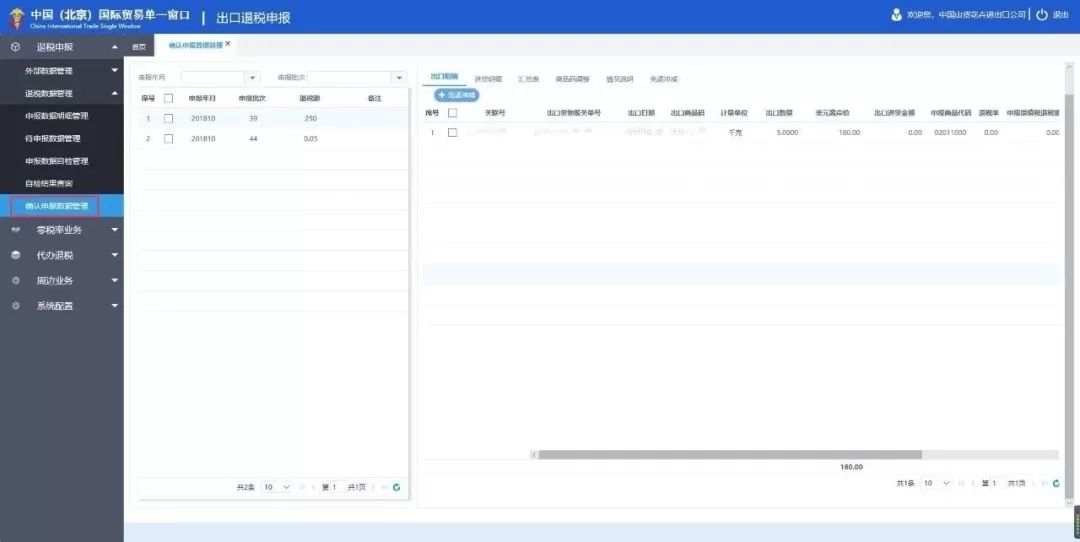
2.2.5 确认申报数据管理
点击退税数据申报,进入确认申报数据管理,可以查看正式申报的数据。如图:
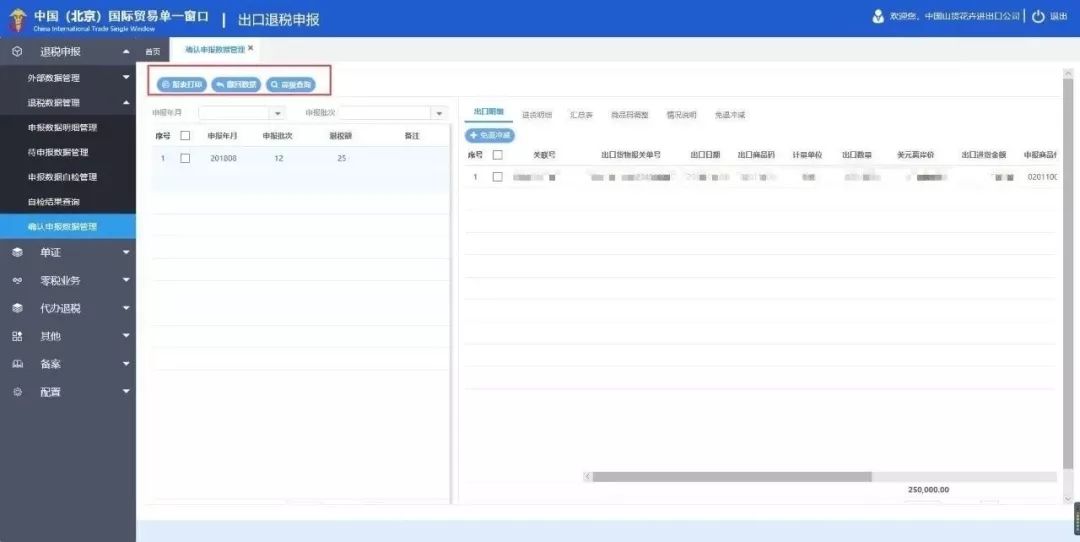
转正式申报后的数据,税务局将接收企业的申报数据进行审核。点击报表打印打印相关的纸质资料;高级筛选根据报关单号和关联号简便筛选。如图:
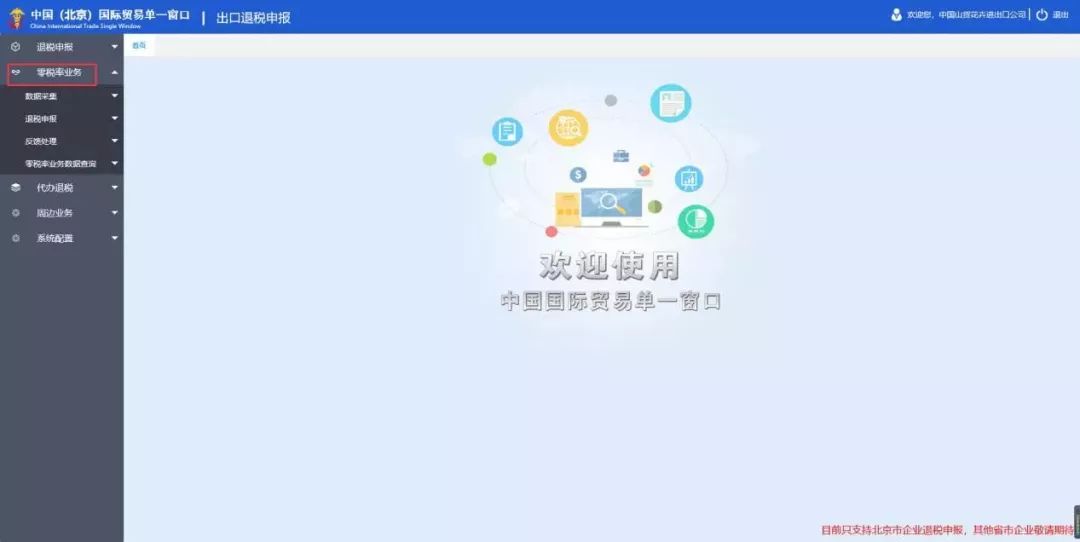
第三章 零税率业务
“零税率业务”模块中包含“数据采集”、“退税申报”、“反馈处理”、“零税率业务数据查询”四个模块。
3.1 数据采集
3.1.1 零税出口/进货采集
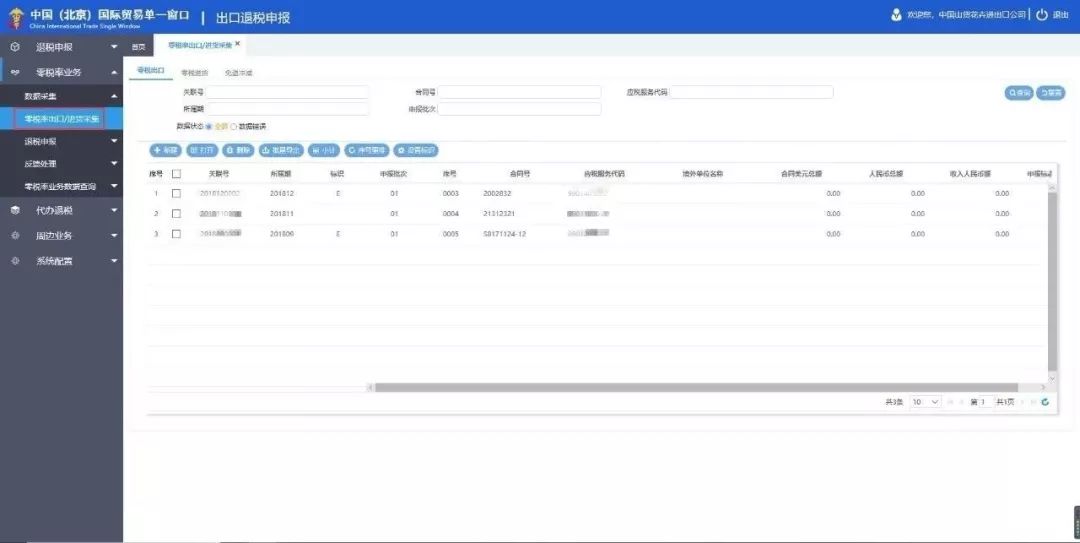
采集零税出口/进货的相关数据,点击“数据采集”中的“零税出口/进货采集”模块。
3.2 退税申报
3.2.1 数据检查
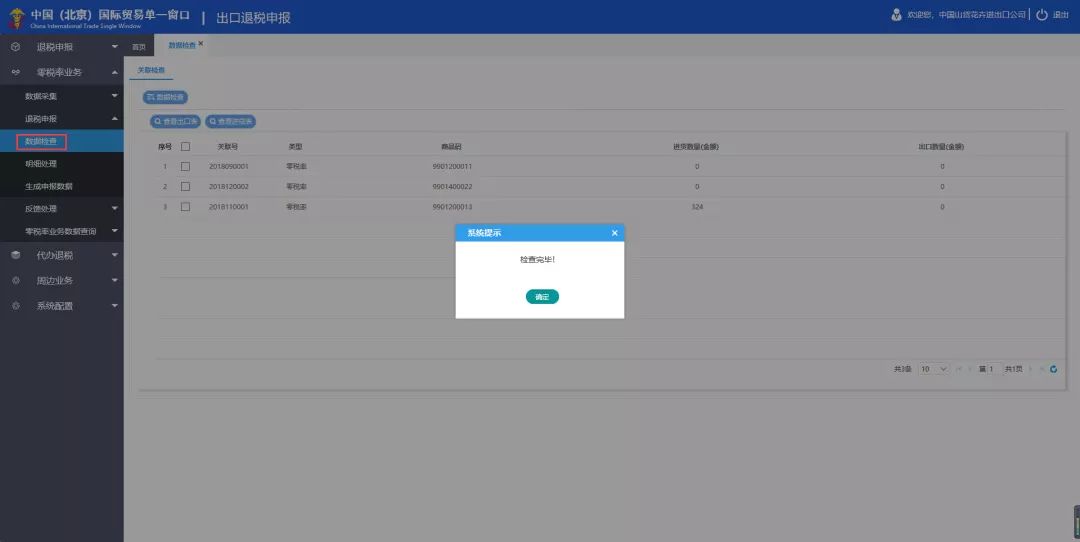
对退税数据进行数据检查,点击“退税申报”中的“数据检查”模块。
3.2.2 明细处理
对数据明细进行处理,点击“退税申报”中的“明细处理”模块。
3.2.3 生成申报数据
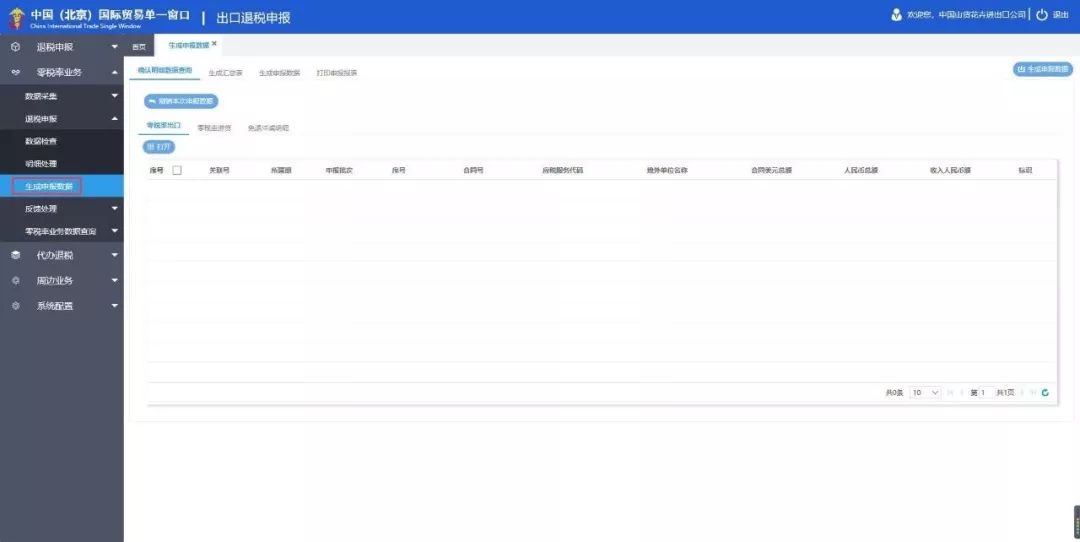
生成零税申报数据,点击“退税申报”中的“生成申报数据”模块。
3.3 反馈处理
3.3.1 反馈信息处理
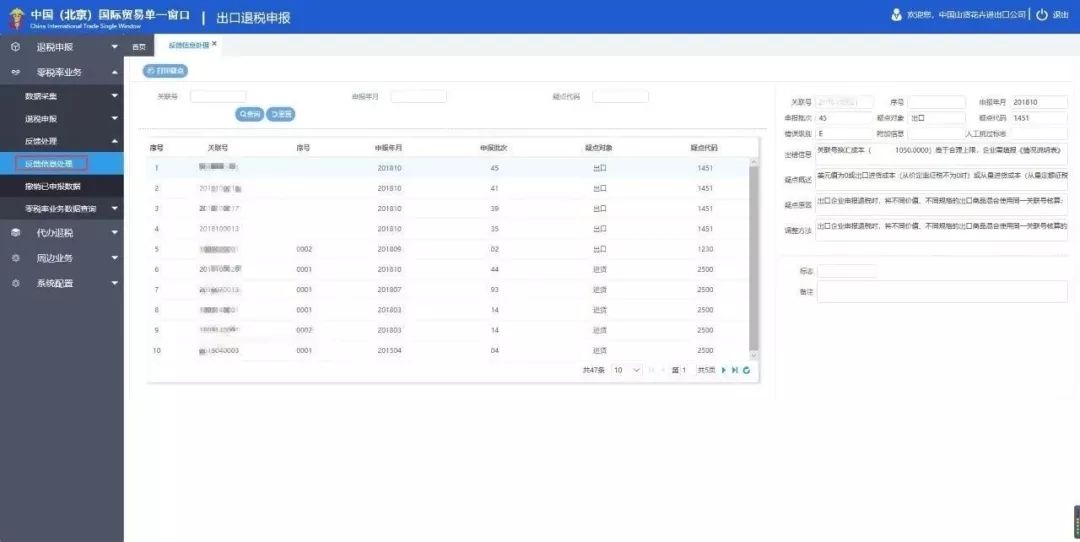
查看申报数据的疑点反馈,点击“反馈处理”中的“反馈信息处理”模块。
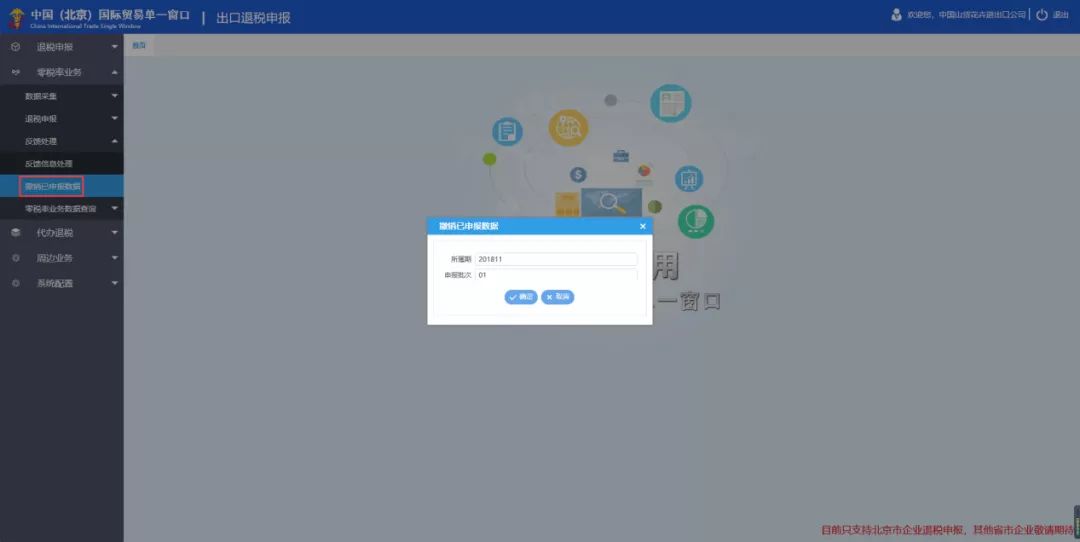
3.3.2 撤销已申报数据
撤销已申报的数据,点击“反馈处理”中的“撤销已申报数据”模块。
3.4 零税率业务数据查询
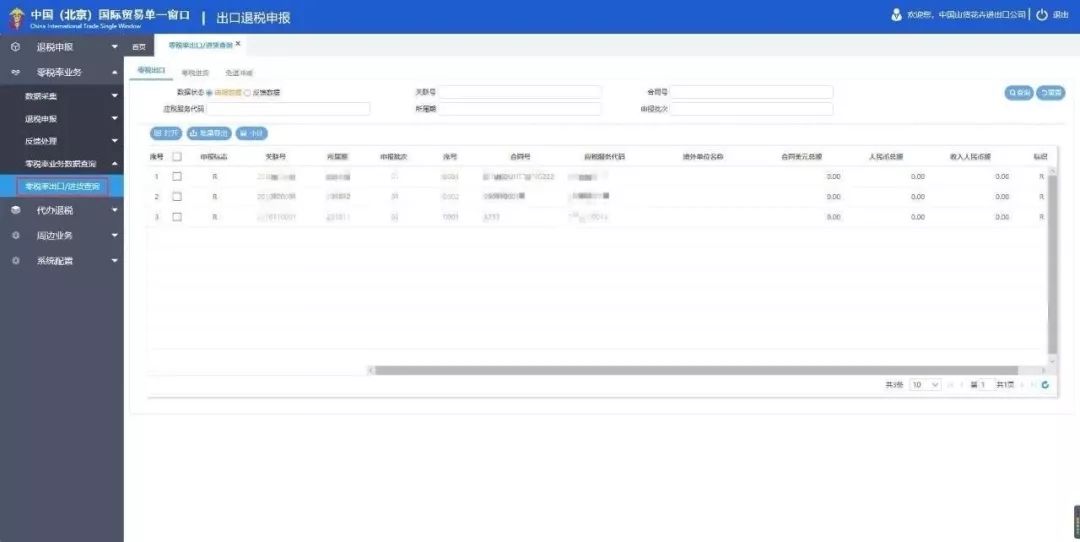
3.4.1 零税率出口/进货查询
查询已申报的零税率业务数据,点击“零税率业务数据查询”中的“零税率出口/进货查询”模块。
第四章 代办退税
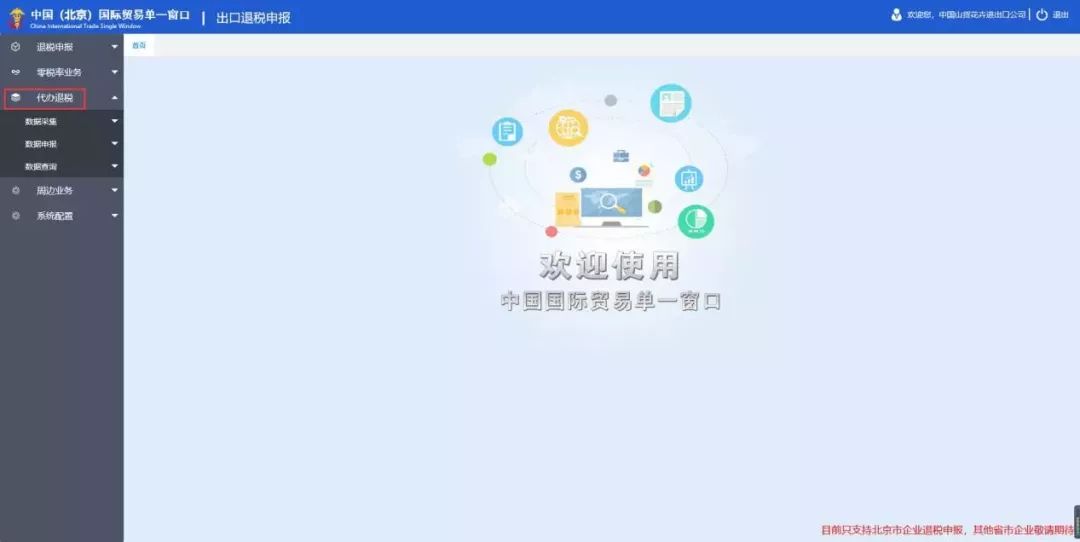
“代办退税”模块中包含“数据采集”、“数据申报”、“数据查询”三个模块。
4.1 数据采集
4.1.1 代办退税明细
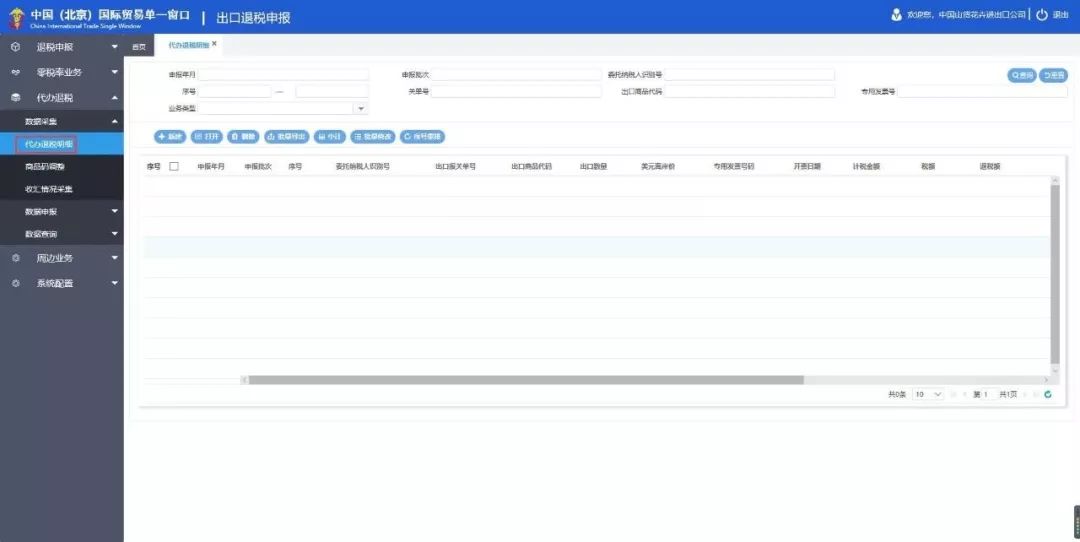
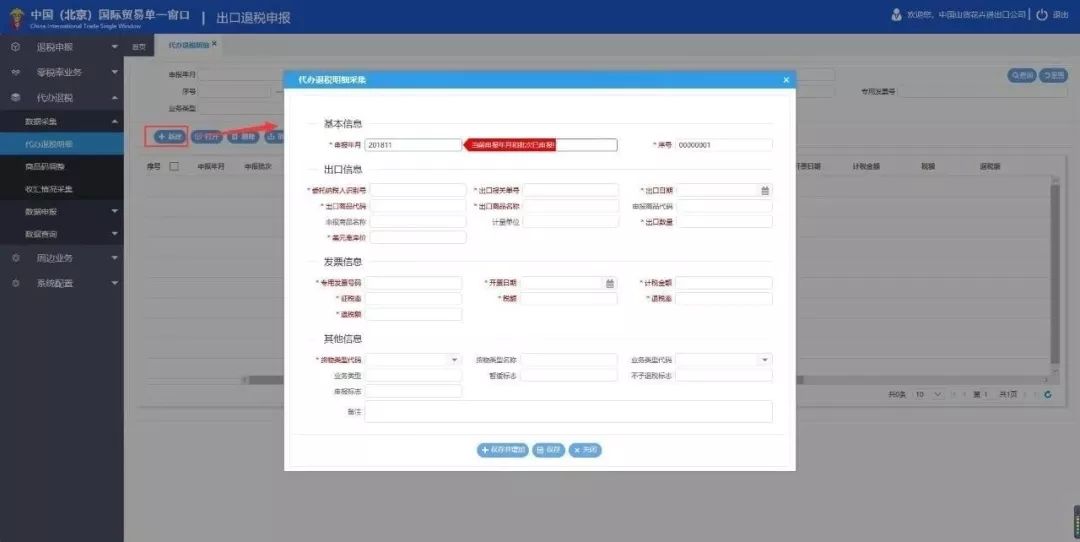
新建代办退税明细采集,红色字体为必录入项,录入完保存即可。
4.1.2 商品码调整
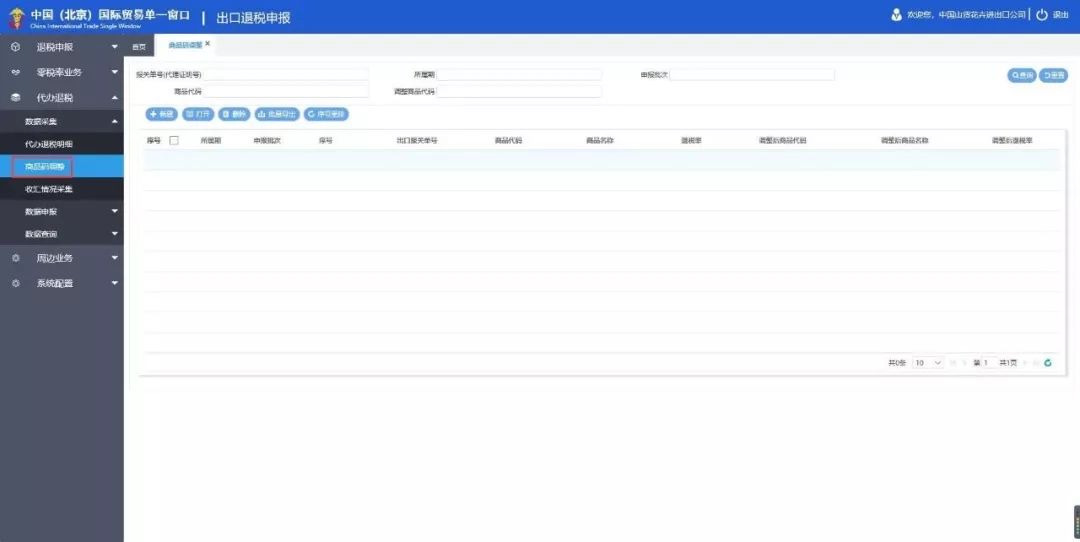
当商品码出现错误且不能使用八位码,十位码或者补充码时,获取正确的调整码,录商品码调整表。
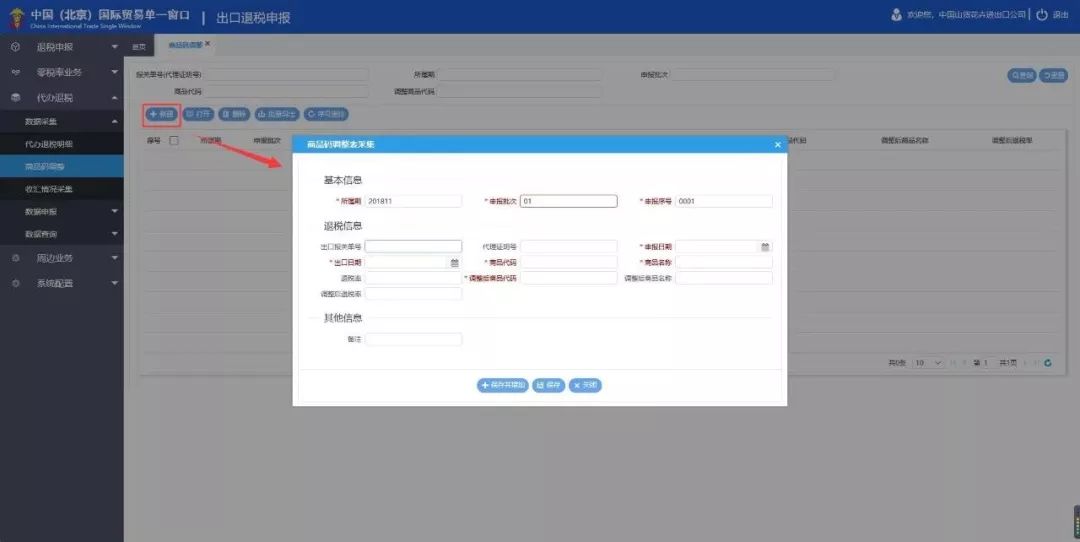
新建商品码调整表采集,录入信息,红色字体为必录入项。
4.1.3 收汇情况采集
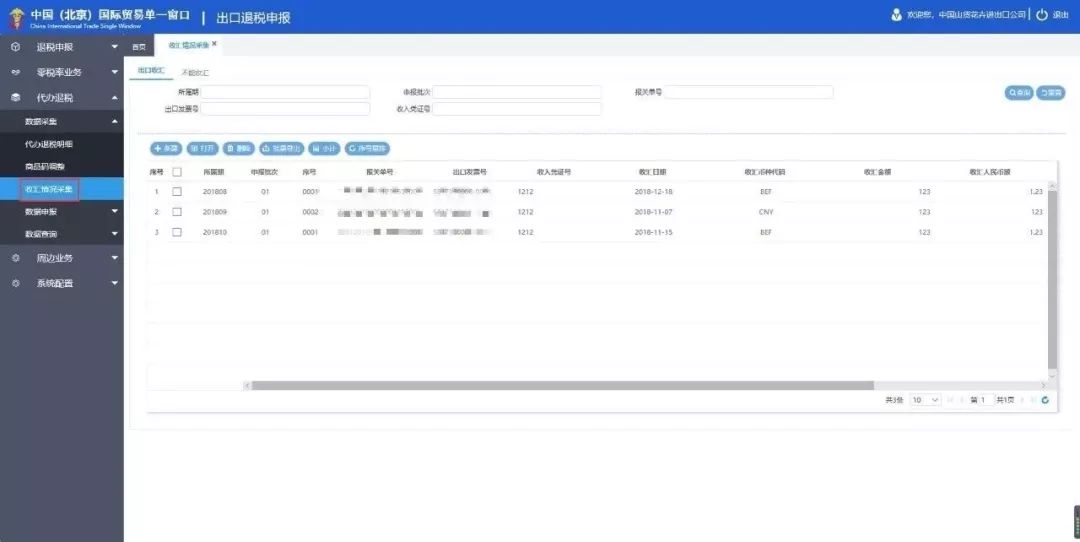
新建收汇表采集,录入信息,红色字体为必录入项。
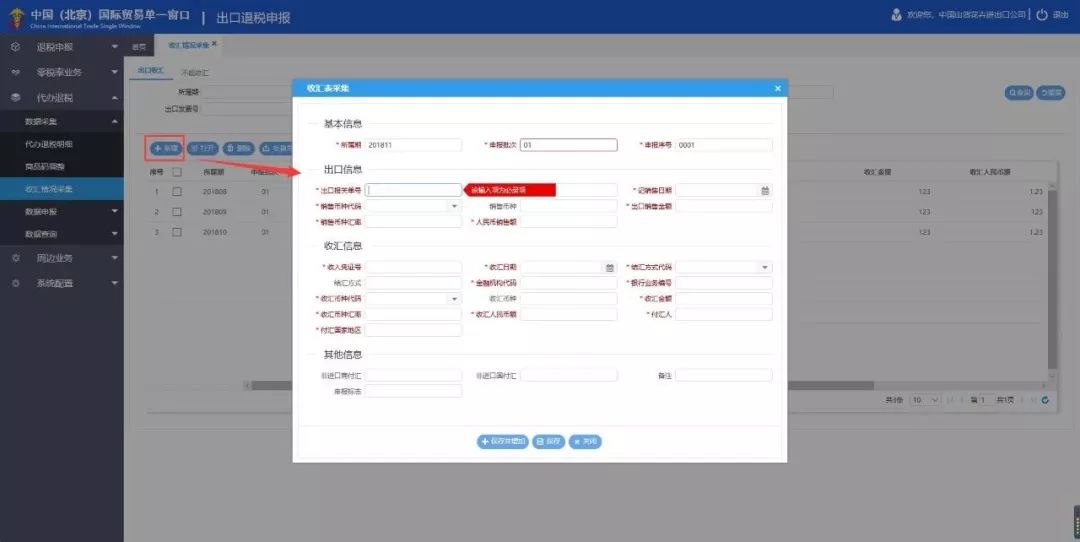
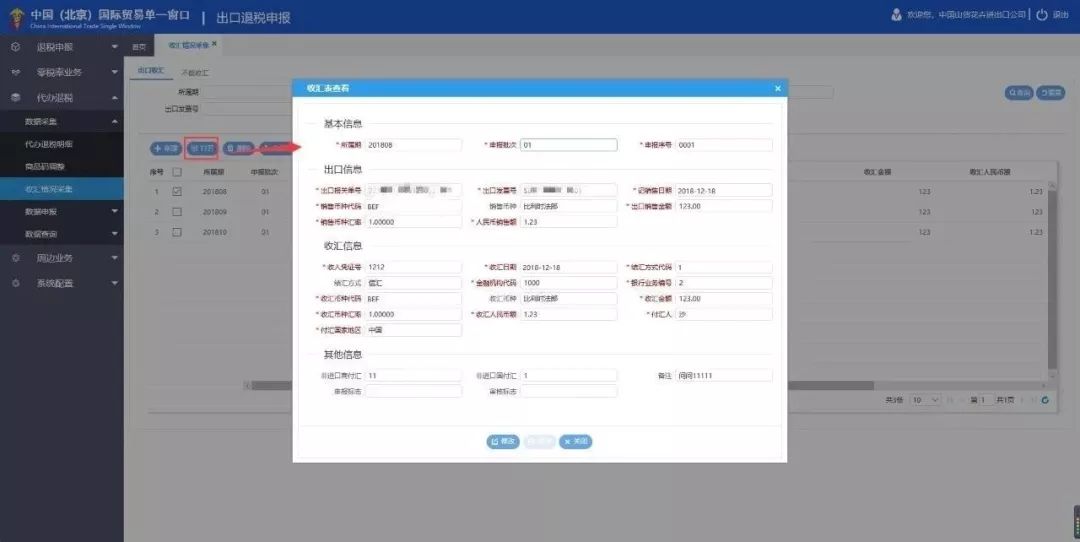
选择已录入的收汇表采集信息,点击打开,可以查看到录入的数据并进行修改,点击删除,可以删除数据。
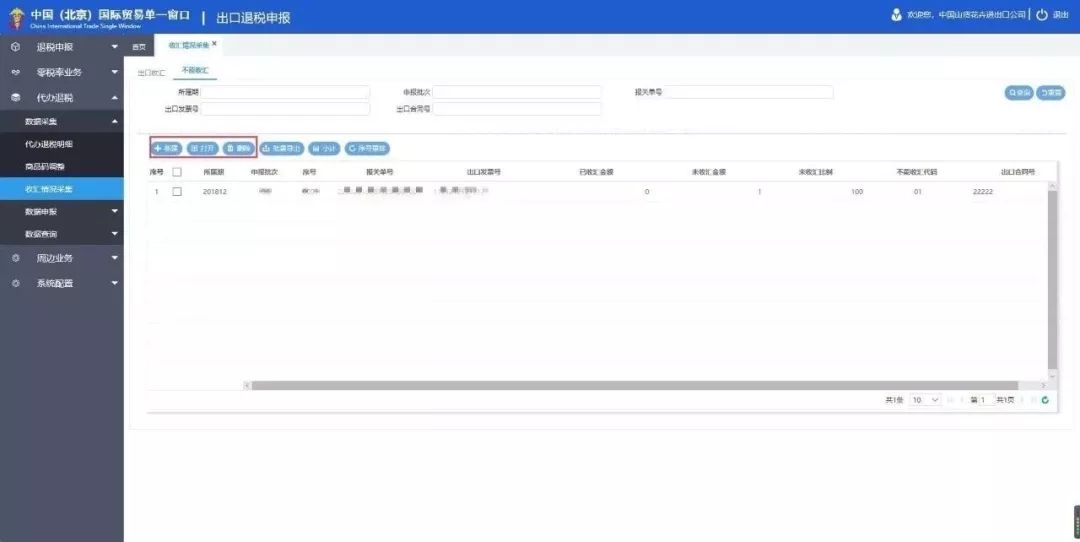
新建不能收汇表采集,录入信息,红色字体为必录入项。
选择已录入的不能收汇表采集信息,点击打开,可以查看到录入的数据并进行修改,点击删除,可以删除数据。
4.2 数据申报
4.2.1 生成申报数据
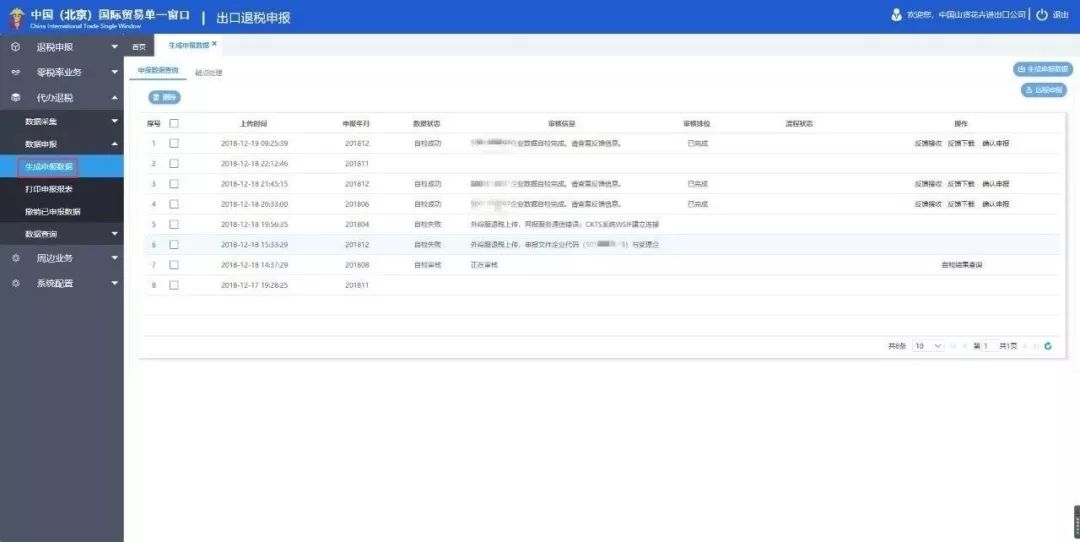
点击生成申报数据,录入需要申报的申报年月和批次,点击确认,进行远程申报数据自检。
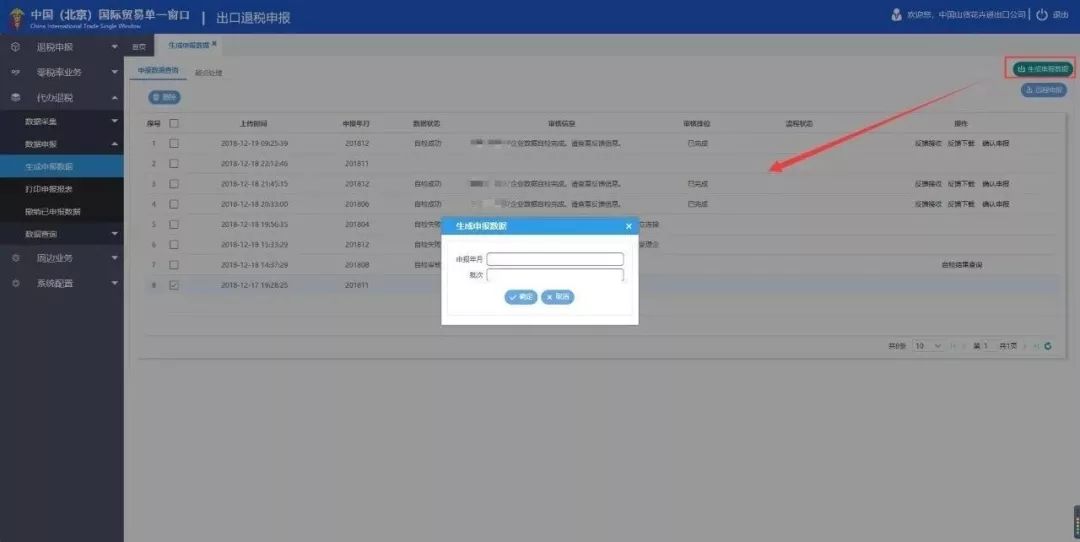
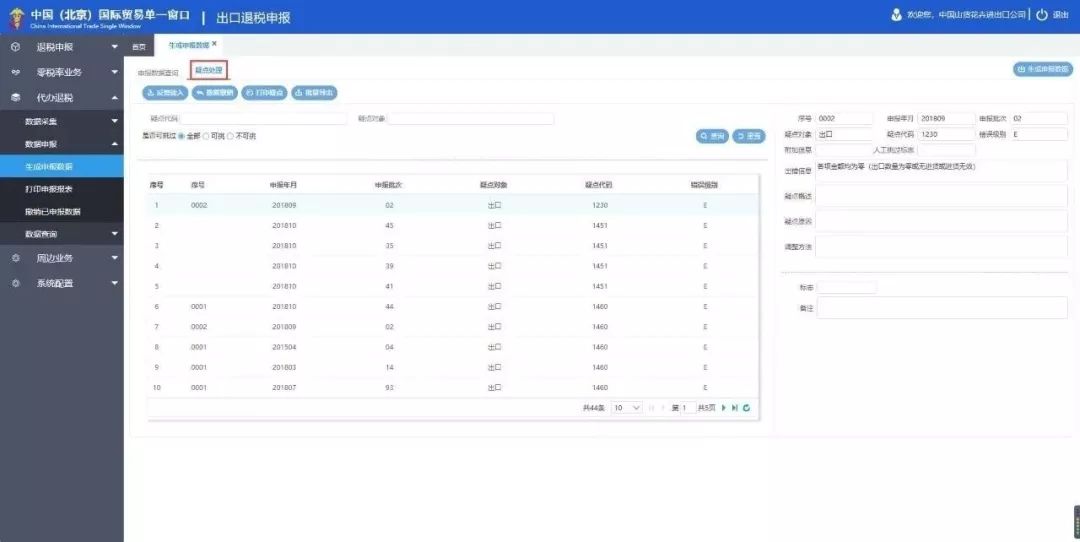
远程申报后,进入疑点处理界面查看疑点。
没有疑点的话,回到申报数据查询界面勾选这条数据,点击远程申报进行正式申报。
存在疑点的话,点击数据撤销,录入需要撤销的申报年月和批次,点击确定,回到代办退税明细模块中修改数据。
4.2.2 打印申报报表
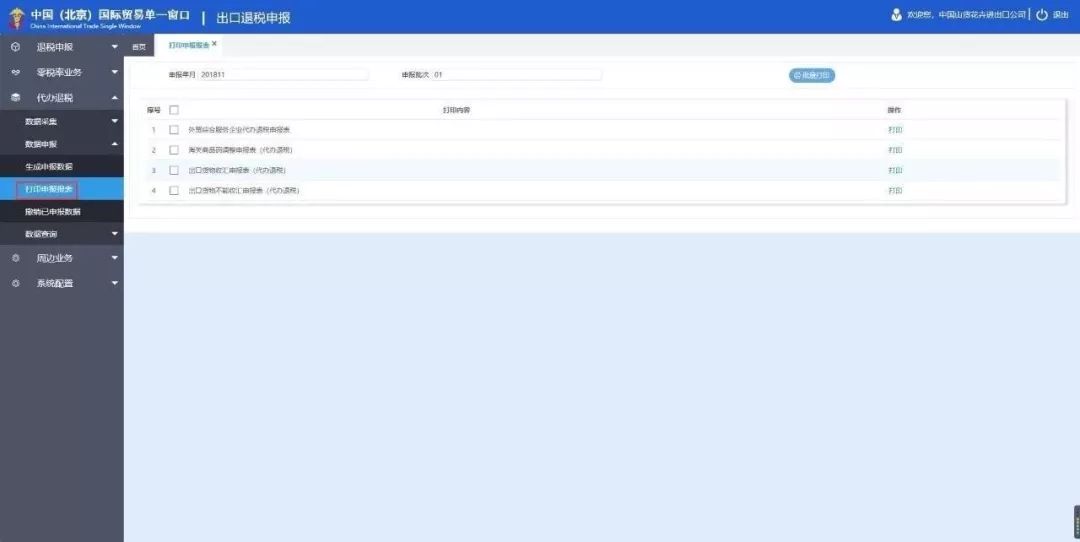
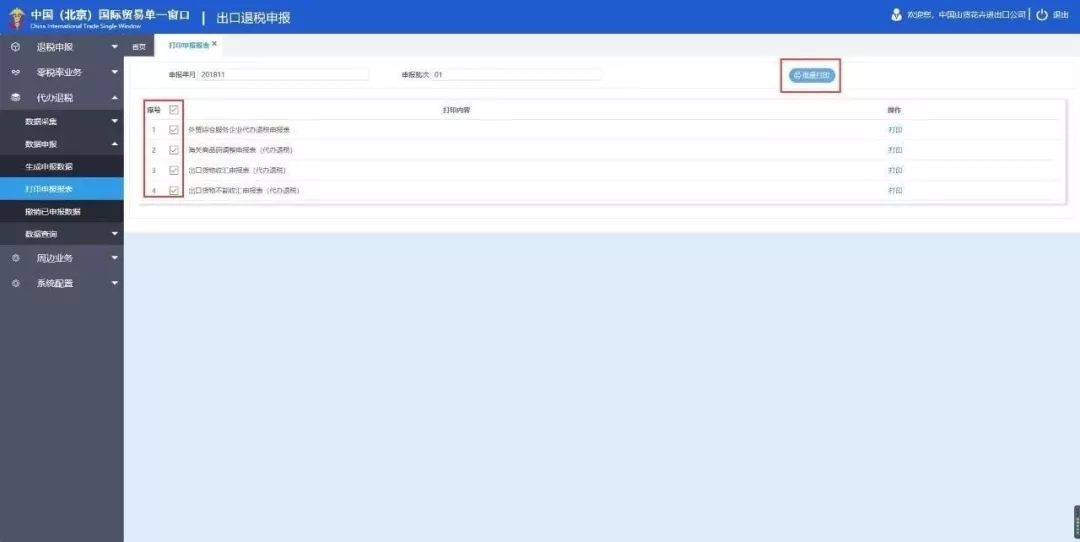
勾选需要打印的报表点击打印,也可以输入申报年月和批次进行批量打印。
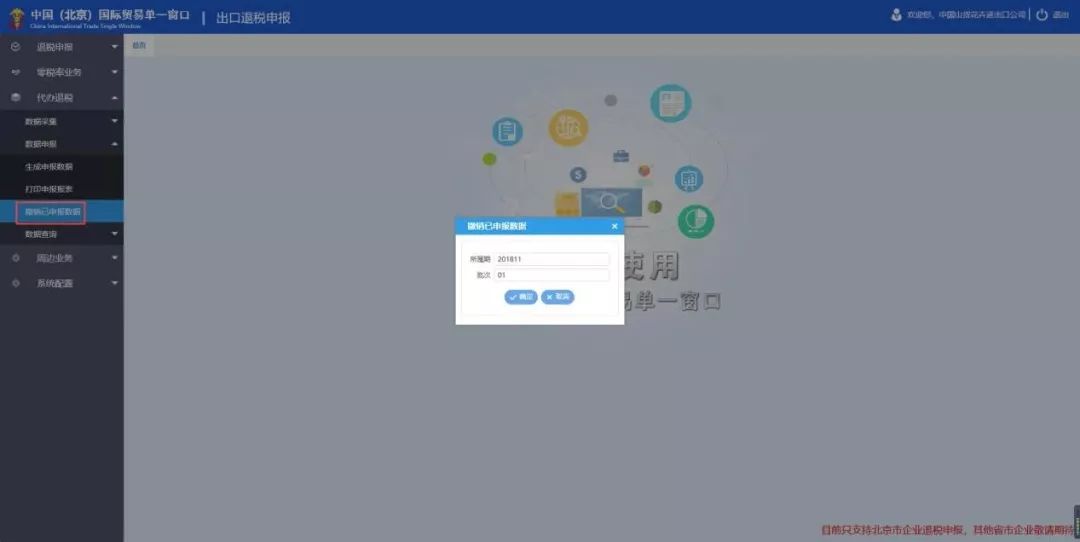
4.2.3 撤销已申报数据
数据自检过的申报数据存在需要修改的疑点和问题的话,通过撤销已申报数据,将数据撤回到代办退税明细模块中进行修改。
4.3 数据查询
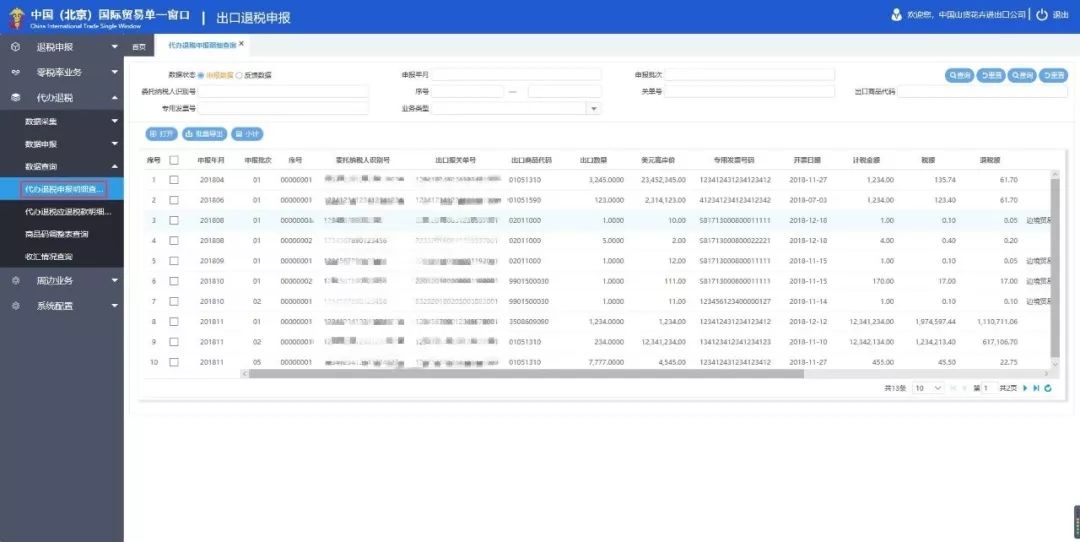
4.3.1 代办退税申报明细查询
可以查看到已申报的代办退税申报明细,勾选需要查看的数据点击打开,就可以看到具体的数据。
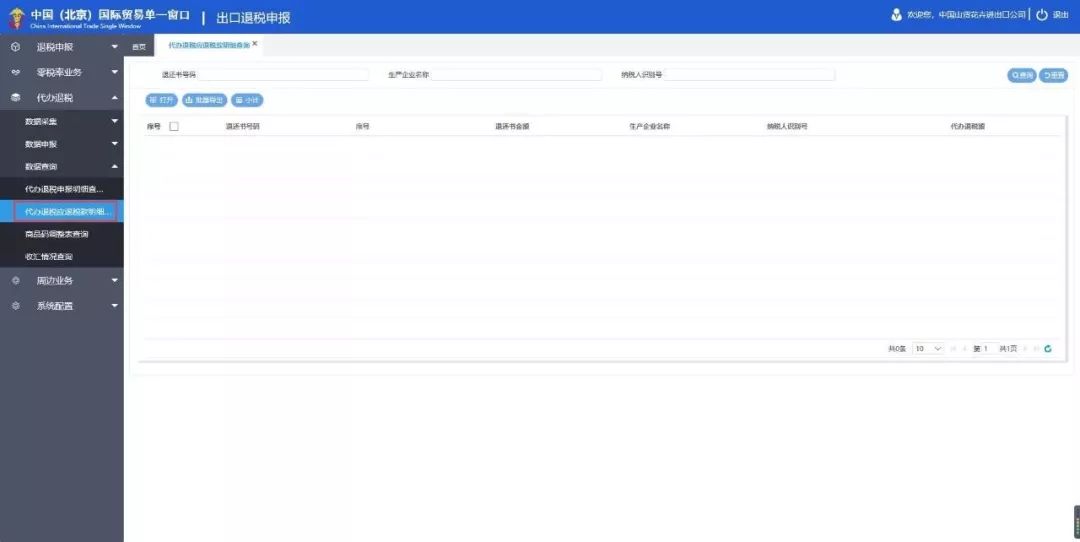
4.3.2 代办退税应退税款明细查询
可以查看到已申报的代办退税应退税款明细表信息,勾选需要查看的表格数据点击打开,就可以看到具体的信息。
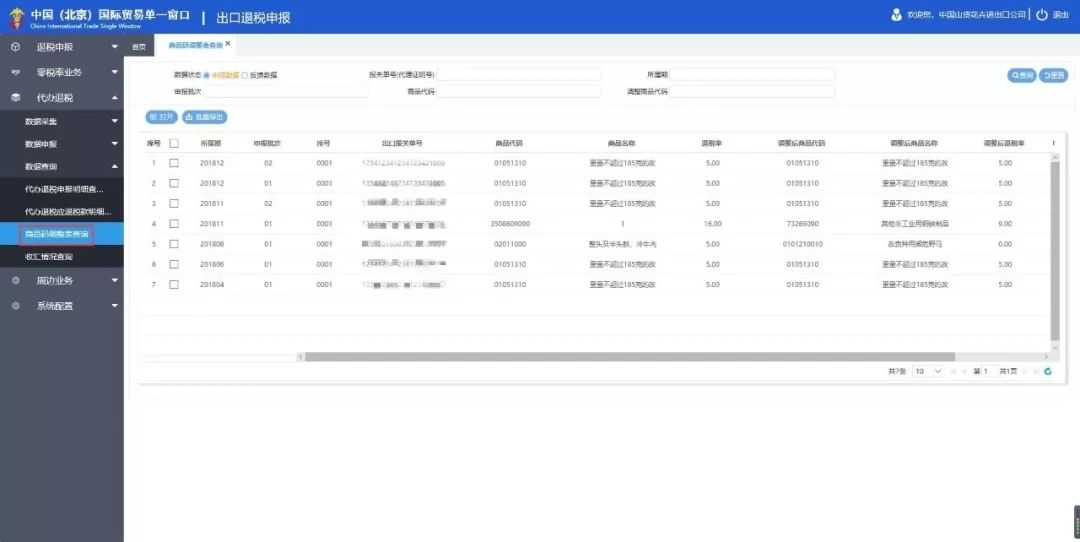
4.3.3 商品码调整表查询
可以查看到已申报的商品码调整表信息,勾选需要查看的表格数据点击打开,就可以看到具体的信息。
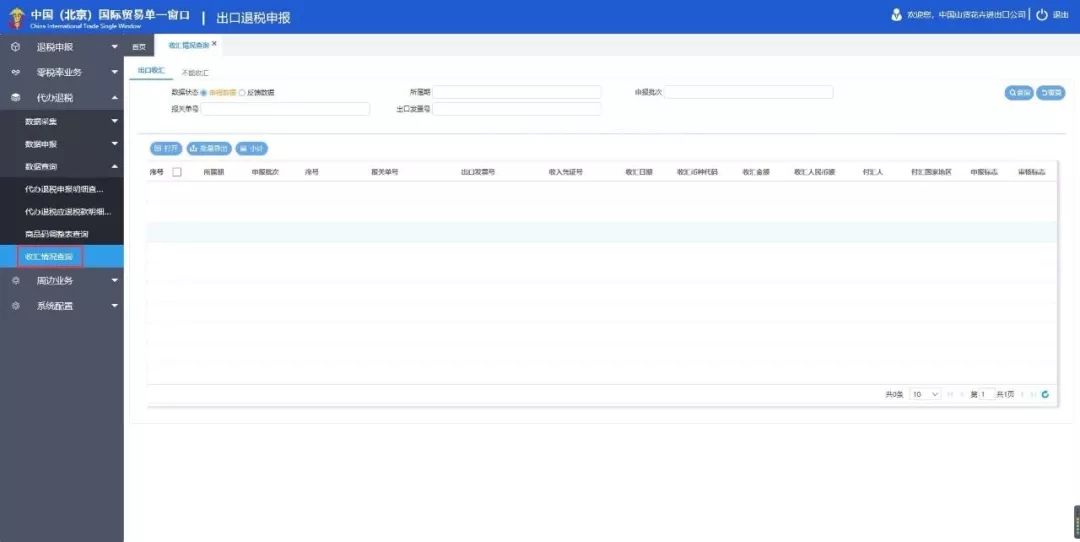
4.3.4 收汇情况查询
可以查看到已申报的出口收汇情况和不能收汇情况的信息,首先选择需要的情况表,然后勾选需要查看的表格数据点击打开,就可以看到具体的信息。
第五章 周边业务
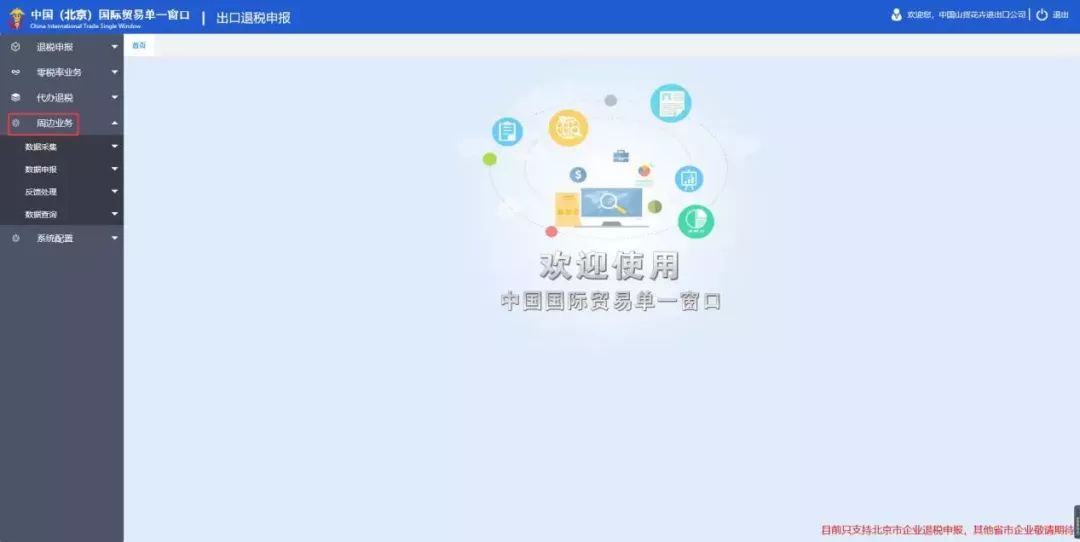
“周边业务”模块中包含“数据采集”、“数据申报”、“反馈处理”、“数据查询”四个模块。
5.1 数据采集
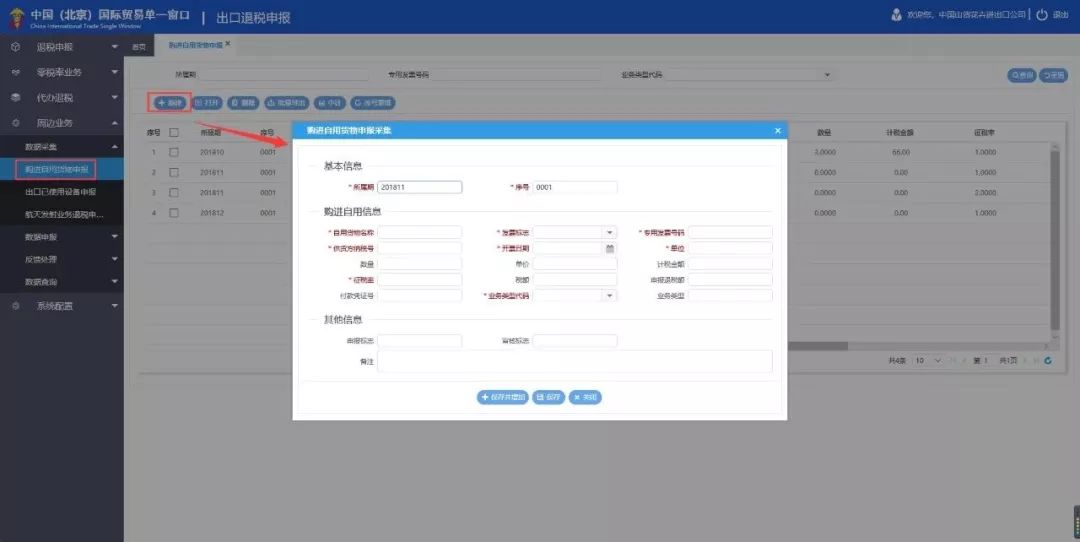
5.1.1 购进自用货物申报
点击数据采集中的购进自用货物申报,点击新建可以采集相关数据。
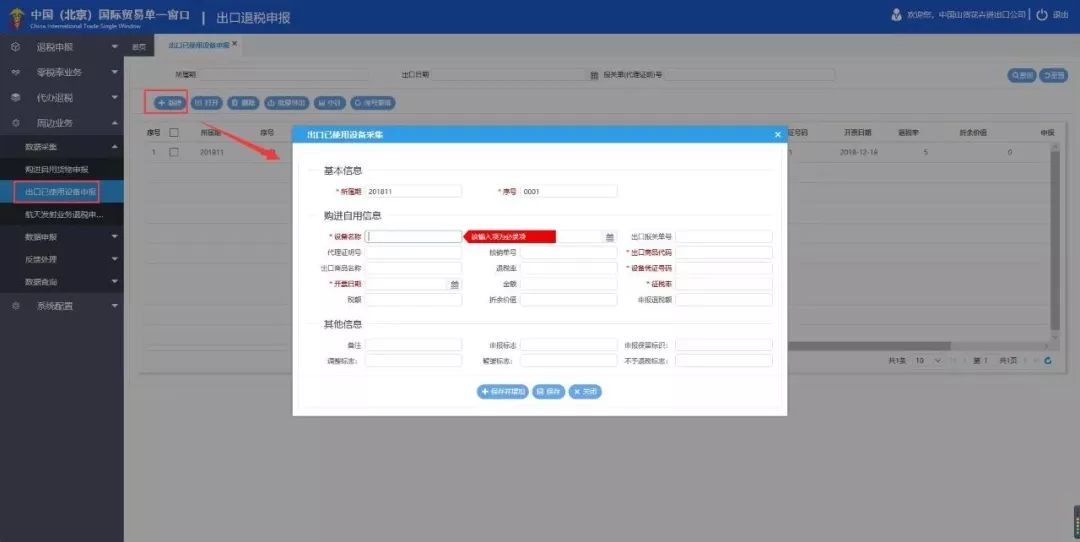
5.1.2 出口已使用设备申报
点击数据采集中的出口已使用设备申报,点击新建可以采集相关数据。
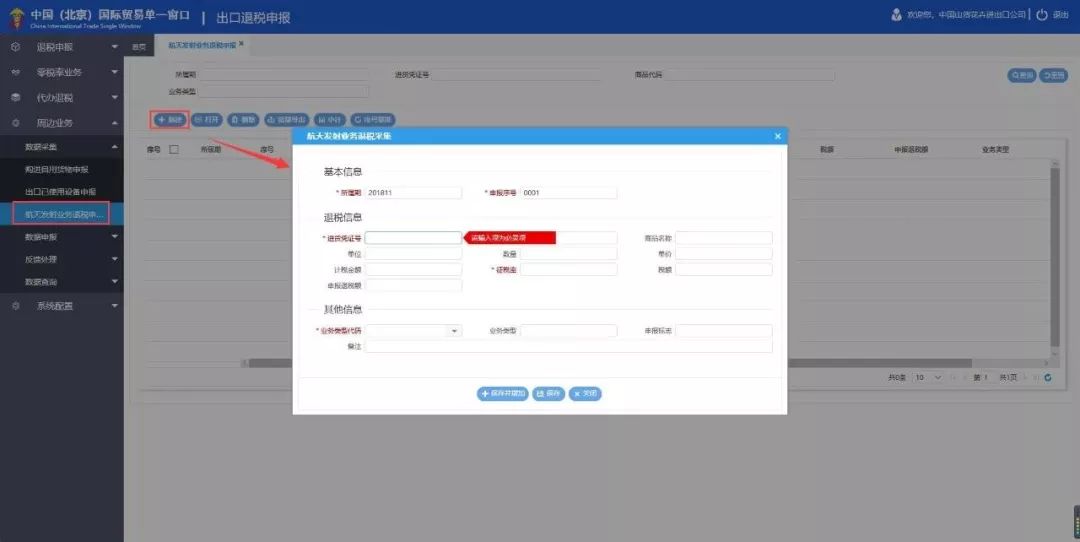
5.1.3 航天发射业务退税申报
点击数据采集中的航天发射业务退税申报,点击新建可以采集相关数据。
5.2 数据申报
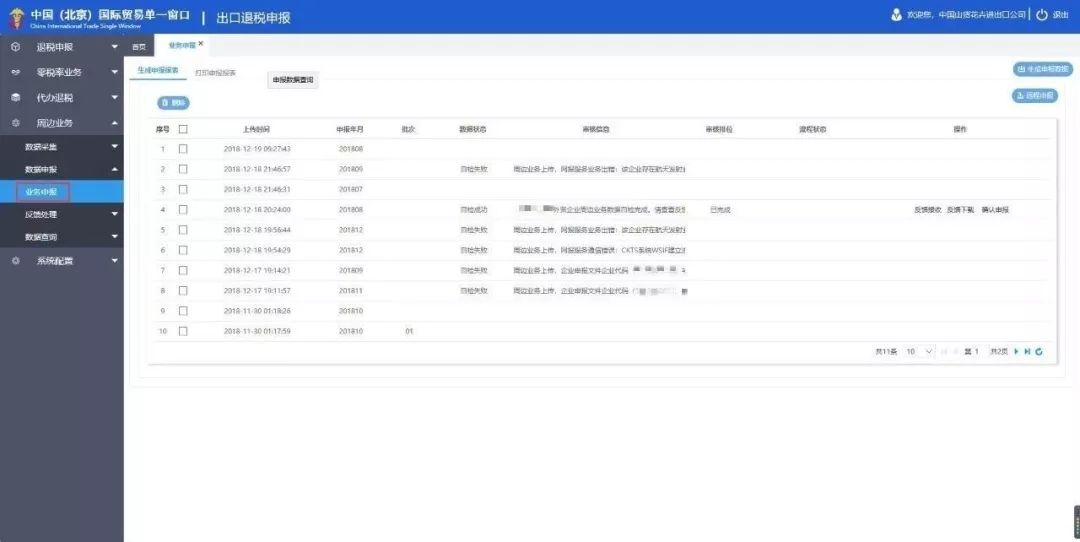
5.2.1 业务申报
点击数据申报中的业务申报,可以申报采集提交的相关数据。
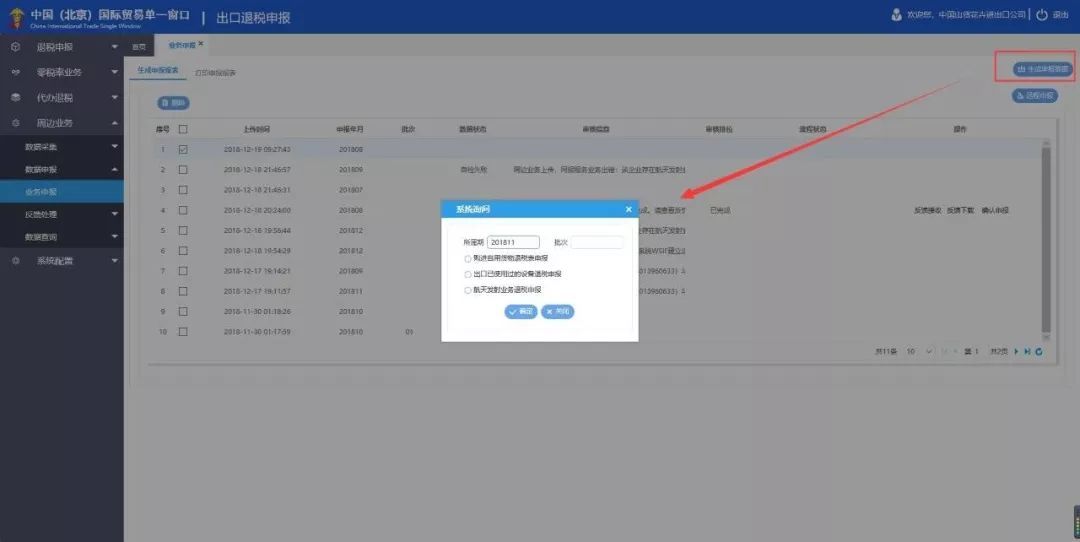
勾选想要申报的数据,点击生成申报数据进行申报。
5.3 反馈处理
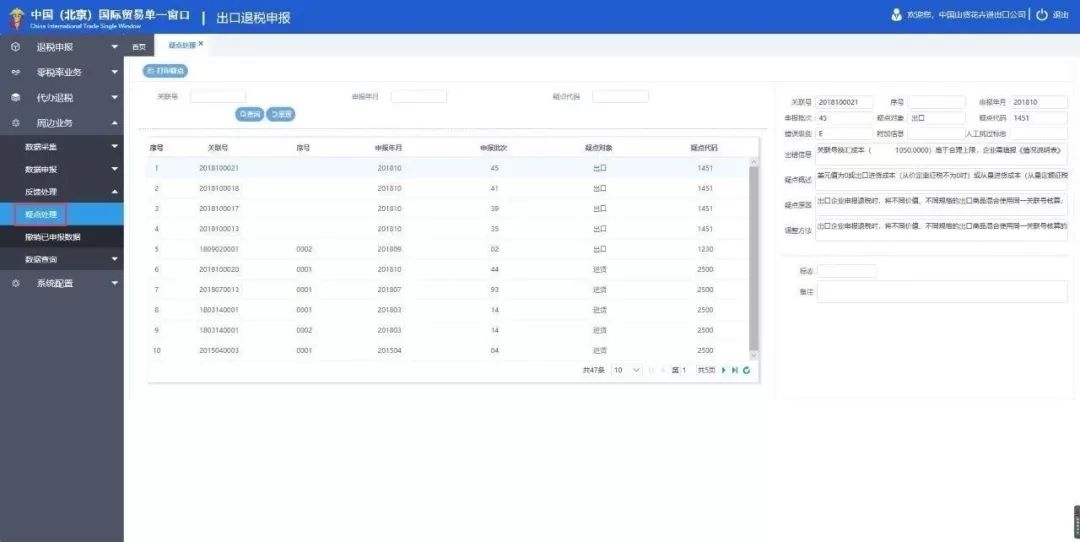
5.3.1 疑点处理
点击反馈处理中的疑点处理,可以查看申报数据的审核疑点。
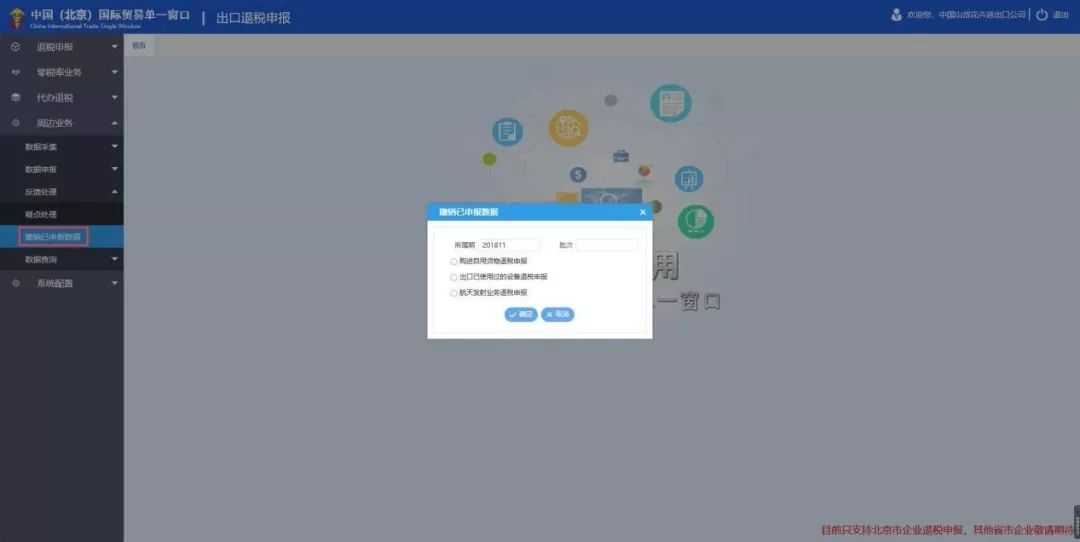
5.3.2 撤销已申报数据
点击反馈处理中的撤销已申报数据,可以撤销申报数据。
5.4 数据查询
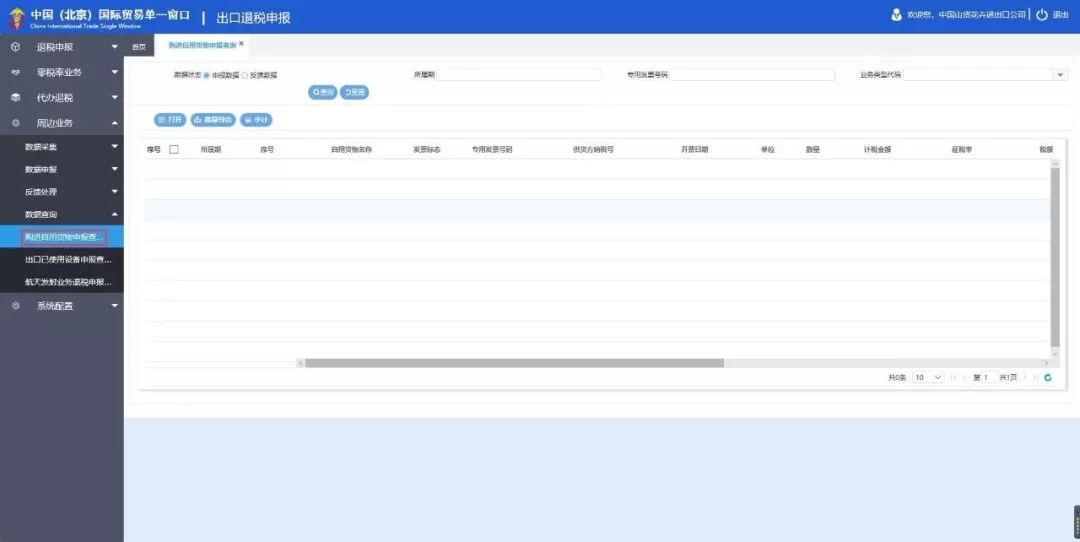
5.4.1 购进自用货物申报查询
点击数据查询中的购进自用货物申报查询,可以查看购进自用货物申报的数据。点击打开可以查看明细。
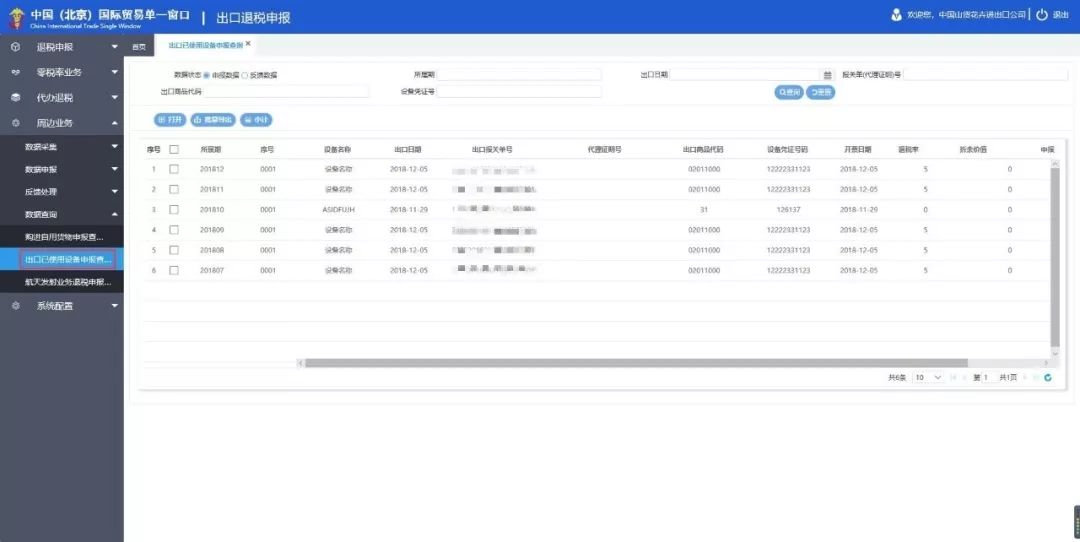
5.4.2 出口已使用设备申报查询
点击数据查询中的出口已使用设备申报查询,可以查看出口已使用设备申报的数据。点击打开可以查看明细。
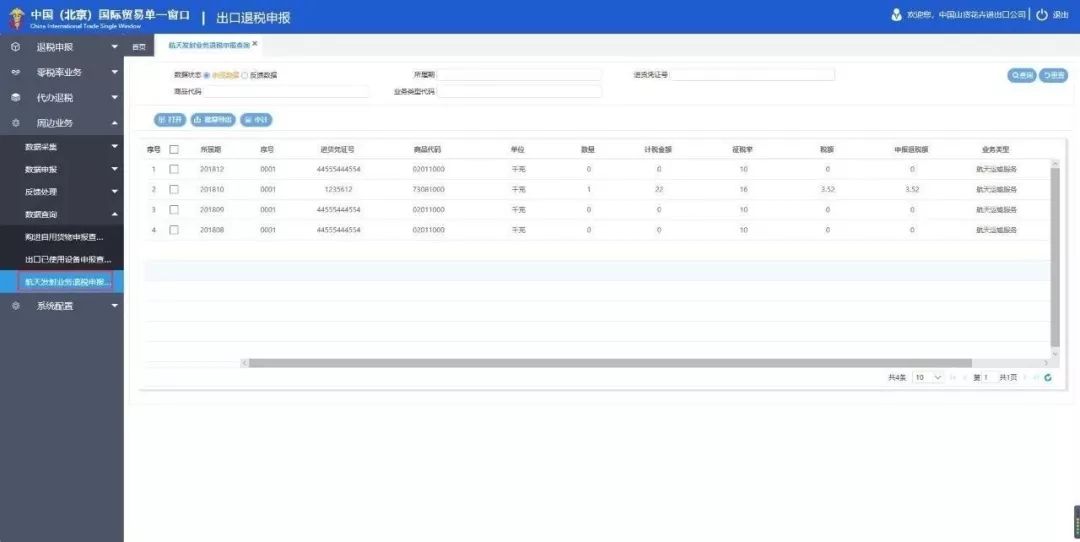
5.4.3 航天发射业务退税申报查询
点击数据查询中的航天发射业务退税申报查询,可以查看航天发射业务退税申报的数据。点击打开可以查看明细。
第六章 系统配置
系统配置”模块中包含“业务配置”、“商品代码”两个模块。
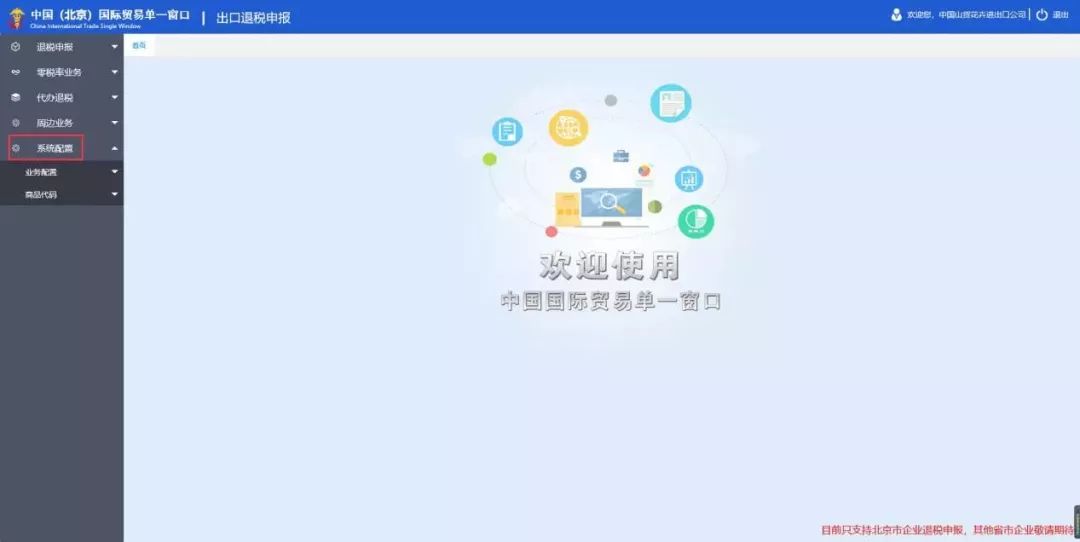
6.1 业务配置
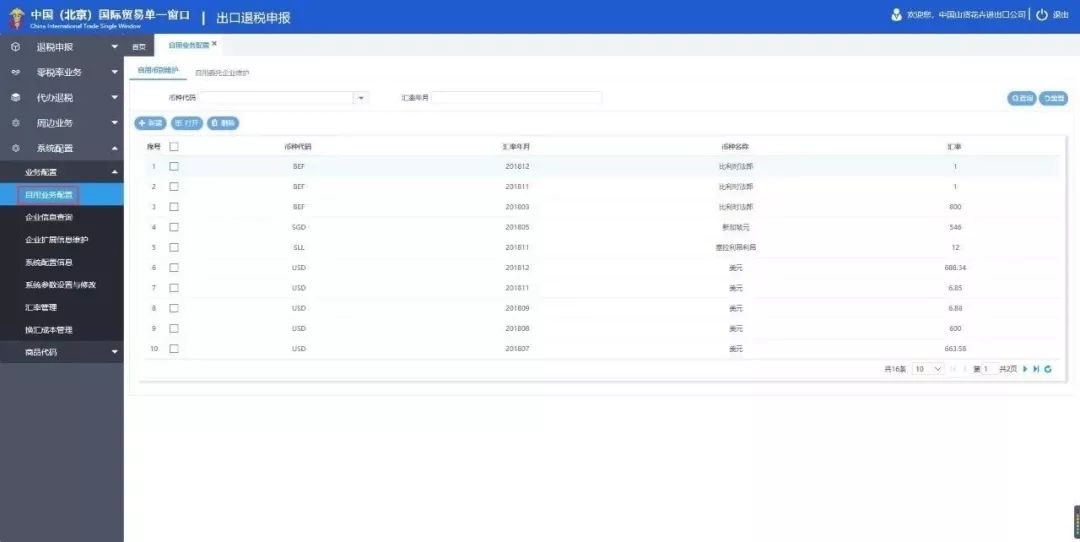
6.1.1 自用业务配置
币别和委托企业的相关维护,点击“业务配置”中的“自用业务配置”模块。
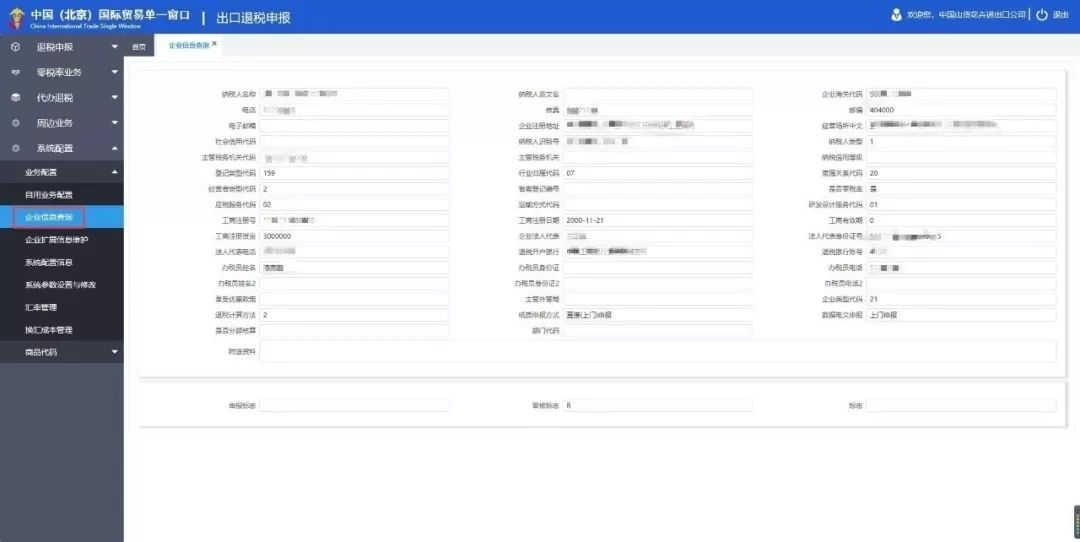
6.1.2 企业信息查询
查看企业相关信息,点击“业务配置”中的“企业信息查询”模块。
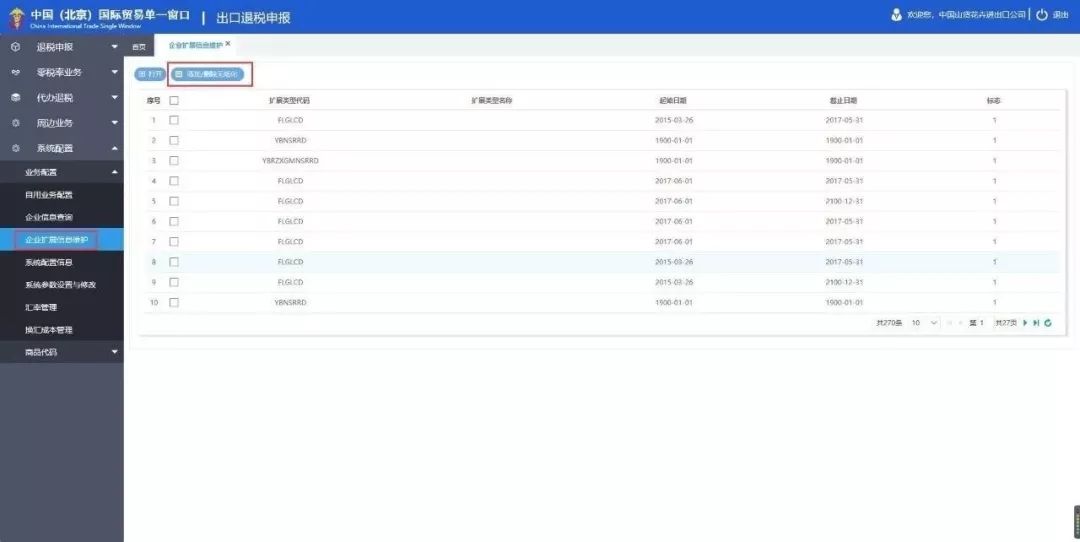
6.1.3 企业扩展信息维护
设置无纸化企业的相关标识,点击“业务配置”中的“企业扩展信息维护”模块。
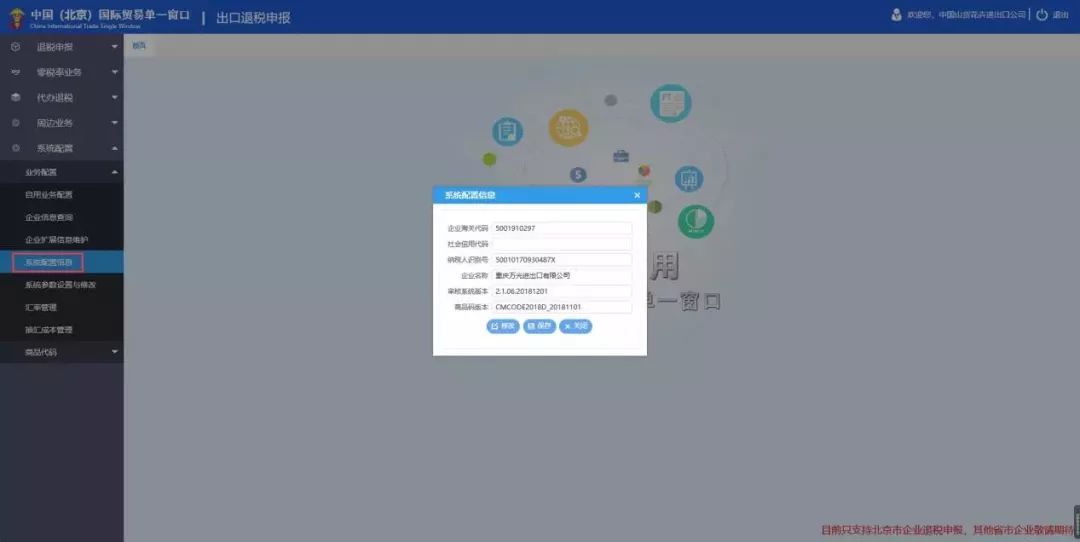
6.1.4 系统配置信息
修改企业相关信息,点击“业务配置”中的“系统配置信息”模块。
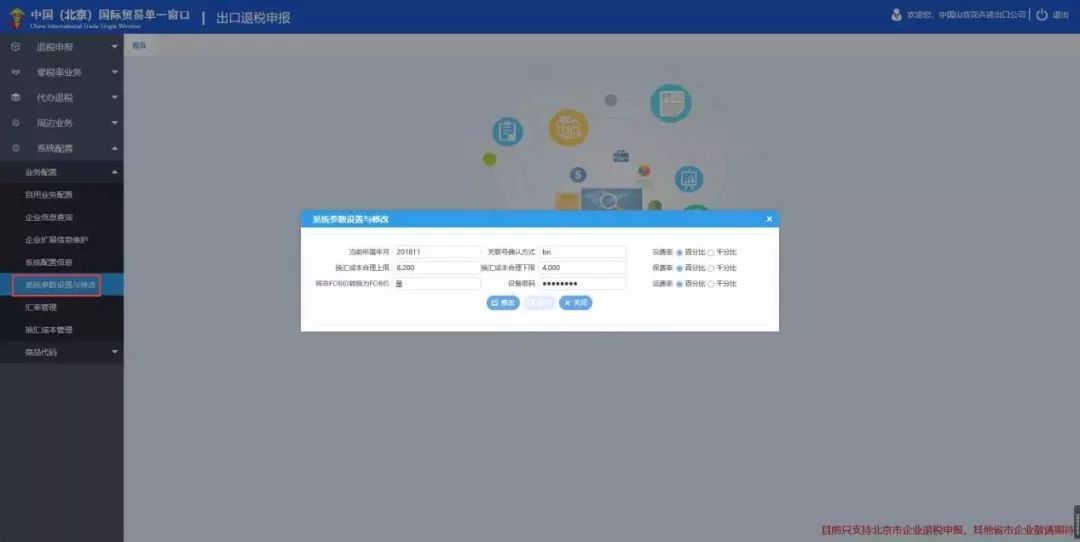
6.1.5 系统参数设置与修改
设置换汇成本合理上下限、税盘密码,点击“业务配置”中的“系统参数设置与修改”模块。
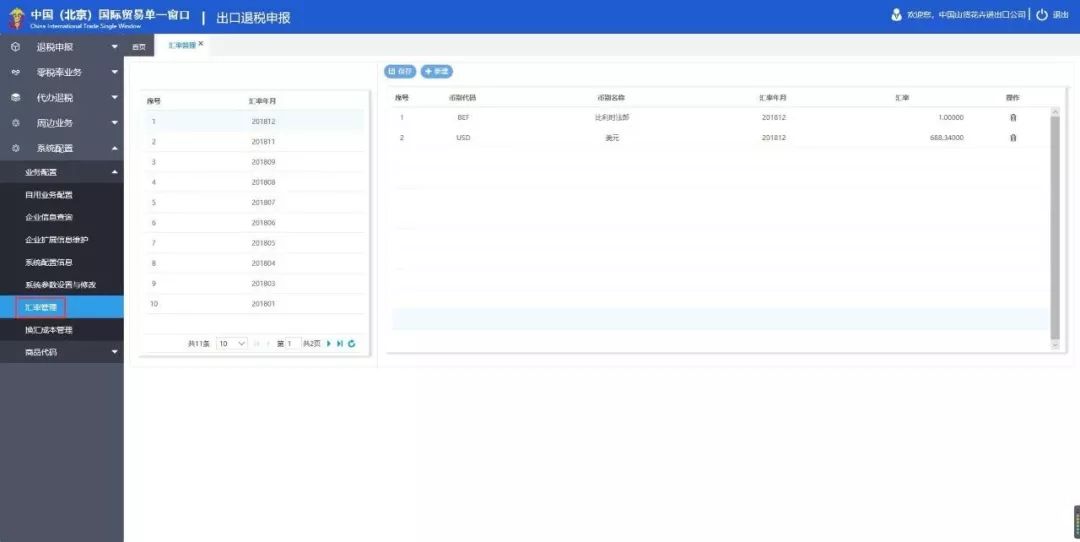
6.1.6 汇率管理
维护相关汇率,点击“业务配置”中的“汇率管理”模块。
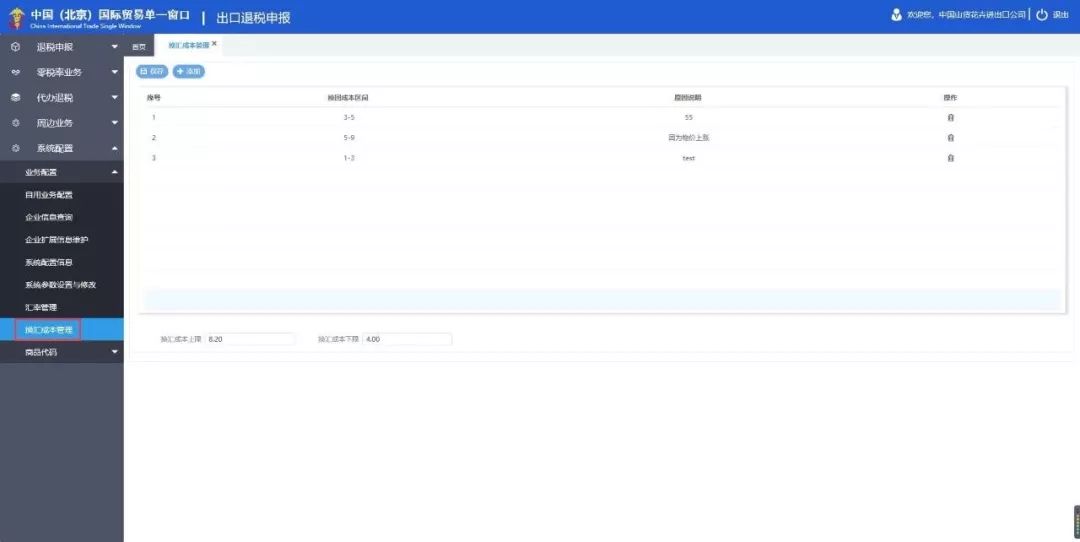
6.1.7 换汇成本管理
设置换汇成本情况说明,点击“业务配置”中的“换汇成本管理”模块。
6.2 商品代码
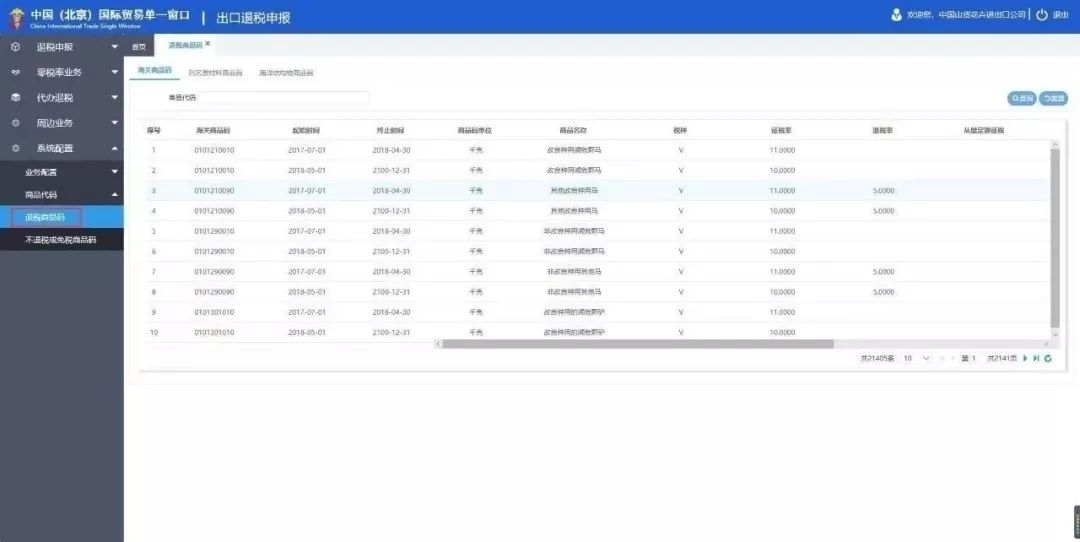
6.2.1 退税商品码
查询退税商品码,点击“商品代码”中的“退税商品码”模块。
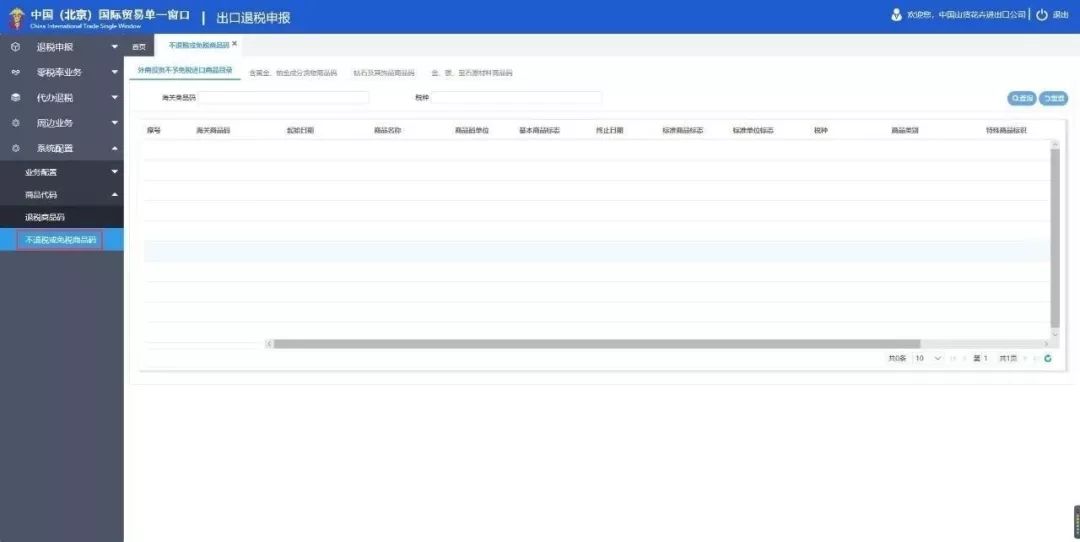
6.2.2 不退税或免税商品码
查询不退税或免税商品码,点击“商品代码”中的“不退税或免税商品码”模块。
来源:中国国际贸易单一窗口,我们致力于保护作者版权,如涉及侵权请联系我们删除。
近期“单一窗口”标准版新上线了出口退税子系统,该系统包括备案申报、退税申报、代办退税、单证申报、其他申报、进料加工申报等业务功能。企业退税实现“一个平台、一次递交、一个标准”,从而提高企业出口退税效率,缩短通关时间,降低企业成本,有效促进我国国际贸易便利化。
第一章 用户注册
打开“单一窗口”标准版门户网站,在页面右上角点击“登录”字样,进入“单一窗口”标准版登录界面(如下图)。、
如您首次使用“单一窗口”标准版,请点击界面中的“立即注册”字样进行注册操作。
第二章 出口退税申报
在门户网站首页的“标准版应用”中点击“出口退税”模块进入到出口退税申报界面。
2.1 外部管理
“外部数据管理”模块中包括“报关单管理”、“发票管理”和“数据匹配”三个功能模块。
2.1.1 报关单管理
首先点击“报关单管理”模块。
点击“关单获取”下载报关单。可以根据出口日期的开始和截止日期区间下载报关单,也可以按报关单号下载报关单。
界面左侧的报关单信息中可以查看该报关单是否已经生成了退税申报数据。点击要查看的报关单可以在右侧看到该报关单中的商品信息,双击可以查看商品信息的明细。
可以根据出口年月、报关单号和报关单状态查询报关单。
勾选将要申报的报关单,进行数据检查,该报关单数据检查无误可以进行申报退税。
2.1.2 发票管理
进入“发票管理”模块。
导入少量发票的话点击“新建”可以手动单张添加发票信息,录入该张发票信息后点击保存该发票信息则添加完毕。
需要批量导入发票信息的话,点击“发票导入”可以下载导入发票信息的Excel格式的模板。
在Excel模板中填写发票信息完毕后,在发票导入中的文件选择中选择该文件读入发票信息。同时该系统也支持导入其他认证系统导出的XML格式的发票。
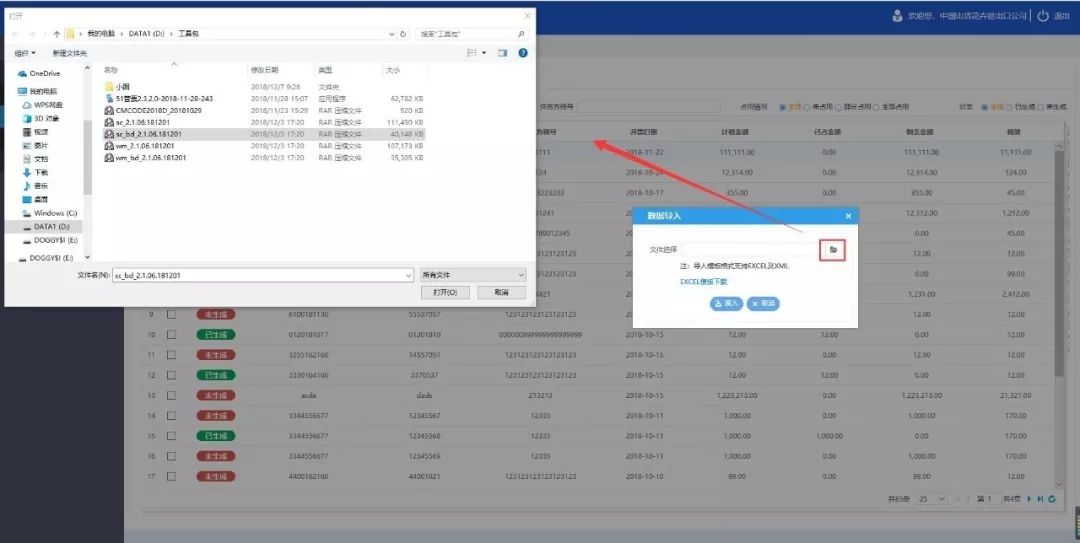
可以根据发票号码、开票年月和供货方税号以及发票状态查询发票。
2.1.3 数据匹配
完成报关单和发票的信息下载和导入后,进入数据匹配模块。
在左侧选择已经进行数据检查将要申报的报关单。可以输入报关单号后四位或点击下拉菜单选择。
随后在右侧添加对应的发票。
如果有连号的发票可以点击发票连号添加。
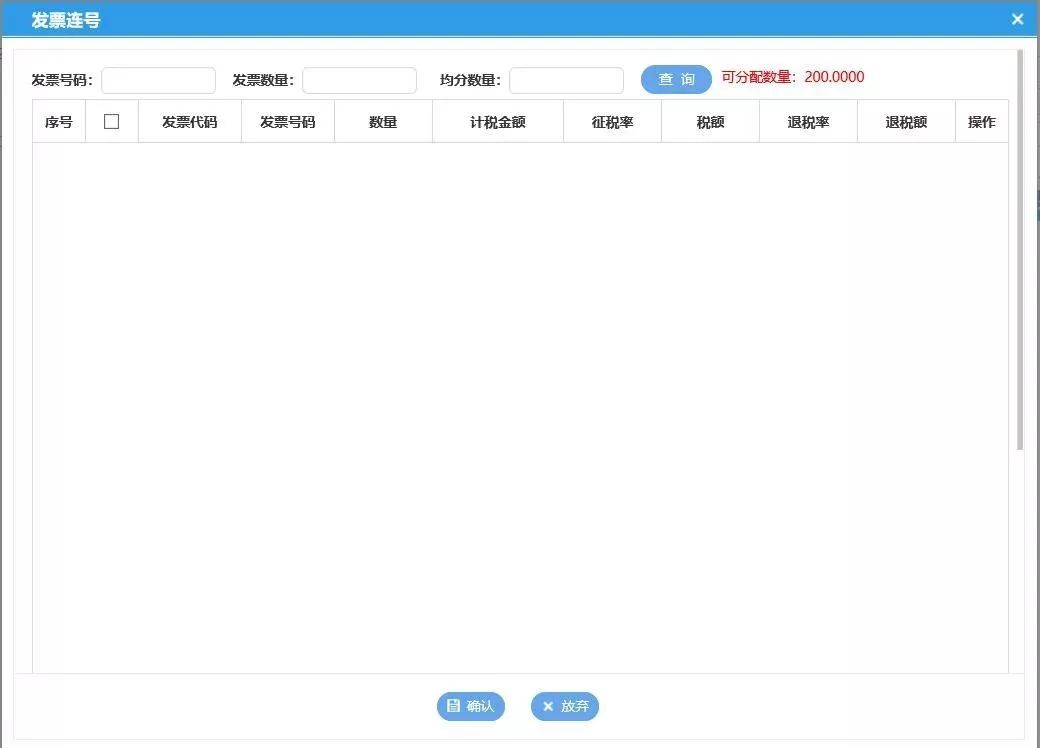
添加对应的发票后在左下角设置业务号和选择业务类型,确认无误后点击提交。
2.2 退税数据管理
2.2.1 申报数据明细管理
点击退税数据管理,进入申报数据明细管理,已经提交的匹配数据会显示在申报数据明细管理界面,如图:
在申报数据明细管理中,可以根据报关单号和数据状态查询对应的匹配数据。
勾选不需要的数据点击删除业务号进行删除。
勾选数据点击数据检查。
数据检查进行关联检查和换汇成本检查。
数据检查通过无提示,检查状态一栏标识为绿色。
点击生成待申报按钮,设置申报年月批次和关联号,将申报数据转入待申报环节。
右侧出口信息中点击添加可以手动添加出口明细。
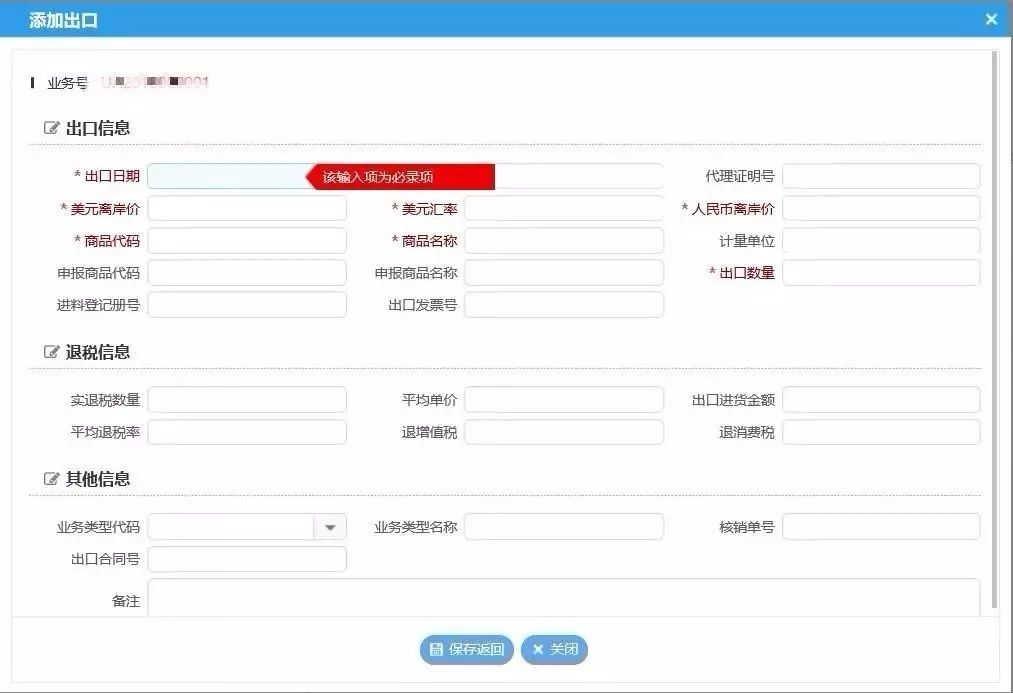
勾选后点击批量修改可以修改业务类型、出口发票号和备注。
勾选后点击转入其他可以将该出口明细转入其他业务号。
勾选后点击计算小计可以查看该条明细的数据。
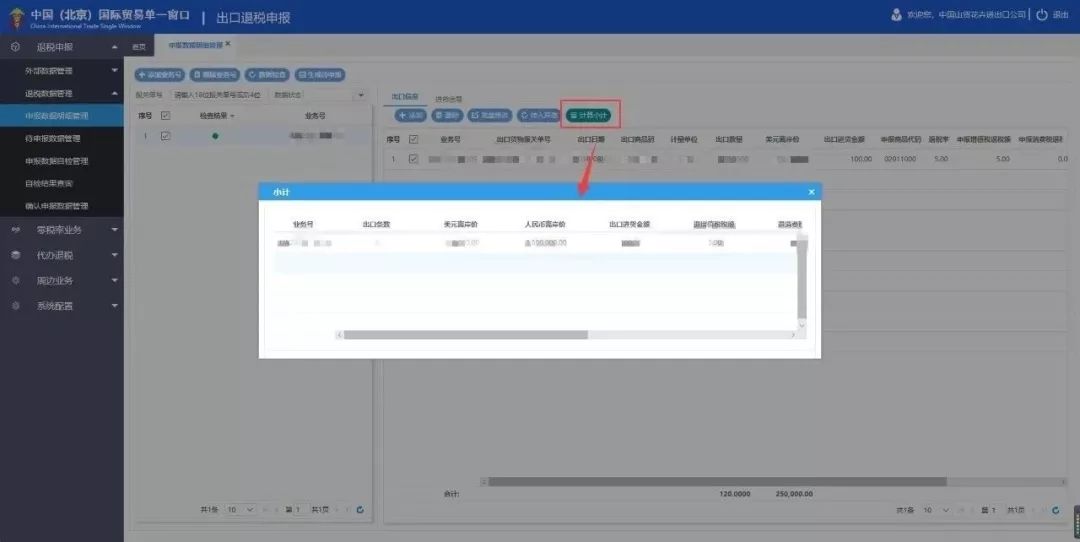
进货明细中的数据查看和操作同上。
2.2.2 待申报数据管理
点击退税数据管理,进入待申报数据管理,已经提交的数据会显示在待申报数据管理界面。如图:
进入待申报数据管理模块,可以对同一申报年月的数据进行批次合并或修改批次;点击数据检查按钮可以对选中的年月批次数据进行数量关联检查和换汇成本检查;确认无误点击转入申报按钮将申报数据转入自检申报环节;撤销数据把待申报数据撤回申报数据明细管理。如图:
右侧出口明细和进货明细的数据查看和操作同申报数据明细管理。
图 出口明细和进货明细的数据查看和操作同上
2.2.3 申报数据自检管理
点击退税数据管理,进入申报数据自检管理,已经提交的数据会显示在申报数据自检管理界面。如图:
进入申报数据自检管理,勾选要申报的数据点击数据自检,选择本地申报可以选择路径在本地生成电子数据包,选择远程自检可以生成申报数据并直接上传到网报系统进行自检。
注:生成申报数据时,无纸化企业需要连接税盘。
自检数据上传后在自检结果审查模块找到该条数据,点击自检结果查询即可刷新自检审核状态并自动将疑点反馈读入系统中。
回到申报数据自检管理模块,选中自检完成的数据可以在右侧查看疑点反馈。
可以在右侧双击打开并直接修改出口明细和进货明细中的数据。
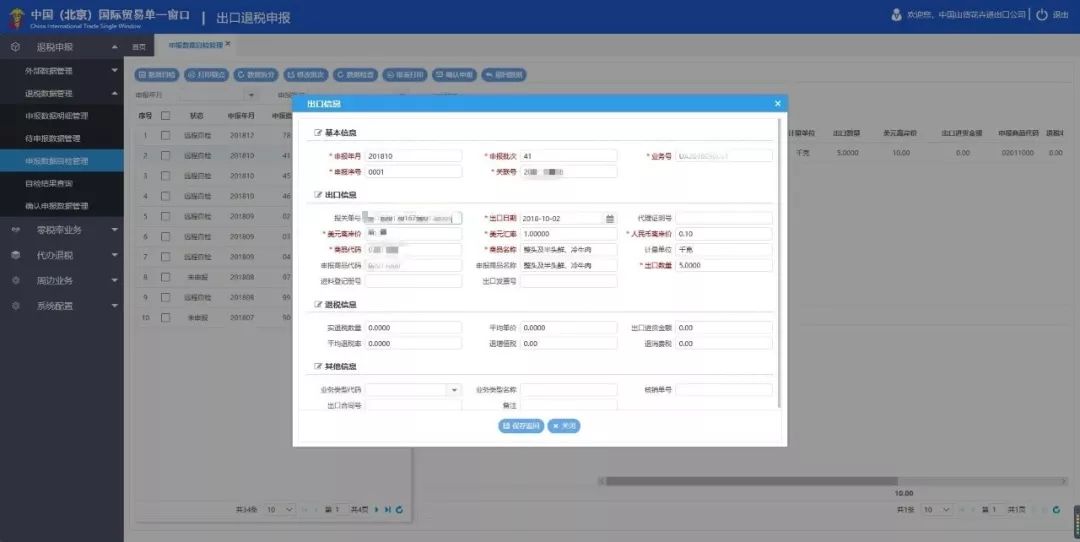
也可以对应疑点添加情况说明、商品码调整表等表单。选中要添加的表单点击添加即可。
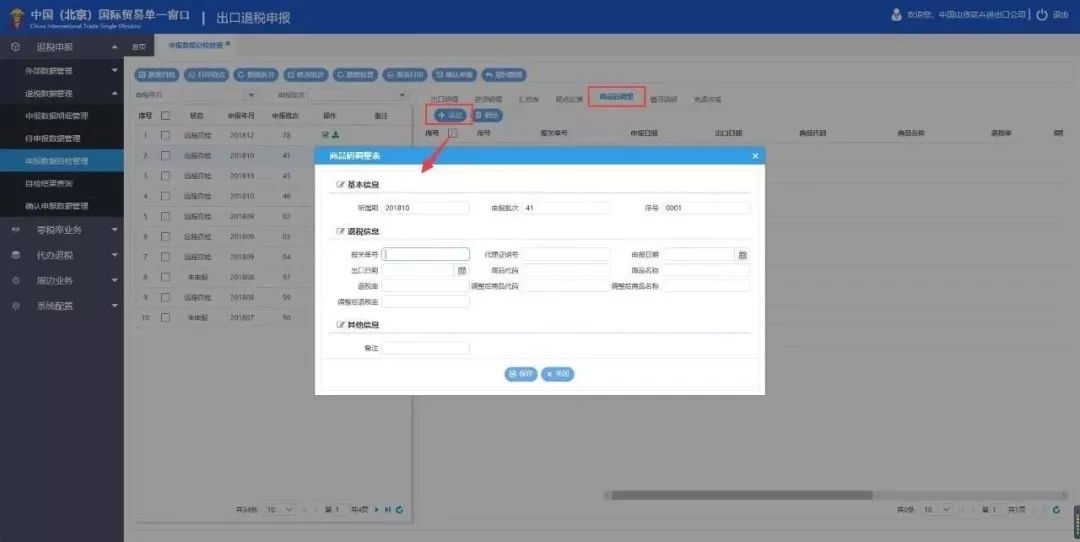
修改数据后在汇总表模块中点击重新生成汇总可以自动生成新的汇总表。
同时也可以选中数据进行数据拆分、批次修改等操作。数据修改无误后重新进行数据检查,然后进行重新自检申报。自检无疑点后选中数据点击确认申报即可转正式申报并打印纸质报表。
2.2.4 自检结果查询
点击退税数据管理,进入自检结果查询,可以查看自检申报的数据和正式申报数据的审核状态并接收相关反馈。自检的数据点击自检结果查询可以刷新审核状态并自动读入疑点反馈;正式申报的数据点击申报状态查询可以刷新审核状态,并在正式申报审核通过后该按钮变为受理回执书下载按钮,可以下载税务事项通知书。
2.2.5 确认申报数据管理
点击退税数据申报,进入确认申报数据管理,可以查看正式申报的数据。如图:
转正式申报后的数据,税务局将接收企业的申报数据进行审核。点击报表打印打印相关的纸质资料;高级筛选根据报关单号和关联号简便筛选。如图:
第三章 零税率业务
“零税率业务”模块中包含“数据采集”、“退税申报”、“反馈处理”、“零税率业务数据查询”四个模块。
3.1 数据采集
3.1.1 零税出口/进货采集
采集零税出口/进货的相关数据,点击“数据采集”中的“零税出口/进货采集”模块。
3.2 退税申报
3.2.1 数据检查
对退税数据进行数据检查,点击“退税申报”中的“数据检查”模块。
3.2.2 明细处理
对数据明细进行处理,点击“退税申报”中的“明细处理”模块。
3.2.3 生成申报数据
生成零税申报数据,点击“退税申报”中的“生成申报数据”模块。
3.3 反馈处理
3.3.1 反馈信息处理
查看申报数据的疑点反馈,点击“反馈处理”中的“反馈信息处理”模块。
3.3.2 撤销已申报数据
撤销已申报的数据,点击“反馈处理”中的“撤销已申报数据”模块。
3.4 零税率业务数据查询
3.4.1 零税率出口/进货查询
查询已申报的零税率业务数据,点击“零税率业务数据查询”中的“零税率出口/进货查询”模块。
第四章 代办退税
“代办退税”模块中包含“数据采集”、“数据申报”、“数据查询”三个模块。
4.1 数据采集
4.1.1 代办退税明细
新建代办退税明细采集,红色字体为必录入项,录入完保存即可。
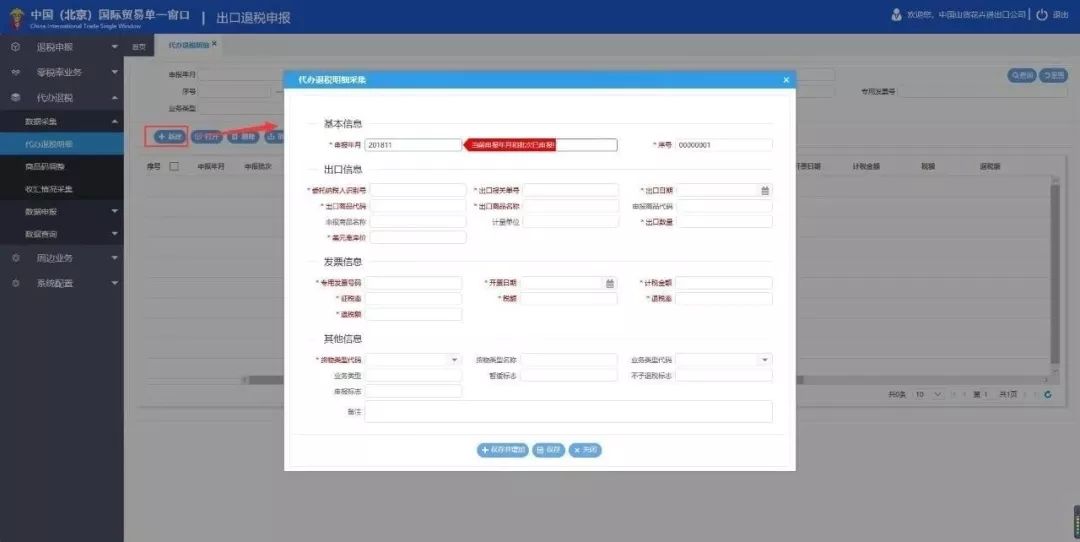
4.1.2 商品码调整
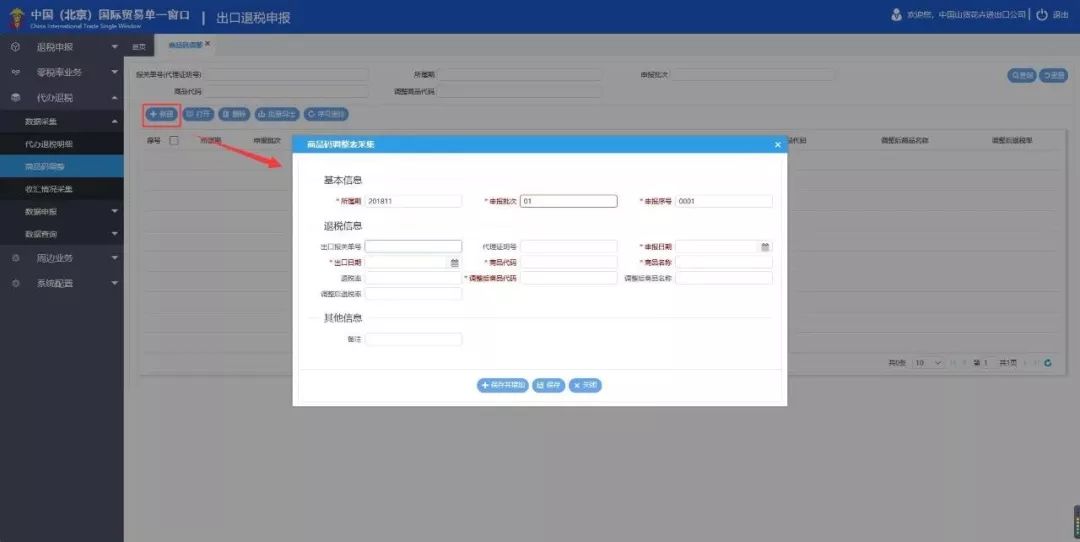
当商品码出现错误且不能使用八位码,十位码或者补充码时,获取正确的调整码,录商品码调整表。
新建商品码调整表采集,录入信息,红色字体为必录入项。
4.1.3 收汇情况采集
新建收汇表采集,录入信息,红色字体为必录入项。
选择已录入的收汇表采集信息,点击打开,可以查看到录入的数据并进行修改,点击删除,可以删除数据。
新建不能收汇表采集,录入信息,红色字体为必录入项。
选择已录入的不能收汇表采集信息,点击打开,可以查看到录入的数据并进行修改,点击删除,可以删除数据。
4.2 数据申报
4.2.1 生成申报数据
点击生成申报数据,录入需要申报的申报年月和批次,点击确认,进行远程申报数据自检。
远程申报后,进入疑点处理界面查看疑点。
没有疑点的话,回到申报数据查询界面勾选这条数据,点击远程申报进行正式申报。
存在疑点的话,点击数据撤销,录入需要撤销的申报年月和批次,点击确定,回到代办退税明细模块中修改数据。
4.2.2 打印申报报表
勾选需要打印的报表点击打印,也可以输入申报年月和批次进行批量打印。
4.2.3 撤销已申报数据
数据自检过的申报数据存在需要修改的疑点和问题的话,通过撤销已申报数据,将数据撤回到代办退税明细模块中进行修改。
4.3 数据查询
4.3.1 代办退税申报明细查询
可以查看到已申报的代办退税申报明细,勾选需要查看的数据点击打开,就可以看到具体的数据。
4.3.2 代办退税应退税款明细查询
可以查看到已申报的代办退税应退税款明细表信息,勾选需要查看的表格数据点击打开,就可以看到具体的信息。
4.3.3 商品码调整表查询
可以查看到已申报的商品码调整表信息,勾选需要查看的表格数据点击打开,就可以看到具体的信息。
4.3.4 收汇情况查询
可以查看到已申报的出口收汇情况和不能收汇情况的信息,首先选择需要的情况表,然后勾选需要查看的表格数据点击打开,就可以看到具体的信息。
第五章 周边业务
“周边业务”模块中包含“数据采集”、“数据申报”、“反馈处理”、“数据查询”四个模块。
5.1 数据采集
5.1.1 购进自用货物申报
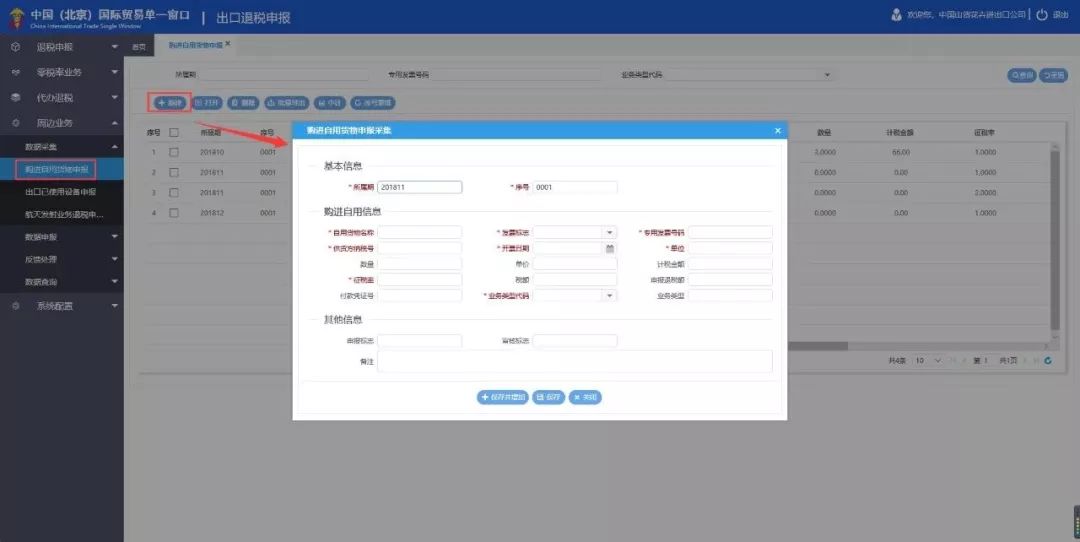
点击数据采集中的购进自用货物申报,点击新建可以采集相关数据。
5.1.2 出口已使用设备申报
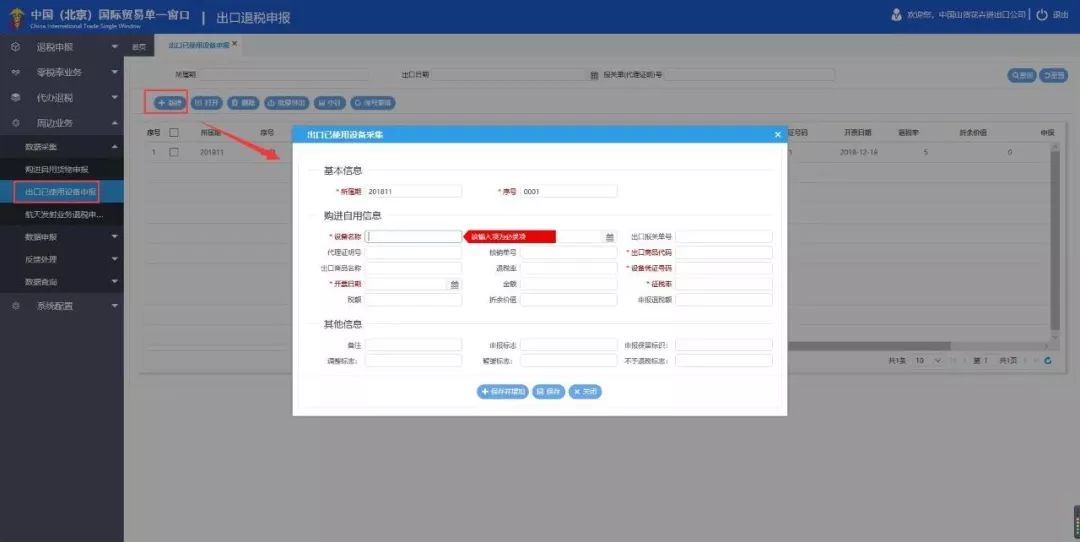
点击数据采集中的出口已使用设备申报,点击新建可以采集相关数据。
5.1.3 航天发射业务退税申报
点击数据采集中的航天发射业务退税申报,点击新建可以采集相关数据。
5.2 数据申报
5.2.1 业务申报
点击数据申报中的业务申报,可以申报采集提交的相关数据。
勾选想要申报的数据,点击生成申报数据进行申报。
5.3 反馈处理
5.3.1 疑点处理
点击反馈处理中的疑点处理,可以查看申报数据的审核疑点。
5.3.2 撤销已申报数据
点击反馈处理中的撤销已申报数据,可以撤销申报数据。
5.4 数据查询
5.4.1 购进自用货物申报查询
点击数据查询中的购进自用货物申报查询,可以查看购进自用货物申报的数据。点击打开可以查看明细。
5.4.2 出口已使用设备申报查询
点击数据查询中的出口已使用设备申报查询,可以查看出口已使用设备申报的数据。点击打开可以查看明细。
5.4.3 航天发射业务退税申报查询
点击数据查询中的航天发射业务退税申报查询,可以查看航天发射业务退税申报的数据。点击打开可以查看明细。
第六章 系统配置
系统配置”模块中包含“业务配置”、“商品代码”两个模块。
6.1 业务配置
6.1.1 自用业务配置
币别和委托企业的相关维护,点击“业务配置”中的“自用业务配置”模块。
6.1.2 企业信息查询
查看企业相关信息,点击“业务配置”中的“企业信息查询”模块。
6.1.3 企业扩展信息维护
设置无纸化企业的相关标识,点击“业务配置”中的“企业扩展信息维护”模块。
6.1.4 系统配置信息
修改企业相关信息,点击“业务配置”中的“系统配置信息”模块。
6.1.5 系统参数设置与修改
设置换汇成本合理上下限、税盘密码,点击“业务配置”中的“系统参数设置与修改”模块。
6.1.6 汇率管理
维护相关汇率,点击“业务配置”中的“汇率管理”模块。
6.1.7 换汇成本管理
设置换汇成本情况说明,点击“业务配置”中的“换汇成本管理”模块。
6.2 商品代码
6.2.1 退税商品码
查询退税商品码,点击“商品代码”中的“退税商品码”模块。
6.2.2 不退税或免税商品码
查询不退税或免税商品码,点击“商品代码”中的“不退税或免税商品码”模块。

2020年1月7日星期二

2020 NEW CHANGES OF FOREIGN INVESTMENT LAWS IN CHINA

There will be new changes in foreign investment laws in China. The foreign investment law will come into effect on January 1 next year.
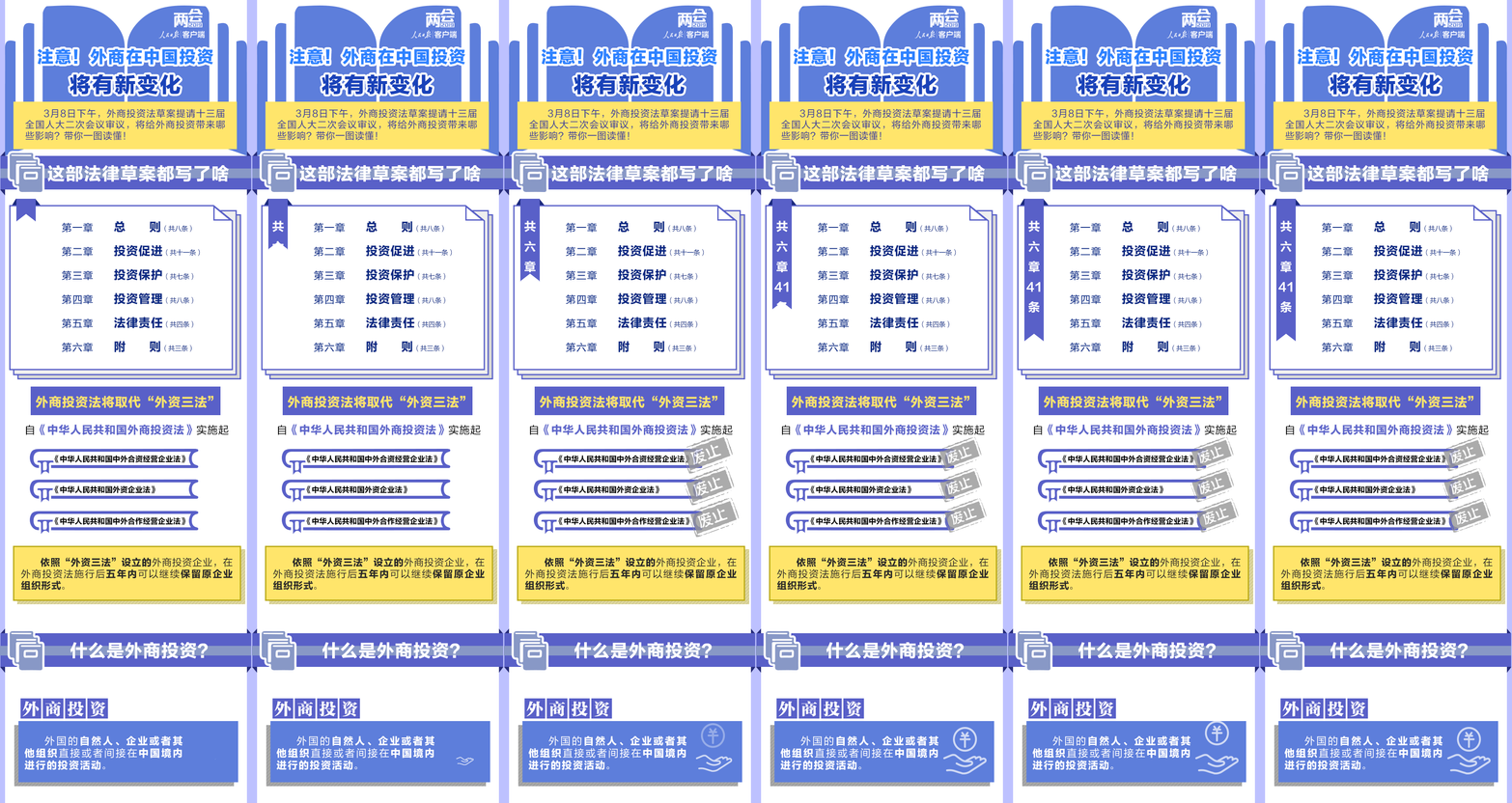
The second session of the 13th National People’s Congress voted to adopt the foreign investment law of the People’s Republic of China, which will replace the “three laws on foreign investment” and take effect from January 1, 2020.
The second session of the 13th National People’s Congress passed a foreign investment law to better protect and attract foreign investment by legal means, premier li keqiang said. The scope of non-forbidden access for foreign investment will be expanded, and punitive compensation mechanism will be introduced for infringement.
The implementation of the pre-establishment national treatment plus a negative list management system for foreign investment in this law has established a level playing field for foreign investment in China.
– The provisions of this law on the administration of pre-establishment national treatment plus negative list for foreign investment, the establishment of a level playing field for foreign investment in China, and the protection of intellectual property rights have become the three highlights of the market.
The latest data released by the ministry of commerce shows that in the first two months of this year, China’s actual foreign investment continued to grow steadily, with the us investment in China increasing by 44.3 percent.
Compared with the third draft of the official document made seven amendments and improvements.
According to the website of the NPC, seven changes have been made to the foreign investment law, including clarifying the scope of government procurement, strengthening the accountability for intellectual property infringement, making it clear that administrative organs and their staff are not allowed to divulge commercial secrets, and making it clear that the specific implementation measures will be stipulated by the state council.
– The main amendments are as follows
  • 1. Article 16 is amended to read: “the state shall ensure that foreign-invested enterprises participate in government procurement activities through fair competition in accordance with the law. The government shall, in accordance with the law, give equal treatment to products and services produced and provided by foreign-invested enterprises within the territory of China in government procurement. This means that government procurement includes both goods and services.
  • 2. The first paragraph of article 19 is amended to read: “people’s governments at all levels and their relevant departments shall, in accordance with the principles of convenience, efficiency and transparency, simplify their procedures, improve efficiency, optimize government services and further improve the service level for foreign investment.” The detailed terms reflect the requirements of “CPF”.
  • 3. The first paragraph of article 22 is amended to read, “the state protects the intellectual property rights of foreign investors and foreign-invested enterprises, and protects the lawful rights and interests of the owners of intellectual property rights and the relevant owners of intellectual property rights; As for the infringement of intellectual property rights, legal responsibilities shall be strictly investigated in accordance with the law. This requirement further improves the provisions on intellectual property protection and strengthens the accountability.
  • 4. Article 1 is added as article 23, stipulating that “administrative organs and their staff shall, in accordance with the law, keep secret the commercial secrets of foreign investors and foreign-invested enterprises they have come to know in the course of performing their duties and duties, and shall not disclose them or illegally provide them to others.” At the same time, it also stipulates the legal responsibility of staff members of administrative organs for violating the duty of confidentiality.
  • 5. Adjust the articles of relevant Chambers of commerce and associations, and delete “foreign investors” in article 26 of the third draft. The revised version reads, “foreign-invested enterprises may establish and voluntarily participate in Chambers of commerce and associations in accordance with the law. Chambers of commerce and associations carry out relevant activities in accordance with laws, regulations and articles of association to safeguard the legitimate rights and interests of their members. The reason for the revision is that the current foreign-related Chambers of commerce and associations are all composed of foreign-funded enterprises, and the above statement in the draft is not accurate enough.
  • 6. Article 30 of the draft is revised to read, “the organizational form, organizational structure and activity criteria of foreign-funded enterprises shall be governed by the provisions of the company law of the People’s Republic of China, the partnership enterprise law of the People’s Republic of China and other laws.” This article is also based on the representative’s proposal that the company law, partnership enterprise law and other laws of market subjects regulate the organizational form and organization of enterprises as well as the behavior of enterprises. The above provisions of the draft are not comprehensive enough, and it is suggested to supplement and improve them.
  • 7. The state council is authorized to formulate specific implementation measures for the transition of foreign enterprises. Article 41 (2) of the third draft shall be added with provisions, and the specific implementation measures shall be formulated by the state council. This is based on the suggestion made by some representatives that the adjustment of the organizational form of foreign-funded enterprises involves a wide range of areas and has a great impact, and appropriate arrangements should be made for relevant work so as to avoid unnecessary interference to the normal production and operation activities of foreign-funded enterprises. It is suggested that the state council be authorized to formulate specific implementation measures for the transition of foreign-funded enterprises in light of previous practices.
Bian yongzu, deputy director of the industry department at the chongyang institute of finance at renmin university of China, told reporters that the adjustments put more emphasis on the government serving foreign-funded enterprises and improving the business environment. The revised wording also makes the law more rigorous.
– As of jan 1, 2020, the three highlights are popular
The law on foreign investment has passed the deliberation of the National People’s Congress and will come into force on January 1, 2020. This law will replace the law on foreign-funded joint ventures, the law on foreign-funded enterprises and the law on chinese-foreign contractual joint ventures as the basic laws for China’s utilization of foreign capital. Bian believes that there is still a long period of time between now and January 2020, which allows time for improving a series of relevant laws and regulations and documents, and is conducive to ensuring the smooth and effective implementation of the law.
The provisions of this law on the administration of pre-establishment national treatment plus negative list for foreign investment, the establishment of a level playing field for foreign investment in China, and the protection of intellectual property rights have become the three highlights of the market.
The draft foreign investment law clearly states that the state shall implement a pre-establishment national treatment plus a negative list management system for foreign investment. Wang shouwen, vice-minister of commerce and deputy international trade negotiator, has said this changes the old model of case-by-case approval, meaning that China’s investment environment is more open, stable and transparent for foreign investment. Xiao jiangping, director of the research center for competition law at Peking University, believes that this means that relevant departments and local governments cannot introduce approval measures for market access at will, and that the ban on entry can be truly realized.
In order to ensure equal participation of domestic and foreign investment in market competition, the draft foreign investment law puts forward many specific measures, including “mandatory standards formulated by the state apply equally to foreign-invested enterprises”, “government procurement of products produced by foreign-invested enterprises in China shall be treated equally” and so on. The regulations respond to a long-standing demand from foreign-invested enterprises, said bai chuan mulberry, director of the institute of international economics at the university of international business and economics.
The draft foreign investment law stipulates in the first chapter of general provisions that the state protects the investment, income and other lawful rights and interests of foreign investors in China in accordance with the law, and a special chapter on “investment protection” shall be set up at the same time. Feng fan, director of the law firm, said that providing more protection and convenience to foreign investors in terms of business environment, capital market, intellectual property rights and technology protection will greatly enhance their trust in China’s market and promote the healthy and orderly development of China’s market economy.
The implementation of this law is conducive to attracting more foreign investors to invest in China. Domestic and foreign-funded enterprises will promote and promote each other on the same stage.
– Li keqiang: non-forbidden access for foreign investment will be expanded
In less than three months, the draft foreign investment law has gone through three rounds of review, which has been called by many media as the “acceleration” of the legislation. The rapid adoption of the foreign investment law has also raised some concerns and doubts.
The foreign investment law passed at the second session of the 13th National People’s Congress (NPC) aims to better protect and attract foreign investment through legal means, premier li keqiang said on Tuesday. This law requires the government to carry out its administration in accordance with the law. “It’s an important thing.”
Li said the new negative list will be reduced and will be gradually reduced in the future. We will also strengthen the protection of intellectual property rights by revising the intellectual property law and introducing a punitive compensation mechanism for infringements.
Li further said that we also hope that foreign governments can fairly view the voluntary cooperation between Chinese enterprises and foreign enterprises. China’s opening up measures, often not rolled out in a package, every year or even every quarter, accumulated will bring unimaginable huge changes.
– China’s use of foreign investment has been on the track of the rule of law
Over the past 40 years of reform and opening up, China’s utilization of foreign capital has been expanding in scale and quality and has made remarkable achievements.
Data shows that by the end of 2018, China had set up about 960,000 foreign-funded enterprises, and the cumulative amount of actually used foreign capital exceeded us $2.1 trillion. In 2018, China’s actually utilized foreign capital reached us $134.97 billion (excluding data in the fields of banking, securities and insurance), ranking the second in the world, about 12 times that in 1992 and 150 times that in 1983. In 2018, foreign capital actually used in the service sector and manufacturing accounted for 68.1 percent and 30.5 percent, respectively.
Foreign capital actually used in high-tech industries has increased 16-fold since 1998, accounting for 23.5 percent in 2018. MNCS have invested in more than 2,000 regional headquarters and r&d centers in China. In particular, in 2018, China’s utilization of foreign capital bucked the trend and became the largest among developing countries in the world.
Looking back on history, China’s utilization of foreign capital has been carried out from the very beginning on the track of rule of law. In December 1978, comrade deng xiaoping put forward the formulation of a foreign investment law.
The law on chinese-foreign joint ventures was one of the first seven laws enacted in the new era of reform and opening up in July 1979. In 1986 and 1988, the National People’s Congress enacted the law on foreign-capital enterprises and the law on chinese-foreign contractual joint ventures. The state council, relevant departments and local governments have formulated a large number of implementing and supporting regulations and rules on foreign investment. The aforementioned three laws constitute the three basic laws on the utilization of foreign capital in China, collectively referred to as the “three laws on foreign capital”.
During the period from 2000 to 2016, China’s laws and regulations on foreign trade and economic cooperation were cleaned up and revised on a large scale before and after China’s accession to the wto, and they were revised and improved many times.
In 2013 and 2014, the standing committee of the National People’s Congress (NPC) made decisions twice, authorizing the relevant pilot free trade zones to temporarily adjust the provisions of the “three laws on foreign investment” on the examination and approval of foreign-invested enterprises, and to trial the management method of pre-establishment national treatment plus negative list.
In September 2016, the standing committee of the National People’s Congress (NPC) amended the “three laws on foreign investment” on the basis of summing up the experience of pilot projects.
Since the 18th national congress of the communist party of China (CPC), the CPC central committee with comrade xi jinping at the core has made a series of important decisions and arrangements in expanding opening-up and promoting foreign investment.
Under the new situation, the related regulations of the “three laws on foreign capital” have been gradually covered by the laws of the company law, partnership enterprise law, general principles of civil law, property law, contract law and other market subjects and market transactions.
At the same time, the requirements of comprehensively strengthening the promotion and protection of foreign investment and further regulating the management of foreign investment under the new situation also go far beyond the adjustment scope of the “three laws on foreign investment”.
The NPC standing committee attaches great importance to the legislative work on foreign investment, and the legislative planning and 2018 legislative work plan of the NPC standing committee clearly put forward the formulation of a law on foreign investment. In December 2018, the state council submitted a draft foreign investment law to the standing committee of the National People’s Congress for deliberation.
In the first two months, foreign investment actually used continued to grow steadily, with U.S. investment in China increasing by 44.3 percent.
Statistics show that last year, more than 60,000 foreign-funded enterprises were set up in China, up nearly 70 percent year-on-year, and the actual use of foreign capital reached a record high of 885.6 billion yuan.
According to data released by the ministry of commerce on January 15, 6,509 foreign-invested enterprises were set up in China from January to February. Actual foreign investment reached 147.11 billion yuan, up 5.5 percent year-on-year. That was equivalent to us $21.69 billion, up 3.0 percent year-on-year. Banking, securities and insurance data are not included.
– China’s actual use of foreign capital continued to grow steadily in the first two months, the head of the foreign investment department of the ministry of commerce said Tuesday.
In terms of industry categories, foreign investment in high-tech manufacturing and high-tech service industries both showed growth. Foreign capital actually used in high-tech industries increased by 48.4 percent year-on-year, accounting for 27.6 percent of the total.
Actual foreign investment in high-tech manufacturing reached 15.91 billion yuan, up 9.3 percent year-on-year. Among them, the actual use of foreign capital in aviation, spacecraft and equipment manufacturing, electronics and communication equipment manufacturing, and computer and office equipment manufacturing increased by 252.7 percent, 21.2 percent and 253.1 percent year-on-year.
The actual use of foreign capital in high-tech services reached 24.67 billion yuan, up 92.9 percent year-on-year. Information services, research and development and design services and transformation of scientific and technological achievements increased by 101.9 percent, 29.2 percent and 76.4 percent, respectively, year-on-year
In terms of regions, 11.8 billion yuan of foreign investment was actually used in the central region, up by 6.6% year-on-year. Actual foreign investment in the pilot free trade zones increased by 35.1 percent year-on-year, accounting for 12 percent. Pilot free trade zones led the country in growth.
By country, us investment in China increased by 44.3 percent, maintaining a relatively fast momentum. Meanwhile, the growth rates of the Netherlands and France both exceeded 100%.

Shanghai DOBY Smart Equipment CO., Ltd supply the export and import service for you.
Whatsapp me: +86 13917269114


new foreign investment laws 2020